
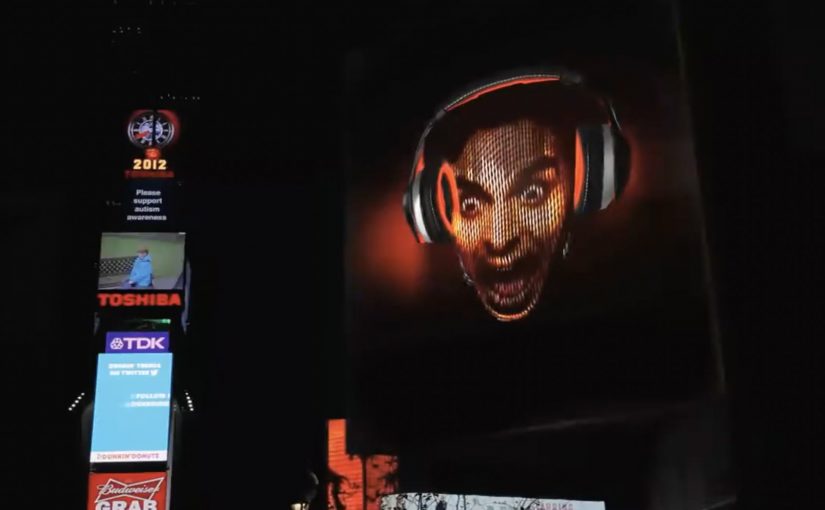
Denon VisYOUalizer: feel the music

Denon VisYOUalizer: feel the music

Denon wants to bring to life the idea that with its line of lifestyle headphones you do not just hear the music, you feel it. So BBDO New York, described alongside Jam3 in production write-ups, creates an engaging experience for younger audiences who are not yet familiar with Denon’s long-running audio heritage.

A Denon VisYOUalizer app is created that lets people try on the headphones virtually and turn their faces into a dynamic, customized music visualizer.

How the VisYOUalizer turns “sound” into something you can see

The mechanic is simple. Your face becomes the canvas, the music becomes the driver. You line up to a camera, the headphones snap into place virtually, and the experience maps a moving visual layer to your expression and the track’s energy. Because the visual layer responds in real time to both the track and your expression, the “feel it” promise reads as proof rather than copy.

In consumer electronics and lifestyle brands, face-based interactivity works best when the visual payoff is immediate and the product benefit is embodied rather than explained.

Why it lands for a younger audience

Headphone marketing often leans on specs, heritage, or famous musicians. This goes the other way. It starts with play and self-expression, then backfills the brand story through the experience and its share value. The real question is whether you can make an intangible promise visible enough that people want to play with it before they care who you are. When awareness is the constraint, a participatory demo beats a spec-led pitch.

Extractable takeaway: If your benefit is sensory or emotional, make the user’s own face or movement the proof, and deliver the payoff before you ask for attention to the brand story.

That matters when awareness is the real problem. If people do not know Denon, a participatory demo can earn attention faster than a product film.

What the brand is really doing here

This is a virtual try-on wrapped around a music visualizer. The try-on makes the product tangible. The visualizer makes the “feel it” claim legible. And the combination gives Denon an interaction that people can show to friends without needing to explain anything.

Steal this for your next “feel it” product idea

  • Turn an abstract benefit into a visible response. If “feel” is the promise, show a reaction that moves with the input.
  • Make the first 10 seconds rewarding. The hook should work before anyone reads instructions.
  • Use virtual try-on as the entry point. It lowers friction because people already know what to do.
  • Let personalization do the marketing. When people see themselves in the output, they are more likely to share.

A few fast answers before you act

What is the Denon VisYOUalizer?

It is a face-based interactive experience that lets you virtually try on Denon lifestyle headphones and transforms your face into a music-driven visualizer.

What product message is it designed to prove?

It translates “you do not just hear the music, you feel it” into a visual reaction that changes in real time with the sound and the participant’s presence.

Why combine a visualizer with a virtual try-on?

The try-on makes the product concrete and recognizable on your face, while the visualizer supplies the emotional payoff that makes people stick around and share.

What do you measure to judge success?

Time spent, completion rate, share rate, repeat plays, and click-through to product pages are more meaningful than raw impressions for an experience like this.

What is the biggest failure mode for this format?

If the camera alignment is finicky or the output looks generic, people bounce fast. The experience needs instant feedback and obvious personalization.
One Small Tweet: A Virtual Voyage to the Moon

One Small Tweet: A Virtual Voyage to the Moon

A tribute that turns participation into progress

Neil Armstrong was the astronaut who took one small step for man and one giant leap for mankind. He was also the man who delivered on John F. Kennedy’s promise to be first to the lunar surface.

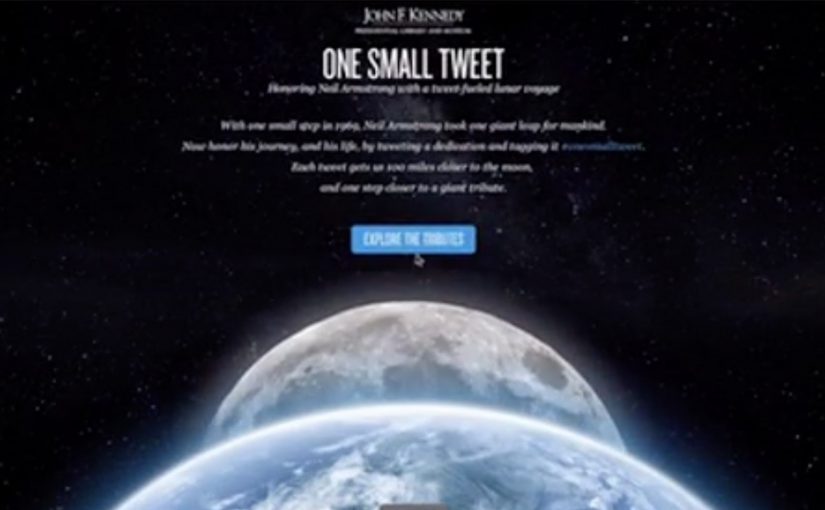
Neil passed away in August 2012. To honor his life, The Martin Agency created “One Small Tweet”. A roughly 238,900-mile virtual voyage to the moon powered by tweets written by admirers around the world.

Click here to watch the case video on the AdsSpot website.

How One Small Tweet works

People posted tributes tagged with #onesmalltweet. Those tweets were aggregated on www.onesmalltweet.com and used as “fuel” for the trip. Each tweet advanced the voyage by 100 miles, so the memorial was something you could watch move forward, one contribution at a time.

In cultural-institution storytelling, social participation becomes meaningful when individual contributions stack into a visible collective outcome.

Why it lands

The idea avoids the usual problem with online tributes. They are heartfelt but static. Here, the tribute has motion and a shared goal, which gives people a reason to join even if they do not know what to say at length. The real question is how to make remembrance feel collective instead of archival. This is a stronger tribute format than a static condolence wall. This works because every tweet visibly moves the same journey, turning private tribute into shared momentum. That progress mechanic, a visible journey meter that advances with each tweet, also makes the scale of remembrance legible. You can see the crowd forming, not just assume it exists.

Extractable takeaway: When you need mass participation, give people a simple action and attach it to a public progress measure. The progress becomes the story people return to and share.

What it teaches about social mechanics

  • Make the unit of contribution small. A tweet is low effort, so participation friction stays low.
  • Make accumulation visible. A journey meter turns separate tributes into one collective narrative.
  • Anchor the mechanic in meaning. The moon distance is not random. It is the symbolism that makes “100 miles per tweet” feel earned.
  • Design for global inclusion. Hashtags travel across borders faster than platform-specific formats.

A few fast answers before you act

What is “One Small Tweet”?

It is a tribute campaign that used tweets tagged #onesmalltweet to power a virtual journey to the moon, turning individual messages into visible collective progress.

How did tweets move the voyage forward?

Each tweet was treated as fuel. The mechanic advanced the trip by 100 miles per tweet, creating a progress narrative people could follow.

Why does a progress mechanic help participation?

It makes contributions feel consequential and connected. People can see their action add to something larger than a single post.

What’s the transferable pattern for other campaigns?

Use a small, easy action. Aggregate it in one place. Show cumulative progress in a way that reinforces the campaign meaning.

What is the main risk with this approach?

If the progress representation is unclear or updates feel unreliable, participation drops. The experience has to feel responsive and real.

Marie Claire: Print Pages You Can Tap to Buy

Marie Claire: Print Pages You Can Tap to Buy

Enabling readers to buy directly from magazines or newspapers is slowly going to become the industry standard, as revenues from print continue to slip.

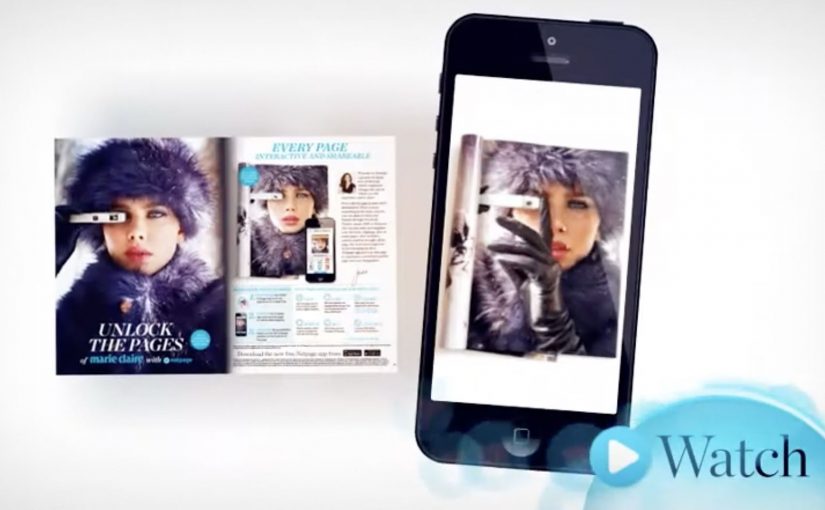
Last year Ikea re-imagined their catalog via a special visual recognition app that brought its pages and offerings within to life. Now Marie Claire has taken it one step further by letting their readers use the Netpage app to interact with its printed pages, clip, save, share, watch and buy.

The Netpage app is described as using a combination of image recognition, augmented reality and digital twin technology. Hence no special codes, watermarks or special printing processes are required. In this context, “digital twin” is used to describe a digital counterpart of each page that can be recognized and linked to interactive layers.

Shoppable print, without QR code clutter

Shoppable print is the fusion of editorial content and commerce, where a reader can move from “I want that” to checkout directly from the page. The key difference here is interaction that is designed to feel native to reading. Not bolted on as a separate scanning ritual. Because the interaction stays inside the reading flow, it reduces friction, which is why it can earn repeat use instead of feeling like a one-time gimmick.

In magazine and brand teams trying to keep print premium while still making it measurable, invisible recognition is the interaction pattern that scales best.

The real question is whether your print pages can create measurable intent without forcing readers out of the reading flow.

Why this matters for magazines and brands

Once print becomes tappable, meaning a phone can recognize a specific page and surface actions, the page stops being an endpoint. It becomes a trigger for a whole set of actions, saving for later, sharing with friends, watching richer product context, and buying immediately.

Extractable takeaway: If a page can trigger trackable actions and even checkout, the magazine is no longer only monetized by ads and subscriptions. It can also participate in the transaction path.

Practical moves for tappable print commerce

  • Design interaction as a reading behavior, quick actions that fit the moment, not a separate “tech demo.”
  • Reduce visual noise, if recognition can be invisible, the page stays premium.
  • Offer multiple intent paths, not everyone wants to buy now, but they might save, share, or watch.
  • Make the jump from inspiration to action short, the fewer steps, the more commerce you unlock.

Publishers and brands should treat tappable print as a measurable commerce layer, not a novelty. The future is all about content being fused with commerce so that it’s a quick step from reading about an item to buying it. So get ready!


A few fast answers before you act

What does “interactive print” mean here?

It means a printed page can be recognized by a phone app and instantly connected to digital actions like clipping, saving, sharing, watching content, and buying.

How is this different from QR codes?

The interaction is designed to be code-free on the page. The recognition layer is meant to feel invisible, so the magazine layout stays clean.

What is the core value for readers?

Convenience. Readers can act on interest immediately, whether that means saving an item, sharing it, or purchasing it, without leaving the content context.

What is the core value for publishers?

A measurable engagement layer and a commerce path. Pages can generate trackable actions and potentially incremental revenue beyond print ads.

What is the biggest adoption risk?

Habit change. If the scanning flow feels slow or unclear, people will not repeat it. The first experience must be fast, obvious, and rewarding.