
Jaguar launches in-car cashless fuel payment

Jaguar launches in-car cashless fuel payment

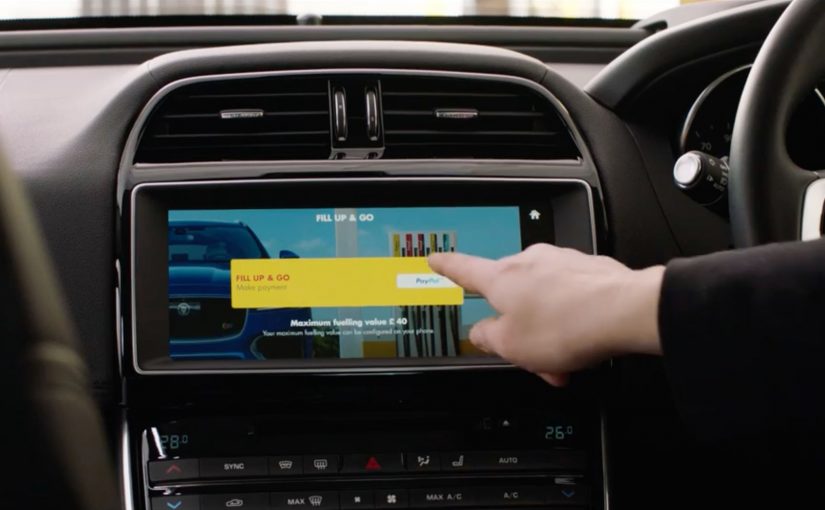
Drive up to a Shell pump. Choose your fuel amount on the car’s touchscreen. Pay without leaving the seat. In a world-first, Jaguar and Land Rover owners can pay for fuel via the touchscreen of their car at Shell service stations. Rather than paying at the pump or queuing to pay in the shop, installing the Shell app via InControl means drivers can drive up to a pump at participating Shell service stations, select how much fuel they require, and pay with PayPal or Apple Pay on the vehicle’s touchscreen.

For more details see Jaguar’s announcement.

Why this matters beyond fuel

This is not really a “payments innovation” story. It is a friction story. The value comes from removing context switching, meaning the driver does not have to break the refuelling task to pull out a phone, walk to the shop, and re-authenticate. No wallet. No phone. No queue. By keeping selection and payment inside the in-car interface, the flow reduces both steps and “did it work” anxiety, which is why it feels meaningfully faster. This is the right direction for in-car commerce, but only if station and pump identification are unambiguous and receipts are immediate. In connected-vehicle ecosystems where multiple brands share the same moment, the primary interface should own the transaction at the point of need.

Extractable takeaway: Collapse checkout into the moment of intent inside the primary interface, and the “innovation” will be felt as time and effort saved.

It moves checkout into the moment of intent

The moment you decide to refuel is the moment you can complete the transaction. That reduces drop-off, reduces effort, and makes the experience feel modern without changing the core product.

It turns the car into a commerce surface

Once the dashboard becomes a trusted place to authenticate and pay, the opportunity expands to other “on-the-go” services where drivers normally step out, wait, or juggle devices. A commerce surface is any interface that can identify the context, confirm the choice, and take payment without switching devices.

It is a clean example of partner-led experience design

Jaguar provides the in-car platform. Shell provides the forecourt context and operational integration. The user experiences it as one flow, not two brands handing off a task.

The real question is whether your primary interface can complete payment at the exact moment intent forms, without sending people into a separate device, screen, or queue.

The reusable pattern

  1. Embed the action where the context already is. Put the transaction inside the primary interface, not a separate detour.
  2. Keep the flow short and explicit. Select, confirm, pay, receipt. Anything more breaks the promise.
  3. Design for trust signals. Clear station identification, clear confirmation, and a clear receipt reduce “did it work” anxiety.
  4. Make the benefit obvious in one sentence. “Pay from your car” is enough. The value is immediate.

What to measure beyond views

  • Adoption. Percentage of eligible drivers who activate the in-car payment feature.
  • Repeat usage. Whether people use it again after the first try.
  • Time saved. Reduction in “fuel stop duration” compared with paying in-store.
  • Experience confidence. Drop-off rates between selecting the pump and confirming payment.

Guardrails to steal for in-car checkout

  • False positives. The system must reliably know which station and which pump the driver is using.
  • Failure recovery. If payment fails, the user needs a clear next step that does not create embarrassment at the pump.
  • Trust. Drivers need clear confirmation, receipts, and predictable behavior every time.

A few fast answers before you act

What is Jaguar’s in-car cashless fuel payment?

A Shell fuel payment flow that lets Jaguar and Land Rover drivers select an amount and pay from the vehicle touchscreen via the Shell app in InControl.

What problem does it solve?

It removes the need to pay at the pump or queue inside the shop. The entire task completes from the car.

What is the core mechanism?

A contextual in-car experience that links the driver, the station, and the payment method into one short flow.

What is the most reusable lesson?

Move checkout into the moment of intent inside the primary interface. Then keep the steps minimal and confidence high.

What is the biggest failure mode?

Any ambiguity about station or pump, or any unclear “did I pay” outcome. Trust collapses fast in payments.
Tostitos Party Safe Bag

Tostitos Party Safe Bag

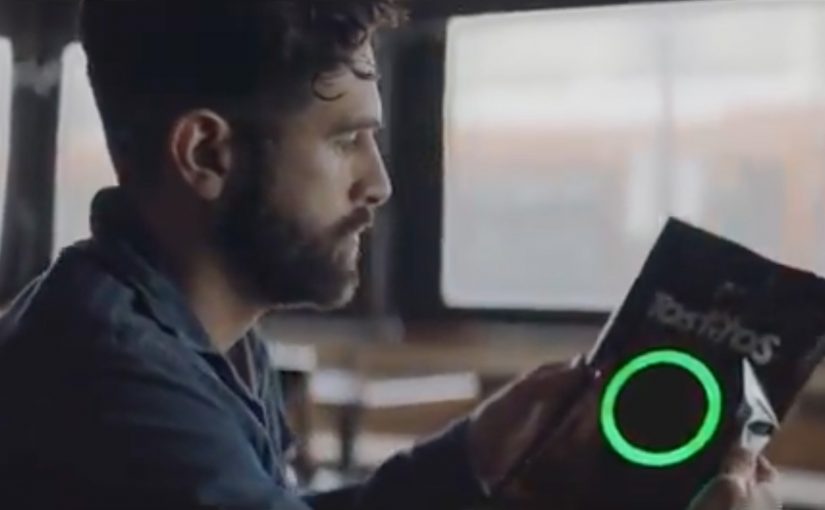
On Super Bowl Sunday 2017, Tostitos puts safety into the packaging. The limited-edition “Party Safe” bag can detect when you have been drinking, then helps you get home safely from the party.

How the Party Safe bag works

The trigger is built into the bag itself. The bag is created by Goodby Silverstein & Partners and comes equipped with a sensor connected to a microcontroller calibrated to detect traces of alcohol on a person’s breath. If alcohol is detected, the sensor turns red and forms the image of a steering wheel.

Then it turns that moment into action. The bag provides a $10 off Uber code along with a “Don’t drink and drive” message. If you have an NFC-enabled smartphone, you can also tap the bag to call an Uber.

In US mass-market brands, the smartest behaviour design often lives where the decision is made, not where the messaging lives.

Why Tostitos ties this to the Super Bowl

The campaign starts from a hard, uncomfortable statistic. According to the US National Highway Traffic Safety Administration, 45 people are killed in drunk-driving crashes on Super Bowl Sunday 2015, nearly half of all traffic fatalities that day.

Extractable takeaway: When risk peaks at a predictable moment, design the intervention to appear at that exact moment and make the safe choice the easiest next step.

So the “Party Safe” bag frames itself as a practical intervention on the one day when party behaviour and driving risk collide at scale.

This is IoT packaging with a clear behavioural goal

The packaging is not a gimmick for novelty’s sake. It is packaging that nudges a specific decision at the moment it matters most. Do not drive. Call a ride.

By IoT packaging, I mean packaging with sensing and a built-in trigger that can prompt an action without a separate app.

The real question is whether your connected experience can change one specific choice at the moment it is made.

This works because it is a behaviour-change intervention first, and a tech demo second.

The smart detail is the friction reduction. The message is immediate, the code is immediate, and the tap-to-request option removes even more steps. Because detection and the next action live on the bag, the distance from recognition to compliance is intentionally short.

The pattern worth stealing

If you work on connected experiences, the structure is reusable.

  • Put the sensor where the decision happens. Not in a separate app.
  • Translate detection into a single, obvious next action. Make the next step unmissable.
  • Pair the behavioural nudge with a concrete incentive. Give people a reason to comply faster.

A few fast answers before you act

What is the Tostitos Party Safe Bag?

A limited-edition Tostitos bag that detects alcohol on a person’s breath, then prompts a safer way to get home.

How does the bag detect drinking?

A sensor connected to a microcontroller is calibrated to detect traces of alcohol on the breath.

What happens when alcohol is detected?

The sensor turns red and forms a steering-wheel image. The bag provides a $10 off Uber code and a “Don’t drink and drive” message.

How does the Uber action work?

You can use the $10 off code, and NFC-enabled smartphones can tap the bag to call an Uber.

The world’s first emotionally powered store

The world’s first emotionally powered store

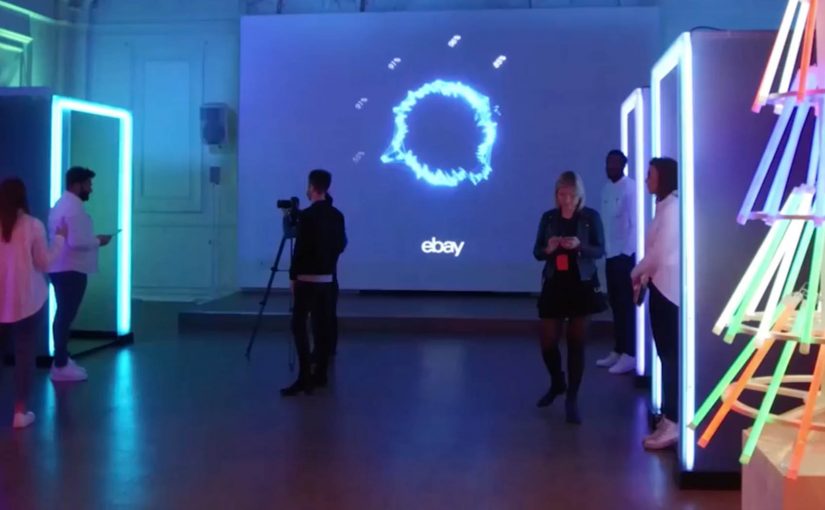
You step into a pop-up store in central London because Christmas shopping feels like a chore. You sit down, look at product ideas on a screen, and the system watches your face as you react. Not in a creepy sci-fi way, but in a deliberately framed “let’s reconnect with the emotional spirit of giving” way. Your expressions become signals. The store turns those signals into a personal report, then suggests the gift that triggers the strongest “this feels right” response.

That is the idea behind eBay’s “emotionally powered store,” created with American technology firm Lightwave. Using intelligent bio-analytic technology and facial coding, eBay records which products provoke the strongest feelings of giving. Here, “facial coding” means software that classifies facial expressions into emotion signals. Then, through personalised emotion reports, it suggests the gift that stirs the most feeling.

What eBay is actually testing here

This is not only a seasonal stunt. It is a test of whether emotion can be treated as data in a retail environment, and whether that data can be turned into a better decision loop.

Treating emotion as data is compelling when it reduces stress and strengthens intent, not when it becomes a gimmick.

The store reframes the problem:

  • the problem is not “too little choice”
  • the problem is decision fatigue, stress, and loss of motivation
  • the solution is not more filters, it is faster emotional clarity

The mechanics. Simple, but provocative

At the core is a clean input-output system:

  • Input. A sequence of gift ideas shown in a tight flow.
  • Measurement. Facial coding and bio-analytic signals that infer which moments create the strongest emotional engagement.
  • Output. A personalised emotion report that recommends the gift that creates the strongest “giving” response.

The tech is almost secondary. The real innovation is the framing. A store that does not just sell products. It guides you toward the gift that feels most meaningful.

Because the flow turns in-the-moment reaction into a clear recommendation, it aims to cut decision fatigue and restore motivation.

In consumer retail and gifting contexts, the win is turning anxious browsing into a confident choice.

Why this matters for next-generation shopping environments

A lot of “next-gen retail” bets on bigger screens, more sensors, and more automation. This one bets on something more human.

Extractable takeaway: When people feel stuck choosing, experience design should optimize for emotional clarity and confidence, not just more options.

It treats the emotional state of the shopper as a first-class design constraint:

  • reduce stress
  • re-anchor the experience in intent and empathy
  • make the decision feel more satisfying, not just more efficient

That is a powerful signal for any brand that sells gifts, experiences, or anything identity-driven. The product is rarely the only thing being purchased. The feeling of choosing it matters.

The leadership question sitting underneath the pop-up

The real question is whether you want your retail experience to optimize for emotional confidence, or pure conversion efficiency.

If you can capture emotional response at the moment of choice, you can start redesigning:

  • the sequence in which products are presented
  • the language and imagery that drives confidence
  • the point at which a recommendation should trigger
  • the moment where a shopper’s motivation drops, and how to recover it

That is where this moves from a pop-up into a capability.

What to copy from this pop-up

  • Design for intent first. Frame the experience around the feeling the shopper wants to deliver, not the catalog size.
  • Shorten the path to “this feels right”. Use tight sequencing and clear prompts that reduce choice overload.
  • Make feedback immediate. Turn reactions into a simple, understandable next step, not another dashboard.
  • Measure to support, not to impress. Keep the technology secondary to the human framing that builds confidence.

A few fast answers before you act

What is an “emotionally powered store”?

An “emotionally powered store” is a retail concept that uses facial coding and bio-analytic signals to infer emotional reactions, then recommends products based on the strongest response.

What is eBay trying to solve with this experience?

The experience targets Christmas gift-buying stress and decision fatigue. It is designed to reconnect shoppers with the emotional spirit of giving.

What role does Lightwave play?

Lightwave provides the technology support for the bio-analytic and facial coding layer used in the pop-up.

What is the output for the shopper?

The output is a personalised emotion report and a gift recommendation based on the products that provoke the strongest feelings of giving.

What is the broader takeaway for retail innovation?

The broader takeaway is that emotion becomes a measurable input for experience design, not just a brand aspiration.