When “viral” requires real engineering
To create a viral video these days, you need to do something great and unique. Vodafone NZ hired a production team to orchestrate cellphones into “playing” Tchaikovsky’s 1812 Overture.
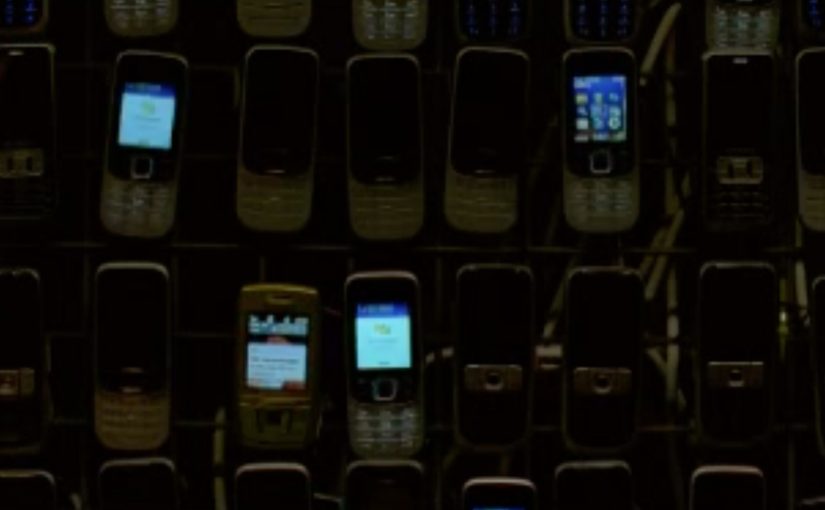
This was done using 1000 phones and 53 different ringtone alerts, synchronized to recreate the classical piece.
How 1000 phones became an orchestra
The mechanism was constraint-driven composition.
Instead of instruments, the “sound palette” was a fixed set of ringtone alerts. The team then arranged phones like sections in an orchestra and synchronized their playback so the combined output recreated the music.
What makes this work on camera is that you can see the system. Rows of devices. Repetition at scale. A human-built machine producing a familiar piece.
In global telecom marketing, the most shareable films often work because the effort is visible.
Why the idea lands with viewers
It lands because it is both absurd and precise, and the visible synchronization lets the viewer sense the complexity without needing the full production process.
Extractable takeaway: When the constraint is instantly legible and the build is visibly real, the craft becomes the hook that earns attention and sharing.
It also bridges cultures. Highbrow music meets everyday tech, creating an unexpected contrast that feels fresh instead of forced.
The business intent behind the ringtone orchestra
The intent was to associate Vodafone with coordination, scale, and modern connectivity, without having to say those words.
The real question is whether your “viral” idea would still be interesting if the camera had to capture a real system doing the work.
This is the right kind of brand film for a telco. It shows coordination and connectivity instead of claiming it.
Steal this pattern from the ringtone orchestra
- Make effort visible. When the craft can be seen, viewers reward it with attention and sharing.
- Use a constraint as the hook. “Only ringtones” creates a clear challenge people instantly understand.
- Engineer a spectacle that reads in one frame. Scale should be obvious without explanation.
- Let the metaphor do the branding. Show coordination and connectivity instead of claiming it.
If you like the resulting tune, you can download it to your computer, as well as the 53 ringtones used to create it, from www.vodafone.co.nz/symphonia.
A few fast answers before you act
What did Vodafone NZ create?
A film where 1000 mobile phones, using 53 different ringtone alerts, were synchronized to perform Tchaikovsky’s 1812 Overture.
What is the core mechanism?
Constraint-driven composition. A fixed set of ringtone sounds becomes the “instrument set”, and synchronization plus physical arrangement makes the system readable on camera.
Why does it work as shareable content?
The effort is visible. The scale reads instantly, and the contrast between classical music and ringtones creates a surprising but coherent hook.
What business goal does this support for a telco brand?
It turns “connectivity at scale” into a watchable metaphor. Many devices acting as one becomes an entertaining proof of coordination and network promise.
What is the most transferable takeaway?
If you can make the constraint and the craft legible in one frame, the build itself becomes the reason people share.