Vampire Diaries Augmented Reality

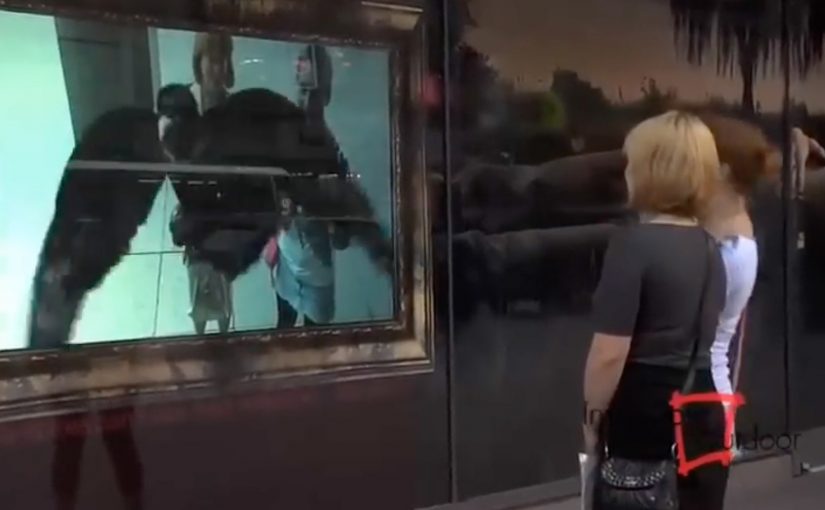
An outdoor advertising campaign by Inwindow Outdoor for CW’s Vampire Diaries appears in Los Angeles and New York. It uses augmented reality to trigger the on-screen display. Here, augmented reality functions as the activation cue that starts the display at the right moment.

The idea. Outdoor that reacts

The execution uses augmented reality as the activation layer. Instead of treating the screen as a static placement, the display is triggered through AR to create a moment that stands out in public space.

The real question is whether the AR layer changes what the outdoor screen does, or just decorates the same placement.

How it works. A trigger drives the screen

The on-screen content is not always running. It is initiated when the AR trigger is detected, turning a standard outdoor screen into a timed reveal rather than a constant loop.

In global entertainment marketing, outdoor activations like this work best when the trigger creates a clear before-and-after moment people can notice in a few seconds.

Where it runs

The installation appears in two major markets. Los Angeles and New York.

Why it lands

AR is worth the added complexity in outdoor only when it changes the behavior of the medium in public space. A triggered reveal creates contrast versus always-on loops, which is what makes the moment feel different rather than merely placed.

Extractable takeaway: Use AR as an activation layer that creates a noticeable state change on the screen, so the placement reads as a triggered experience, not static media.

What to apply in your next OOH activation

  • Design for a visible state change: Make the triggered moment look materially different from the idle screen state.
  • Keep the trigger simple: The audience should not need instructions to notice that something just changed.
  • Treat AR as the switch: Use AR to initiate the moment, not as decorative overlay on an unchanged placement.

A few fast answers before you act

What is this campaign?

An outdoor advertising campaign for CW’s Vampire Diaries by Inwindow Outdoor that uses augmented reality to trigger an on-screen display.

Where does it appear?

Los Angeles and New York.

What role does augmented reality play?

It is used as the activation layer that triggers the on-screen display.

Who executes it?

Inwindow Outdoor.

What is the core takeaway?

Use AR as an activation layer that turns an outdoor screen from static media into a triggered experience.
Nike: Trackball for CTR360

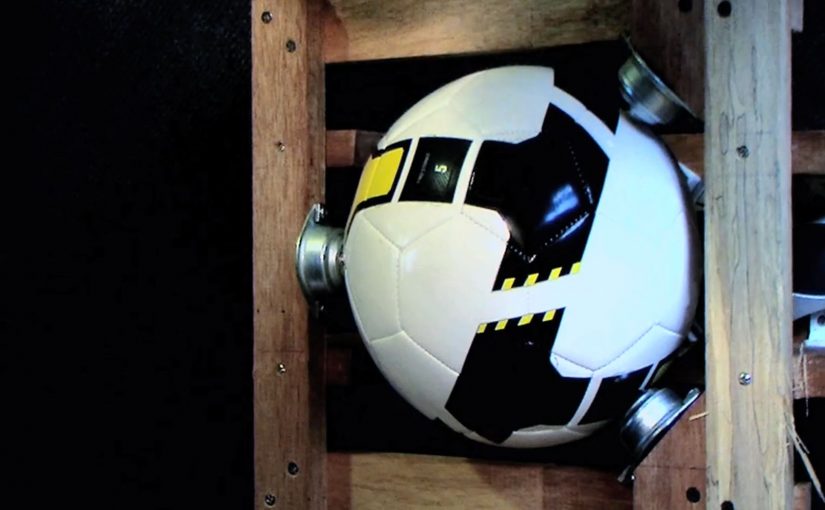
When Nike launched the CTR360 football boot in Singapore, they wanted something that could deliver the revolutionary features that make this product the ultimate in ball control.

So an interactive in-store experience was created where ball control and product knowledge of the Nike CTR360 was both seamless and seductive.

The real question is how to make a ball-control claim feel true within a few seconds of interaction.

For performance products, the best retail education is interaction, not explanation.

Why this retail execution works

The strongest part is that it does not separate “demo” from “education”. The interaction itself becomes the explanation. You learn by doing, and that is exactly how a ball-control product should be introduced. In performance-footwear retail, shoppers believe what they can trigger themselves without instructions. Here, “the mechanic” is the single interaction pattern that carries both the demo and the message.

Extractable takeaway: When a benefit is about control, design one self-explanatory action that proves control before you explain anything else.

  • Product truth in the mechanic. Control is demonstrated through controlled interaction, not described in copy.
  • Low friction discovery. Visitors do not need instructions to begin. The interface invites experimentation.
  • Retail as experience, not shelving. The store becomes the medium that proves the claim.

What to take from it

If your product benefit is physical or performance-based, build a retail moment that lets people feel the promise quickly. The goal is not to show every feature. It is to create one memorable proof point that makes the product easier to believe and easier to talk about.

  • Pick one proof point. Let people feel the promise quickly, instead of trying to cover every feature.
  • Make the start frictionless. Invite experimentation without needing staff to interpret what to do.
  • Design for retellability. Create a moment people can describe right after they try it.

A few fast answers before you act

What did Nike do for the CTR360 launch in Singapore?

Nike created an interactive in-store experience that demonstrated ball control while also communicating CTR360 product features through the interaction itself.

Why pair product education with interaction?

Because performance products are understood faster through demonstration than explanation. The experience makes the benefit tangible.

What is the core pattern behind this kind of retail activation?

Translate the product promise into a simple, inviting interaction. Then let that interaction deliver both the “wow” and the learning.

How do you know if an in-store experience is doing its job?

If a visitor can explain the product benefit immediately after trying it, without needing staff to interpret it, the design is working.