
Carlsberg: Happy Beer Time

Carlsberg: Happy Beer Time

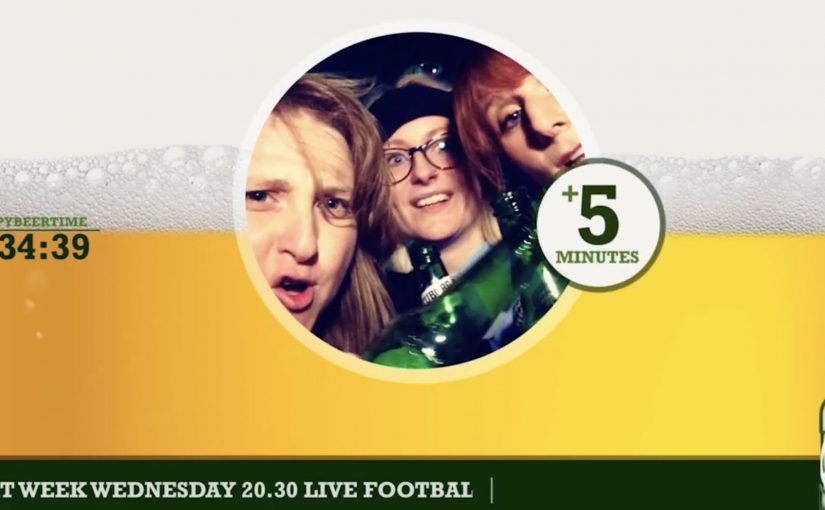
Nowadays people like to go out, take photos, and share them on Instagram. Carlsberg, together with the Danish agency Konstellation, puts a social twist on the well-known concept of happy hour by turning every post into more discounted time for the whole bar.

A happy hour that gets longer when the bar posts together

The mechanic is simple and highly visible. Guests snap an Instagram photo and tag it with the venue name and #HappyBeerTime. Each successfully tagged photo extends a shared countdown on the bar’s screen, which keeps discounted beer available for everyone while the clock keeps moving.

In on-trade environments, meaning bars and restaurants, the strongest promotions convert shared participation into a shared, immediate reward that the whole room can see.

What makes the mechanism work in a real bar

  • One clear lever. Post with the right tags. Add time.
  • Progress is public. A live countdown on a screen turns the promotion into a collective game.
  • Reward is communal. Everyone benefits from every post, so the behaviour spreads naturally.
  • Distribution is built in. The bar gains organic visibility through guests’ own feeds.

The real question is whether your incentive creates a room-level feedback loop fast enough that people feel their action changes the moment.

Why it lands

This activation aligns with what people already do on a night out. Take photos. Share moments. The difference is that the sharing changes the environment in real time. That makes the incentive feel playful rather than purely transactional.

Extractable takeaway: If you want participation at scale inside a venue, use a reward the entire room experiences together, and make the progress visible so the crowd recruits itself.

What the brand is really buying

On the surface, it is discounted beer for longer. Underneath, it is repeat purchase pressure at the point of sale, plus a stream of user-generated content tied to specific venues and nights. The bar gets word-of-mouth promotion. Carlsberg gets social proof linked to a real-world occasion.

A quick note on “Happy Hour 2.0”

“Happy Hour 2.0” is the idea of extending a happy-hour window through a simple trigger, instead of relying on a fixed start and end time. Budweiser was earlier to pioneer this Happy Hour 2.0 concept in August 2012. Carlsberg’s twist is connecting the extension mechanic directly to social posting behaviour.

Proof that the idea travelled beyond a one-off

The concept drew broader industry attention, including recognition in Danish award circuits and international festival shortlists. That matters because it signals the mechanic is legible. It is easy to explain, easy to copy, and easy for people to participate in without training.

Steal the shared countdown loop

  • Keep the action atomic. One photo and two tags beats a multi-step flow.
  • Design the room-level feedback loop. The screen is not decoration. It is the social engine.
  • Set guardrails early. Decide how you handle off-brand or inappropriate posts, and communicate it.
  • Make the reward feel immediate. “Add time now” beats “collect points later”.
  • Measure uplift, not just posts. Treat UGC as a means. The goal is incremental sales and dwell time.

A few fast answers before you act

What is Happy Beer Time in one sentence?

It is a bar promotion where Instagram posts tagged with the venue name and #HappyBeerTime extend a shared happy-hour countdown, keeping discounted beer available for longer.

Why does “time” work as the reward?

Time is instantly understood, visibly shared, and emotionally tied to the night out. Adding minutes feels like progress the whole room experiences together.

What makes this different from a standard hashtag campaign?

The hashtag is not just for awareness. It is a trigger that changes the real-world environment in real time, which makes posting feel consequential.

What can go wrong operationally?

If tagging rules are unclear, people will not participate. If moderation is absent, inappropriate content can surface. If the reward lags, the loop breaks.

What should you measure in a pilot?

Participation rate, post volume per hour, time extended per session, sales uplift during the activation window, and whether dwell time increases without margin loss exceeding targets.
Samsung Display: Display Centric World

Samsung Display: Display Centric World

A near-future that blends text and screens

Text, video, audio and several other interaction types become a common part of media. Everything blends between the visual and the textual and back again. We are surrounded with multi-touch media that uses highly engineered displays and companion technologies.

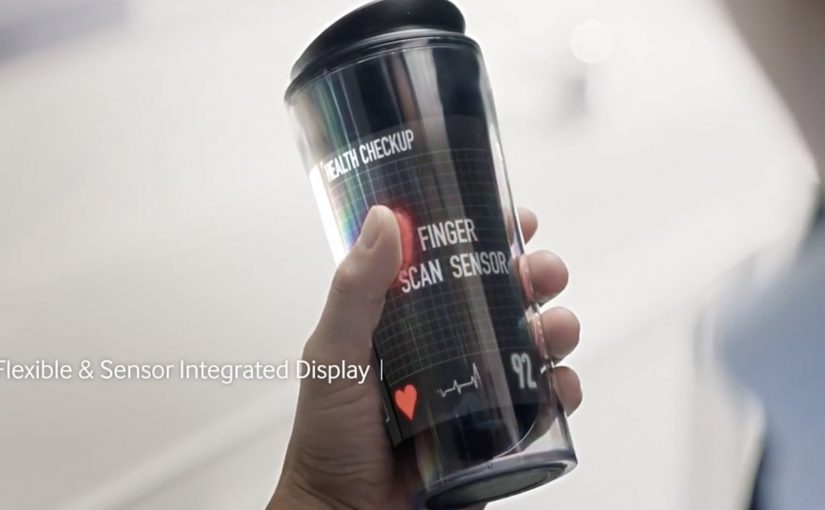
Samsung Display created the video below to share its vision of the future and to show how its panels could be implemented across consumer and enterprise markets.

What the film is really selling

The premise is not “better screens.” The premise is “more surfaces become screens.” Here, a display-centric world means a world where screens become the default surface for access, guidance, and collaboration across daily tasks. The film repeatedly puts interactive display surfaces into everyday moments. Cafés, classrooms, retail, commuting, and healthcare all become scenarios where information appears in place, on demand, and in the exact format that fits the situation.

Samsung Display originally presented this concept film as part of its Analyst Day 2013 narrative. The message is clear. When displays get thinner, lighter, and more flexible, the interface stops being a device and starts being the environment.

In consumer electronics and enterprise IT, display surfaces are becoming the default interface between data, services, and people.

Why it lands

Vision films work when they turn a technology roadmap into felt moments. Here, the “wow” is not a single gadget. It is the continuity of interaction. You move between surfaces without re-learning the interface, and information follows you in a way that feels natural rather than like a series of app launches. It works because repeated interaction across familiar settings makes the future feel less like a prototype and more like a habit.

Extractable takeaway: The fastest way to make an emerging technology believable is to show the same interaction pattern repeated across multiple contexts, until it reads like an everyday habit.

The hidden dependencies behind a display-centric world

A world full of screens implies a stack of enabling layers that the film only hints at. Sensors to understand context. Identity and handoff to move work between surfaces. Content designed for glance, touch, and collaborative viewing. And a trust model that makes people comfortable when “the room” is also an interface.

The real question is what workflows get simpler when the display is no longer tied to a single endpoint. If you watch it as an enterprise leader, that is where the real productivity story starts.

What to borrow from Samsung’s interface vision

  • Prototype interactions, not products. A single interaction pattern shown in five contexts communicates strategy better than five unrelated gadgets.
  • Make “handoff” the hero. The magic is continuity. Show how content moves between surfaces and people without friction.
  • Design for groups, not just individuals. Many enterprise use cases are collaborative. Surfaces that support shared viewing and shared input are the point.
  • Pressure-test trust. If your interface becomes ambient, you need explicit cues for privacy, control, and intent.

A few fast answers before you act

What is “Display Centric World” by Samsung Display?

It is a concept film that imagines a near-future where interactive displays are embedded into many everyday surfaces, making screens a pervasive interface rather than a single device.

What is the core idea the film communicates?

That as display tech becomes thinner, lighter, and more flexible, the interface shifts from dedicated hardware to the surrounding environment, with consistent multi-touch interaction across contexts.

Why do these “future vision” videos matter for brands and enterprises?

They translate a technology roadmap into concrete usage scenarios, which helps teams align on what to build, what to partner for, and what behaviors they are trying to create.

What are the key dependencies a display-centric world requires?

Context sensing, identity and handoff, content designed for multiple viewing distances and collaboration, and a trust model that makes ambient interfaces feel safe and controllable.

What is the most transferable lesson for product teams?

Build and communicate around repeatable interaction patterns and seamless handoffs. Products change quickly, but interaction habits scale across devices and surfaces.

Foxtel: The Alert Shirt

Foxtel: The Alert Shirt

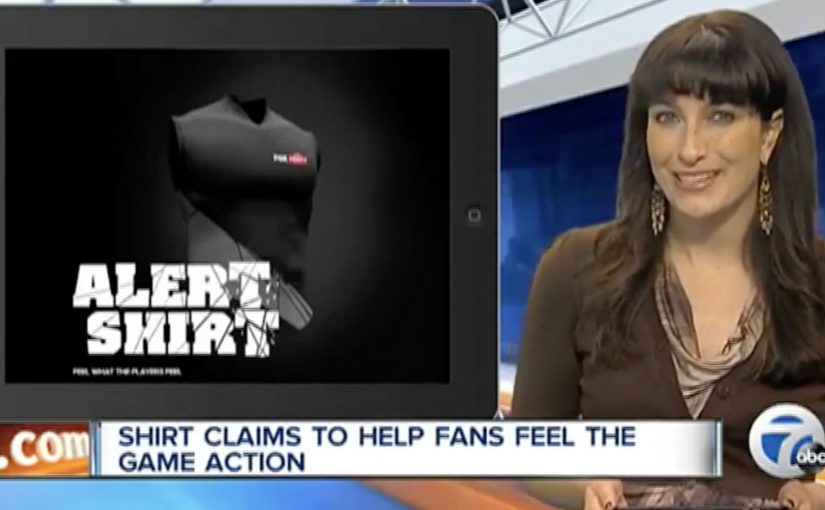
In September 2012, London fashion house CuteCircuit launched a wearable, sharable, programmable tshirt. Then in 2013, Durex Australia unveiled their wearable electronic underwear that allowed touch to be transferred over the internet. Now joining this growing trend of wearable electronic clothing is the Alert Shirt from Australian telecommunications company Foxtel.

Loyal Foxtel customers can use this special shirt to experience in real time some of the physical sensations their favorite players have on the field, including:

  • Pressure: A thumping heartbeat
  • Impact: The shock of a big hit
  • Adrenalin: An intense rush of blood
  • Exhaustion: Lungs burning with effort
  • Despair: A sudden sinking feeling

The data is transmitted via Bluetooth from smartphone app, and the shirt is powered by a lithium polymer cell battery.

From second-screen to second-skin

The mechanism is a clean translation layer. Live game moments are captured as data, the app receives them, and the shirt turns those signals into physical feedback. The experience is not about watching harder. It is about feeling the sport in parallel with the broadcast.

In subscription sports media, the strategic job is retention. The best fan experiences make the service feel like access to something you cannot get anywhere else.

Why it lands

This idea works because it turns fandom into a bodily cue, not just a viewing habit. It also frames “technology” as something you wear once, then forget. When it is working, the interface disappears and the sensation becomes the message.

Extractable takeaway: If you want to deepen engagement, do not add more features to the screen. Translate key moments into a new sensory channel that runs alongside the core experience, and make activation as close to effortless as possible.

What Foxtel is really testing

Beyond the spectacle, this is a trial of emotional stickiness. By emotional stickiness, the point is simple: give fans a stronger felt reason to come back for the live broadcast. The real question is whether that added intensity is strong enough to make Foxtel feel like the only place to experience the match properly. If the shirt can make a live match feel more intense at home, it creates a reason to watch live, to watch longer, and to choose the broadcast that supports the experience.

What sports broadcasters can steal from this

  • Design the sensation vocabulary. Map data to feelings in a way users can understand instantly.
  • Make the phone a bridge, not the destination. Use the app to pair and translate, then let the wearable carry the moment.
  • Keep the promise specific. Heartbeat, hit, exhaustion. Concrete signals beat vague “immersive” claims.
  • Build for live viewing. The value rises when timing is tight and the feedback feels synchronous.

A few fast answers before you act

What is the Foxtel Alert Shirt?

It is a connected shirt that receives live match signals via a Bluetooth smartphone app and converts them into physical sensations so fans can feel key moments in real time.

What problem does it solve for a broadcaster?

It makes the broadcast feel exclusive and more emotionally intense, which can support loyalty and repeat live viewing.

Why use physical sensations instead of more on-screen stats?

Because sensations do not compete with the main viewing experience. They add a parallel layer without asking the fan to look away.

What makes this kind of wearable feel credible?

Clear mappings between events and sensations, low setup friction, and tight timing so feedback feels connected to the moment.

How can another brand apply the pattern?

Choose a live experience with high emotion, capture a small set of meaningful signals, then translate them into a simple, repeatable sensory vocabulary.