
Heineken: UEFA Giveaway

Heineken: UEFA Giveaway

Here are two campaigns that Heineken created in Europe to give away seats for the UEFA Champions League finals in London last month.

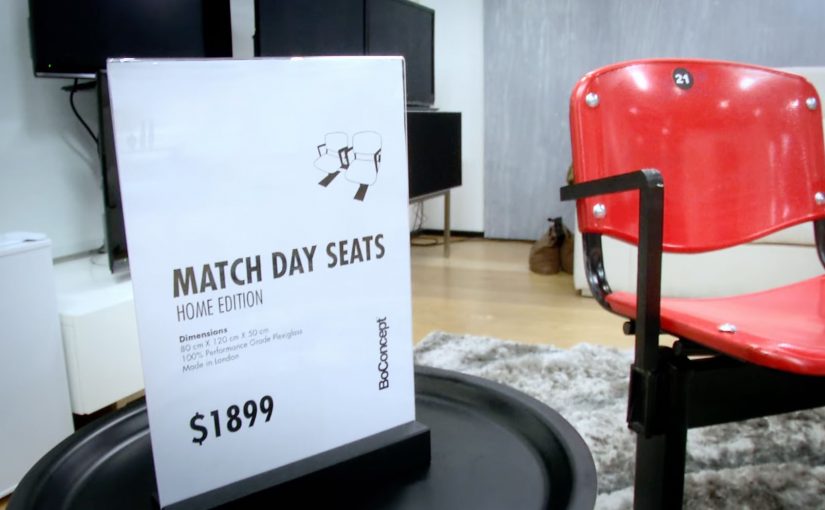
Heineken: The Negotiation

Heineken challenged football fans at a furniture store in the Netherlands to convince their ladies to buy a $1899 set of plastic stadium chairs for their home. If they managed to pull it off, they would win a trip to the final. The result:

Heineken: The Seat

In Italy, Heineken hid 20 tickets under 20 Wembley seats and spread them around Rome and Milan. Fans then had only one hour to find them and secure their place at the final. The result:

Two different mechanics, one sponsorship objective

Both ideas do the same strategic job. They make the sponsorship feel like something you can play, not just something you watch. Here, a mechanic is the simple set of rules that turns a giveaway into a game.

In European consumer brands, the cleanest giveaway mechanics turn sponsorship into something fans do, not just something they see.

The real question is how you turn a scarce prize into a story people repeat without you paying for distribution.

In European football sponsorship, ticket scarcity is a powerful emotion. Brands win when they turn that emotion into participation that fans can retell in one breath.

Why these promos travel so easily

Both promos travel because the giveaway is inseparable from the story. You do not share “I won tickets”. You share the rule that made winning possible.

Extractable takeaway: If the prize is scarce, design the giveaway so the mechanic is the headline, and the brand is the quiet sponsor of the moment.

The Negotiation works because it stages a recognisable domestic conflict and turns it into a public challenge. You do not have to care about Heineken to enjoy the tension. You just need to recognise the situation.

The Seat works because it feels like a real-world game with an unfair advantage for the most alert fans. A one-hour window and a physical search turns “tickets” into a quest, and the city becomes the interface.

Giveaway mechanics worth copying

  • Do not just “give away”. Build a mechanic that proves fandom or commitment in a fun way.
  • Make it legible in five seconds. If people cannot explain the rules instantly, the idea will not spread.
  • Use time pressure carefully. A short window creates urgency, but it must still feel fair.
  • Let the prize stay pure. The reward is the story. The brand should be the enabler, not the gatekeeper.

A few fast answers before you act

What is the core mechanic in Heineken’s Negotiation?

A persuasion challenge staged in a real retail environment. The couple dynamic is the entertainment engine, and the prize converts the tension into a payoff.

Why does a scavenger hunt work for high-demand tickets?

Because it turns passive desire into active effort. The search itself becomes the content, and the winners feel like they earned the prize rather than being randomly selected.

What is the main sponsorship benefit of campaigns like these?

They convert a sponsorship from branding to experience. The brand becomes part of how fans remember the final, not just a logo around it.

What is the biggest risk with “race” mechanics?

Perceived unfairness. By “race mechanics” here, I mean time-boxed contests where speed and timing determine winners. If the rules, locations, or timing feel stacked, the conversation flips from excitement to frustration.

What should you measure beyond video views?

Look for participation rate, speed of uptake, earned media pickup, and how often people retell the mechanic in social posts. Those indicate whether the idea actually travelled.
Roman Atwood: The World’s Most Contagious Prank

Roman Atwood: The World’s Most Contagious Prank

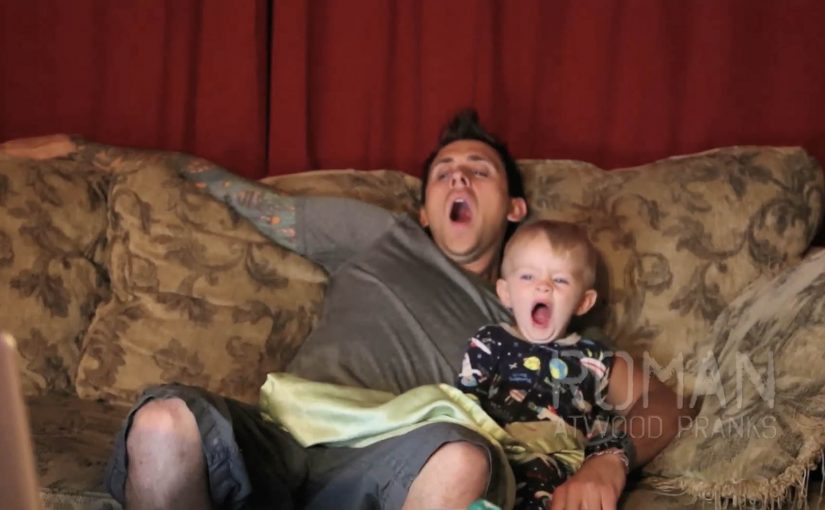
Here is an infectious yawning video created by YouTuber Roman Atwood. Try watching this nearly three minute clip of constant yawning without letting one loose yourself. I could not help but yawn while watching it.

The simplest mechanism in the world

The mechanism is pure mimicry and suggestion. You see a yawn. You anticipate a yawn. Then your body does the rest. The prank is not about shock. It is about stacking the same trigger again and again until your reflex gives in.

In social video, simple human reflexes and repeatable triggers can outperform high production because the viewer feels personally involved.

Why it lands

This works because it turns the viewer into the subject. The content is not only “watch someone yawn”. It is “can you resist”. That tiny competitive frame, a simple self-test with a clear pass-or-fail outcome, creates attention, and attention makes the reflex even harder to ignore. The real question is how you turn a passive viewer into an active participant with almost no friction. The smarter lesson for marketers is that participation can beat production value when the trigger is immediate and universal.

Extractable takeaway: If you can anchor a video around a universal, involuntary response and wrap it in a clear challenge, the audience participates while they watch. Participation is what makes the clip shareable.

How to build your own contagious challenge

  • Start with the reaction you want: pick a response that is immediate and universal, then build backwards.
  • Use repetition with purpose: one trigger is a gag. Many triggers become a challenge.
  • Make the premise explainable in one sentence: “watch this without yawning” is the whole pitch.
  • Let viewers test themselves: self-tests create comments, shares, and rematches.
  • Keep it short and focused: the tighter the loop, the stronger the contagion.

A few fast answers before you act

What is “The World’s Most Contagious Prank”?

It is a yawning prank video where the creator yawns repeatedly in public to see if bystanders and viewers “catch” the yawn reflex.

Why do people share videos like this?

Because the challenge frame is social. People want to test friends, compare reactions, and prove whether they can resist.

Is this a prank or a social experiment?

It sits in between. It uses a prank setup, but the entertainment comes from observing a predictable human reflex spread from person to person.

What is the key lesson for video marketing?

Design around a specific viewer response, then make the viewer feel like the outcome depends on them.

What is the main risk of copying this format?

If the trigger is not truly universal or the loop feels repetitive without payoff, people drop off quickly. The mechanic has to be instantly felt, not only understood.

Hello bank!: The Mobile Orchestra

Hello bank!: The Mobile Orchestra

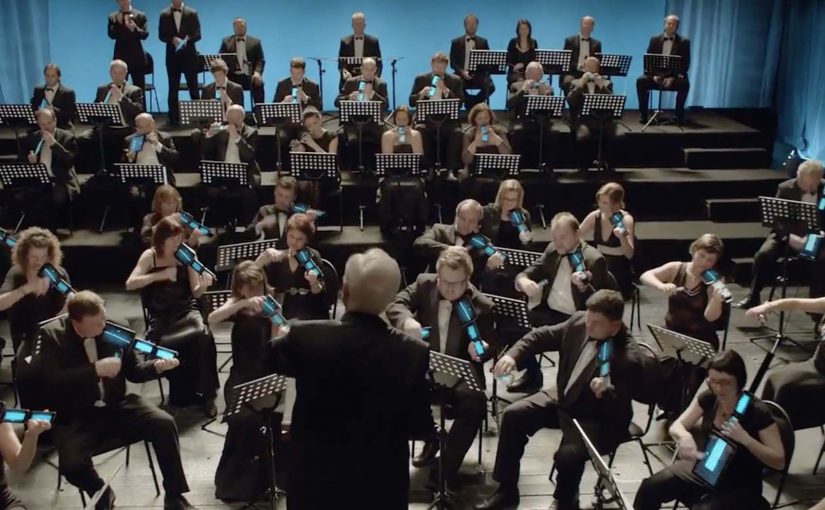
To promote Hello bank!, BNP Paribas and agency B-Roll wired up 60 musicians in the Czech National Symphony Orchestra with smartphones and tablets for a rousing rendition of “Carmen.”

A bank launch that uses devices as instruments

Hello bank! is positioned as an “all-digital” bank in Europe, and the launch film turns that idea into a performance. BNP Paribas and agency B-Roll wire up 60 musicians in the Czech National Symphony Orchestra with smartphones and tablets and stage a rousing rendition of “Carmen.”

The mechanism is not an app demo. It is a symbolic proof. The devices that usually represent distraction and notifications become part of the orchestra, implying that “digital” can be disciplined, coordinated, and human when it is designed well.

In European financial services launches, differentiation is often abstract, so the work has to make the promise visible.

Why it lands

This works because it treats technology as an instrument, not a feature list. Orchestras are the opposite of chaotic. They are synchronized systems where every signal matters. That metaphor is useful for a digital bank that wants to feel trustworthy while still modern. You should lead with a credible system metaphor like this when feature claims would sound generic.

Extractable takeaway: When your product benefit is invisible, translate it into a physical system people already associate with reliability. A performance can do what a product explainer cannot. It makes the promise feel real.

What the brand is really trying to say

Hello bank! is telling the market that “digital-first” does not have to mean cold or fragile. The orchestration suggests competence, control, and a new kind of everyday convenience that still sits on serious infrastructure.

The real question is whether your “digital-first” promise is legible without an app screen.

Moves to borrow for your next launch film

  • Choose a metaphor with built-in credibility. Orchestras communicate precision and trust without needing a voiceover.
  • Let tech be a prop, not the plot. Devices appear, but the story is about what they enable.
  • Make the proof visible. A claim becomes believable when it has a physical analogue the audience can instantly read.
  • Keep the idea retellable. “A symphony played on smartphones and tablets” is enough to earn a click.

A few fast answers before you act

What is the Hello bank! “Mobile Orchestra” campaign?

It is a launch film where the Czech National Symphony Orchestra performs while using smartphones and tablets as part of the instrumentation, created to symbolize Hello bank!’s digital-first positioning.

Why use an orchestra to communicate a bank promise?

Because orchestras represent coordination and reliability. That meaning transfers well to a digital bank that must feel safe while being modern.

Is this an app demo or a brand story?

It is primarily a brand story. The devices are a metaphorical proof of “digital” rather than a walkthrough of product features.

What makes this shareable as branded content?

The premise is instantly understandable and visually unusual. People click to see how it is done, and the brand benefit travels inside the spectacle.

How do you keep a metaphor like this from feeling gimmicky?

Tie the spectacle to a meaning people already trust, then keep the execution disciplined so the “proof” reads as competence, not randomness.