
Flashback Book Facebook App

You scroll through years of Facebook updates, realise how quickly your best moments disappear into the feed, then hit a button to turn them into something you can actually keep. Flashback Book takes your statuses and photos and produces a printed Facebook book you can hold.

The brief. Launch a Facebook platform without the usual gimmicks

Bouygues Télécom asks ad agency DDB Paris to come up with an idea to launch their Facebook platform. The goal is to go beyond using profile pictures in a funny way, or pranking friends with small jokes.

The insight. We post every day, then forget what we shared

DDB looks at the way we use Facebook and finds a simple truth. Even though we use the social networking site every day, we forget our favourite moments we share online. So they create an app that changes that, and keeps Facebook, in a book.

How the Flashback Book is created

Facebook ads engage people to participate in the creation of their books and receive a printed copy of their statuses and photos. You can also choose up to 10 friends to add into your book, as well as the desired timeframe, whether it is your birthday, your wedding, or from the very beginning of your profile.

That works because a few simple choices turn passive scrolling into light curation, which makes the printed outcome feel personal without making the experience feel like work.

Why turning the feed into a book lands

The real question is how you make a social platform feel valuable when most social content is designed to disappear into the next post. The answer here is to turn forgotten updates into a keepsake. This is a smarter launch move than another lightweight Facebook stunt because it gives people something worth finishing.

Extractable takeaway: When people feel their digital history is worth preserving, participation stops feeling like promotion and starts feeling like recovery.

In social platforms built on endless feeds, one durable way to create value is to convert personal traces into something people can keep, gift, or revisit.

After only two days they receive 15000 fans, and the limited edition of 1000 books are gone in only an hour.

What to steal from turning social memories into products

  • Turn the feed into a tangible artefact. A physical output makes “I should do this later” become “I want this now”.
  • Let users curate with a few meaningful choices. Timeframe and included friends are enough control to feel personal without slowing the flow.
  • Use life events as the organising logic. Birthdays and weddings are natural prompts for reflection and gifting.
  • Make the reward feel scarce and real. A limited edition run pushes completion and makes the outcome feel worth the effort.

A few fast answers before you act

What is Flashback Book in one sentence?

It is a Facebook app concept that turns your statuses and photos into a printed book, so your favourite moments live outside the feed.

What choices does the user control?

You choose the timeframe and can include up to 10 friends, which makes the book feel personal and event-based rather than generic.

Why does a physical book work as a social idea?

Because it flips ephemera into permanence. It turns “endless scrolling” into a curated artefact you can keep, gift, and revisit.

What is the key execution lesson here?

Make participation lightweight and the output tangible. When the reward is a real object, the motivation to complete the flow increases.

What makes the experience feel personal without becoming slow?

The user only chooses a timeframe and up to 10 friends. That gives enough control to feel personal without turning the flow into a long editing task.
Orange UK: Singing Tweetagrams

When “say it on Twitter” becomes “say it in song”

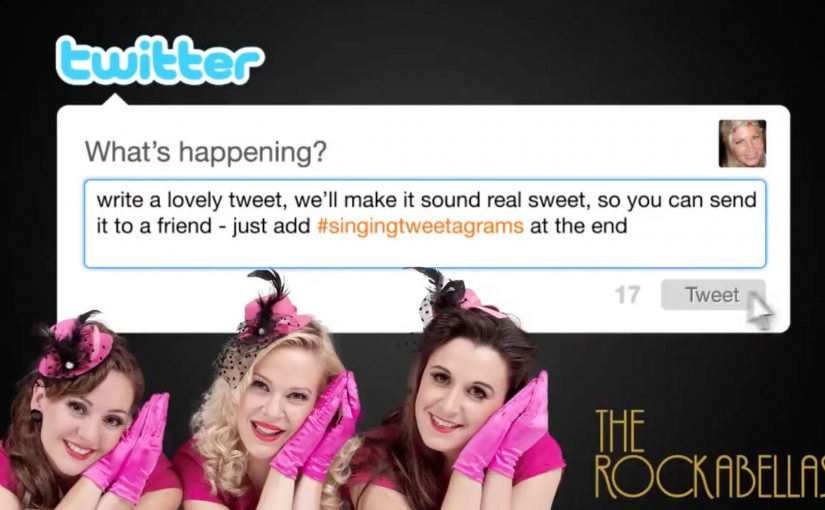
Got a friend who needs cheering up? Or maybe you just want to tell them that you love them, miss them, or really like their new haircut. Now you can say it with Orange UK’s new singing tweetagram. In this activation, a tweetagram is a short tweet that gets turned into a personalized song you can share.

The mechanic: hashtags in, custom songs out

It works like this. You write the tweetagram message to someone, adding the hashtag #singingtweetagrams. Orange then picks the best ones and has the Rockabellas record the message in song within a few hours. Orange then uploads the song and tweets it to you with a link, so you can send it on to the person.

A tweetagram is a short message written in the native language of Twitter, then converted into a personalized media artifact that feels like it was made for one person.

In consumer social marketing, the strongest hashtag activations reward participation with a tangible output that people can share without extra explanation.

Why it works: the reward is the content

The clever part is that the prize is not a discount or a badge. The prize is the thing you actually want to share. This is a smart activation because it turns participation into a gift-like artifact people actually want to pass on. A custom song is inherently gift-like, and it gives the sender social credit while giving the receiver a genuine moment.

Extractable takeaway: If you can turn a native platform input into a fast, polished, personal artifact, the reward becomes the share, and the experience travels without extra persuasion.

This also reduces the usual user-generated content risk. Users write the raw line, but the brand controls selection, production, and final output quality.

When a brand turns a user’s message into a polished artifact and returns it quickly, it converts “engagement” into a keepsake. That creates higher motivation to participate and higher likelihood of forwarding.

The operational question: can Orange produce at internet speed?

The question will be whether they can keep up the pace set by Wieden + Kennedy in its Old Spice effort, which was described at the time as producing more than 180 videos in a couple days and pumping out responses nearly immediately. The real question is whether Orange can keep the “within hours” turnaround feeling real at scale.

That comparison matters because the magic is not only the idea. It is the turnaround time. If the lag feels slow, the moment passes and the sender stops feeling clever for trying.

Steal this pattern: hashtag-to-song rewards

  • Make the output unmistakably personal. Names, in-jokes, and direct address beat generic templates.
  • Return value fast. “Within hours” is part of the product, not a service detail.
  • Keep creation native. Let people use the platform behavior they already know. Here it is a tweet plus a hashtag.
  • Curate to protect quality. Selection is a feature. It keeps the final artifacts share-worthy and on-brand.

A few fast answers before you act

What is Orange UK’s Singing Tweetagrams campaign?

It is a Twitter-based activation where people post a message with #singingtweetagrams. Orange selects some messages and has the Rockabellas record them as short personalized songs, then sends the result back as a shareable link.

Why is “speed” so important in this format?

Because the sender’s motivation is tied to the moment. Fast turnaround keeps the interaction feeling live, current, and socially relevant.

What role does curation play in making it work?

Curation protects output quality and brand tone. Users provide raw inputs, but the brand controls which messages become finished content.

How is this different from typical user-generated content contests?

The reward is not external. The reward is the finished content itself, which is designed to be shared and kept.

What is the biggest execution risk?

Production bottlenecks. If demand outpaces recording capacity, turnaround slows and the concept loses the real-time feeling that drives participation.

UNIQLO: Lucky Machine Social Pinball Launch

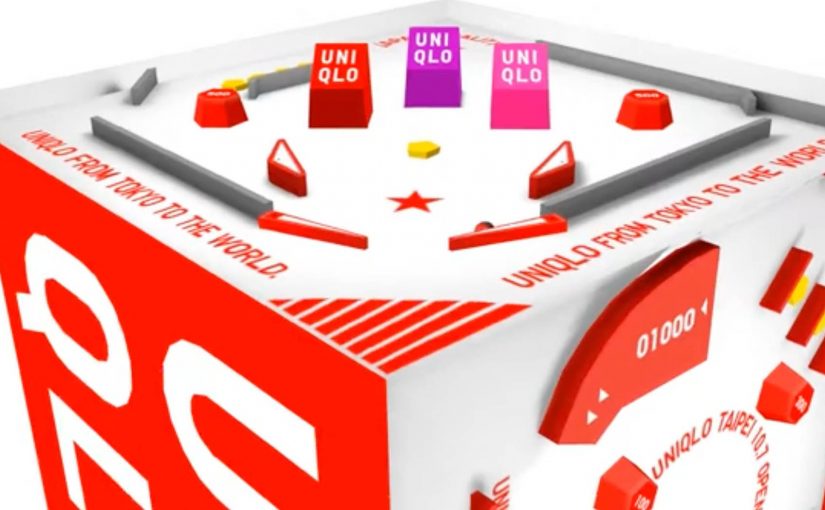
Here is another cool digital campaign from UNIQLO, this time they are promoting the launch of their new UK store via an online pinball machine (built in Papervision) that is socially connected.

You start with a single ball, but on connecting with Facebook you get a bonus 3 to help you climb the leader board for a share of thousands in prizes.

UNIQLO are well known for their digital campaigns and this once again hits the mark, providing a seriously simple pinball machine that feels so easy to master that you’ll be there, racking up some great brand engagement time over the campaign.

Why a simple game is a strong store-launch mechanic

A new store opening is a local moment. A game turns it into a repeated behavior. If the experience is light, fast, and replayable, it can generate more total attention than a one-off announcement.

Extractable takeaway: For store launches, a lightweight replay loop can compound attention over days, not just spike it once.

  • Instant entry. You can play immediately without committing time to learn.
  • Built-in replay loop. “One more try” is the whole point of pinball.
  • Competition creates stickiness. Leaderboards turn casual play into a goal.

Social connection as a value exchange

The Facebook connection is not framed as “follow us”. It is framed as a direct advantage in the game. Extra balls. Better odds of climbing the leaderboard. A clearer path to prizes. Here, the value exchange is simple: you trade a Facebook connection for immediate in-game advantage.

That is the important shift. Social is not an add-on. It is a gameplay benefit, which makes the opt-in feel earned rather than demanded.

The real question is whether your “social” step feels like friction, or like a fair trade that makes the experience better.

What this teaches about gamification done properly

  1. Keep the mechanic obvious. If people do not understand how to win, they leave.
  2. Reward the right action. Extra balls is a reward that directly improves the experience.
  3. Make progress visible. Leaderboards and scores give people a reason to return.
  4. Make prizes feel real. A “share of thousands” is a tangible incentive that fits the competitive loop.

In retail launch marketing, a simple replay loop can outperform a big announcement because it turns curiosity into time spent.

What to take from this if you run retail or digital campaigns

  1. Design for time spent, not just reach. A replayable game builds engagement minutes, not impressions.
  2. Use social as a functional advantage. Tie opt-ins to benefits users actually value.
  3. Let the format do the messaging. A campaign that is fun is a campaign people return to voluntarily.
  4. Keep the barrier to entry close to zero. The simpler the first 10 seconds, the better the retention.

A few fast answers before you act

What is UNIQLO “Lucky Machine”?

It is a socially connected online pinball game built to promote the launch of a new UNIQLO UK store, with leaderboards and prizes.

How does Facebook connection change the experience?

Connecting with Facebook gives players a bonus three balls, improving their chances to climb the leaderboard and compete for prizes.

Why is pinball a good format for engagement?

It is quick to start, easy to replay, and naturally encourages “one more try”, which increases time spent with the brand.

What is the main growth mechanic?

A simple value exchange. Social connection provides a direct gameplay advantage, which drives opt-ins without heavy persuasion.

What is the transferable lesson for campaign design?

If you want engagement time, choose a format that is inherently replayable, then attach social behaviors to real user benefits.