
Live interactive billboard against agression

Live interactive billboard against agression

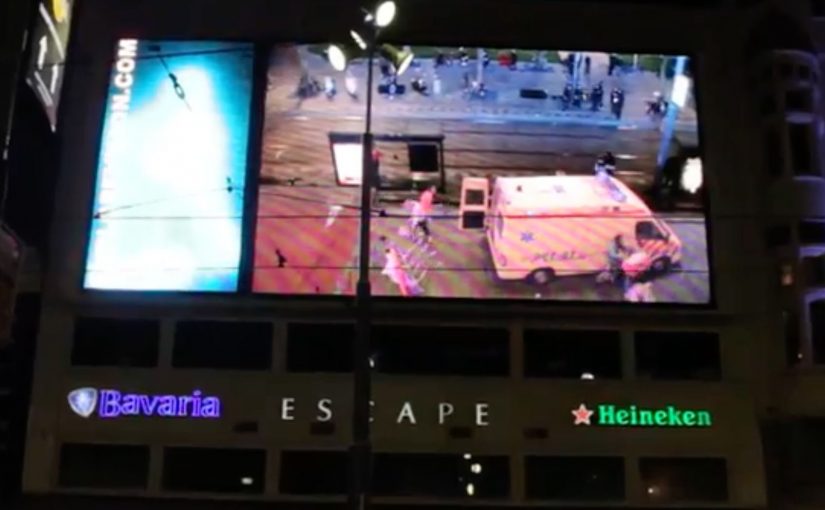
You walk past a giant outdoor screen in Amsterdam or Rotterdam and suddenly find yourself inside a street-violence scenario. Public service employees in the Netherlands face aggression and violence on the streets more and more often. Onlookers unfortunately do not intervene often enough when they encounter a situation like this. A live interactive billboard places people in a similar situation and confronts them with their inactivity.

Here, “live interactive” means recorded confrontation scenes are blended with a real-time street feed so passers-by appear inside the event.

What the billboard is designed to trigger

This is not entertainment. It is a public-awareness intervention. It puts the bystander role on display and forces a moment of self-recognition. If you do nothing, you see yourself doing nothing. The campaign intent is to turn passive awareness into a stronger sense of responsibility when aggression happens in public.

How the “live” effect is created

The experience blends previously recorded footage with a live street feed, so passers-by feel like the scenario is happening in their space, with their presence in the frame.

Why this works as a behaviour nudge

Because the live blend moves people from observer to participant, it turns an abstract social issue into a personal moment, and that is why the message sticks. In public-sector behaviour-change work, the hard part is not awareness alone but making bystanders feel immediate personal responsibility before the moment passes.

Extractable takeaway: When a campaign can place people inside the consequence of their inaction, reflection becomes harder to avoid and the desired behaviour feels more immediate.

The real question is how to make passive witnesses feel accountable before the moment passes.

For serious behaviour-change topics, participation works better than passive messaging when the mechanic stays clear and the context feels real.

What behaviour-change teams can borrow

  • Put the audience inside the situation. When people recognise themselves in the moment, the message stops being abstract.
  • Use context as the trigger. A street setting and a live feed make the behaviour question feel immediate, not theoretical.
  • Design for self-recognition, not spectacle. The point is reflection and responsibility, not entertainment value.
  • Keep the mechanic explainable in one line. If the concept cannot be repeated quickly, it will not travel beyond the location.

A few fast answers before you act

What is this interactive billboard trying to change?

It targets bystander inaction. It makes people aware of how often they do not intervene when witnessing aggression and violence against public service employees.

Why use “live” interaction instead of a normal poster?

Because the live element increases personal relevance. When people recognise themselves in the situation, the message becomes harder to dismiss as “someone else’s problem”.

What is the core mechanic in one line?

A staged violence scenario is combined with a live feed so passers-by see themselves present in a situation that calls for action.

When is this approach appropriate for brands or public bodies?

When the goal is behaviour change, not awareness alone, and when the topic is serious enough that participation creates reflection rather than trivialisation.

What has to be true for this format to work?

The blend between staged footage and live context has to be instantly legible. If people cannot understand the setup quickly, the reflection moment is lost.
A Non Smoking Generation: Ugly Models

A Non Smoking Generation: Ugly Models

A teenage girl applies to a glamorous new modelling agency called “U-Models”. She fills in her age, height, and other details, uploads a photo, and waits for the call-back.

Then the twist lands. “U-Models” is revealed as “Ugly Models”, and the campaign’s message is blunt: smoking doesn’t just damage you in the long run. It shows up on your face, sooner than you think.

A fake model search that weaponises the application form

The execution is built like a real talent hunt. Recruitment happens online, and the “application” is the product. Applicants are asked for basics like age and an uploaded photo. Smoking status is part of the form, too.

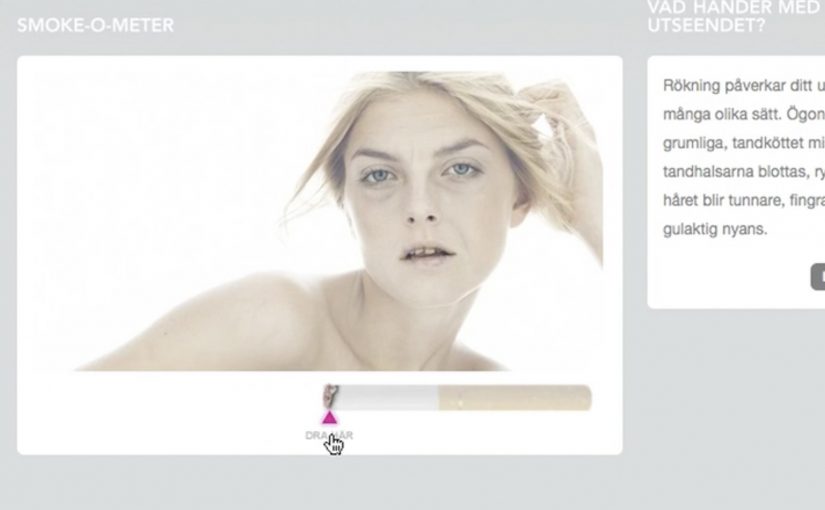
After the sign-ups, the campaign responds at scale. Applicants are told they are “too cute” for this agency because it is looking for “ugly models”. They are then shown a retouched version of their own photo that visualises how they might look after years of smoking.

How it turns a health warning into personal evidence

Most anti-smoking messages rely on abstract futures: disease, risk, statistics. This one drags the consequence into a mirror. It converts “smoking is harmful” into “this is what it can do to you”, using the viewer’s own face as proof, and using the modelling world as the attention hook.

In Scandinavian youth health communication, campaigns often have to compete with fashion and celebrity culture for attention.

The real question is how you make a long-term health risk feel socially immediate to a teenager.

Why it lands with the target group

The psychological move is simple: it swaps distant health outcomes for immediate social stakes. For teenagers, “identity now” usually beats “health later”. The campaign borrows the exact mechanics young audiences already understand. Casting calls, celebrity endorsement, online applications. Then it flips those mechanics into an uncomfortable reveal that is hard to unsee. That works because a personalised image collapses an abstract warning into an immediate identity threat.

Extractable takeaway: If your audience discounts long-term risk, translate the consequence into a near-term identity signal, and make the “proof” feel personally addressed rather than generally broadcast.

The intent, and the ethical edge you can’t ignore

This is a deliberately provocative form of social marketing. It uses deception, and it leans on appearance anxiety to get attention. That friction is part of the spread. People talk about it because it feels shocking, and because it breaks the usual public-service tone.

The pattern is effective, but it should only be used where the public-good case is strong and the safeguards are explicit. If you borrow the pattern, borrow it with care. The line between “wake-up call” and “harmful shaming” is thin, especially when the audience is young. The execution works because it is sharp, but it also raises real questions about consent, data handling, and emotional impact.

What to steal for your next behavior-change idea

  • Use a familiar cultural container. Here it is modelling and celebrity culture. Pick a container your audience already pays attention to.
  • Make the interaction do the persuasion. The form, the upload, and the response are the message. Not the headline.
  • Deliver a personalised “receipt”. The retouched photo turns a general warning into concrete evidence.
  • Design the reveal as the share trigger. The moment of “wait, this isn’t what I thought” is the social fuel.

A few fast answers before you act

What is “Ugly Models” in this context?

It is an anti-smoking campaign framed as a modelling recruitment drive called “U-Models”, later revealed as “Ugly Models”, designed to warn teenagers about the visible impact smoking can have on appearance.

How does the campaign mechanism work?

Teenagers apply online to a supposed model agency and upload a photo. The campaign then responds with a reveal message and a retouched version of the applicant’s own photo that visualises the effects of smoking over time.

Why is the personalised photo so powerful?

Because it turns a general warning into something that feels directly attached to the viewer’s own identity. The consequence stops being abstract and starts feeling immediate, visible, and personal.

Why focus on appearance instead of health consequences?

The idea is that long-term health warnings are often ignored by teenagers, while near-term identity and appearance cues are harder to dismiss. The campaign makes the risk feel immediate and personal.

What’s the main risk in copying this approach?

The tactic uses deception and can slide into shaming. If the audience is young, you need extra care around consent, safeguarding, and avoiding harm while still delivering a clear public-good message.