

NIVEA: Deo Stress Test

A woman waits in an airport lounge. A newspaper lands nearby. Her face is on the cover, framed as a dangerous suspect. Seconds later, a TV broadcast repeats the same “wanted” story. The room shifts. People stare. The pressure spikes.

This is the “Stress Test” prank used to launch NIVEA Deo Stress Protect in Germany. The set-up covertly photographs real passengers, then inserts their images into a rapid sequence of believable media moments. A fake front page. A fake news segment. A looming “security” approach. Then the reveal. The suitcase opens and the product appears as the punchline.

In European FMCG launches, where functional claims are easy to ignore, a live stunt can turn a product benefit into a story people retell.

Prankvertising is a brand activation that creates a real-world surprise for unsuspecting participants, then packages the reaction as content. It only works when the prank is tightly controlled, the audience understands the logic, and the reveal cleanly connects the stress to the product promise.

Turning “stress sweat” into something you can feel

Stress-induced sweating is hard to demonstrate in advertising without sounding clinical. This campaign solves that with one blunt translation. Make stress visible. Make it public. Make it uncomfortable. Then position the deodorant as the relief valve.

Why this landed, and why it drew criticism

The mechanism is instantly legible, so viewers stay for the reactions. But that same realism creates a risk. If the line between tension and harm feels too thin, the brand gets attention for the wrong reason. Trade coverage at the time noted both the viral momentum and the backlash, which is the trade-off with high-intensity stunts.

What to steal, without inheriting the downside

  • Anchor the stunt to a single product truth. Here it is stress. Everything in the sequence reinforces it.
  • Make the reveal unmissable. The product has to arrive as the resolution, not as an afterthought.
  • Design an ethical escape hatch. Keep the duration short, avoid escalating beyond what you can safely control, and ensure participants are cared for immediately.
  • Pre-plan the criticism. If you choose fear as a lever, you must be ready to justify it and explain safeguards.

A few fast answers before you act

What happens in the NIVEA Deo “Stress Test” airport prank?

Unsuspecting passengers are covertly photographed and then confronted with fake media outputs that portray them as “wanted”. The tension builds until the reveal introduces NIVEA Stress Protect as the relief and the message.

What product benefit is this trying to dramatize?

Stress-induced sweating. The activation makes stress feel immediate and physical, then frames the deodorant as protection in high-pressure moments.

Who created the campaign?

It is credited to Felix & Lamberti (Hamburg, Germany), with production credits listed in trade write-ups, and Labamba is commonly referenced as a partner in the execution and case material.

Why do stunts like this go viral?

They compress a clear story into a few minutes. Viewers understand the situation instantly, then watch for human reactions and the reveal.

What is the biggest risk with prankvertising?

Brand damage from perceived cruelty or unsafe escalation. If the audience thinks you harmed people for clicks, the message flips from “clever” to “reckless”.
Strongbow Gold: StartCap Bottle Top

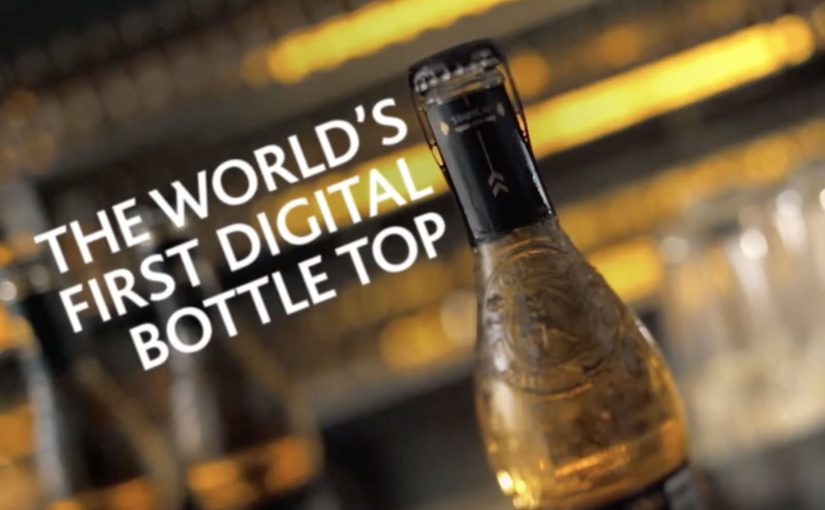
Strongbow Gold is testing what is being billed as the world’s first digitally enabled bottle top. Trigger it, and the bottle top activates a surprise designed to make the night feel more refreshing, more unexpected and more exciting.

For its first public appearance, the Strongbow Gold team rigged an entire bar in central Budapest with RFID readers, antennas and wires. Then during the night, StartCap triggered a string of memorable activations.

A bottle that behaves like a remote control

The core mechanism is packaging as a trigger. An RFID element in the cap signals nearby readers when the bottle is opened, and that signal kicks off a pre-set sequence in the environment, lights, music, props, anything the system is wired to control.

In European FMCG brand launches, connected packaging is a direct way to turn a product claim into a lived experience because the consumer action, opening the bottle, becomes the start button for the story.

Why this lands in a bar context

Bars already run on anticipation. People are there for the next moment. StartCap simply makes that “next moment” programmable, and ties it to the brand in a way that feels earned rather than announced.

It also builds social energy without forcing “sharing” prompts. When something unexpected happens in a shared space, people naturally look up, react, and talk. The product becomes the cause of the reaction.

What the brand is really proving

This is less about a new cap and more about a new role for the brand. Strongbow Gold positions itself as the catalyst for a better night out, not just a drink choice. The technology is the proof device that makes that positioning tangible.

What to steal for your next connected-packaging idea

  • Make the trigger unavoidable. Opening, pouring, unwrapping. The action must be natural.
  • Design for surprise, not complexity. One clean signal, one clear payoff, then scale the choreography.
  • Use the environment as media. If the space reacts, you earn attention without buying more screens.
  • Keep it safe and reliable. In live venues, failure is public. Redundancy matters.

A few fast answers before you act

What is StartCap in one sentence?

A digitally connected bottle top that uses RFID to trigger events in the surrounding environment when the bottle is opened.

Why is packaging-triggered tech so effective?

Because it links the brand to a physical action the consumer already performs. The experience starts at the product, not at an ad.

What is the biggest risk with “connected bar” activations?

Operational fragility. If sensors misread, activations lag, or the venue is too noisy to notice outcomes, the magic disappears.

Does this need a smartphone app to work?

Not necessarily. This model can be environment-driven. The venue infrastructure can detect the trigger and run the experience without asking the guest to install anything.

What should be measured to judge success?

Participation rate, repeat triggers per guest, dwell and sentiment in the venue, plus any post-event lift in brand consideration and trial.

Waternet Queen’s Day Challenge: Pee Race

Turning a messy problem into a canal-side race

Queen’s Day in Amsterdam brings huge crowds and heavy celebrations. It also brings a very practical problem for Waternet, the city’s water supplier: too many people treat the canals like a public toilet.

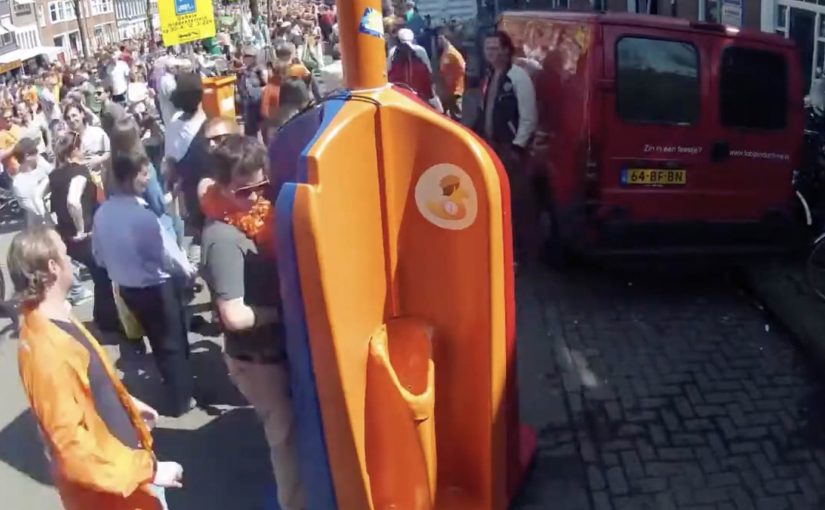
Instead of posting warnings, Waternet worked with Achtung! and installed several brightly colored urinals at different points along the canal. Each unit had four stalls and connected to a digital screen that turned peeing into a live race, with a simple incentive that makes people want to participate.

In crowded city-center celebrations, playful public interactivity often changes behavior faster than moralizing signage.

The mechanics that make it work

This is a strong example of ambient behavior-change design. Here “ambient” means the intervention lives in the environment, right where the decision happens, not in a banner ad or a TV spot.

It works because the feedback is immediate, the experience is social by default, and the “right” behavior feels more fun than the “wrong” behavior. That combination reduces friction and replaces shame with competition.

How to apply the pattern elsewhere

  • Move the message to the moment. Put the interaction where the behavior happens, not weeks earlier in a campaign feed.
  • Make the desired action the easiest action. People choose the path that feels obvious and frictionless in public.
  • Use visible progress. A shared screen and a simple scoreboard create instant social proof.
  • Reward participation, not perfection. Even a small, symbolic payoff can tip the choice at scale.

A few fast answers before you act

What is the Waternet Queen’s Day Challenge?

It is a Queen’s Day activation in Amsterdam where Waternet installs canal-side urinals and turns their use into a multiplayer race on a connected screen, discouraging people from urinating into the canals.

How does the “pee race” work?

Four stalls connect to a shared screen. Participants use the urinal and the screen visualizes a race, making the act feel like a public, competitive mini-game rather than a private necessity.

Why does this kind of gamification change public behavior?

It replaces a negative instruction (“don’t do this”) with a positive, easy alternative that gives immediate feedback and a social payoff, which is especially effective in crowded, high-energy settings.

What makes an ambient activation succeed in public space?

Clear purpose, low friction, instant comprehension, and feedback people can see without explanation. If it needs a guide, it usually fails on the street.

How can brands use this pattern without relying on shock value?

Keep the mechanism. Swap the provocation. Put the interaction at the point of decision, make progress visible, and attach a small reward to the behavior you want to encourage.