
Pepsi Like Machine

You walk up to the Pepsi’s “Like Machine”, tap “Like” for Pepsi on Facebook using your smartphone or the machine’s touchscreen, and it dispenses a soda. Simple rule. Instant reward.

The Like Machine mechanic

Coca-Cola has created a whole bunch of innovative vending machines over the last couple of years. Pepsi, on the other hand, created only a couple. Now to add to that collection, Pepsi piloted its latest vending machine. Dubbed the “Like Machine”, it was programmed to dispense soda to fans who “Like” the brand on Facebook via their smartphone or via the touchscreen on the machine.

For brands using event-led FMCG activations, the value of this mechanic is that it turns a familiar digital action into a visible physical conversion point.

The business logic is clear: tie a low-friction social action directly to a branded product moment.

Where did Pepsi pilot it

Pepsi piloted the machine at a Beyonce concert in Antwerp, Belgium and received a good response. So do not be surprised if you see more of them popping up nearby.

Why “Like” works as currency here

The exchange is clear. A lightweight social action becomes the trigger for a real-world payoff. The behaviour is familiar, the barrier is low, and the moment is easy to understand even in a noisy live-event setting. The real question is whether the action feels effortless enough to be worth doing on the spot. This is a smart activation rule because it converts a familiar digital gesture into an immediate physical reward, which reduces hesitation and lifts participation.

Extractable takeaway: When a brand uses a familiar low-friction action as the price of entry, more people complete the interaction because they understand the trade instantly.

What to steal from a like-for-reward mechanic

  • Make the exchange instantly legible. One action. One reward. No interpretation required.
  • Use a behaviour people already do. “Like” is familiar, so the barrier to participation stays low in a live setting.
  • Keep the payoff immediate. The shorter the gap between action and reward, the higher the completion rate.
  • Measure conversion, not just buzz. Track attempts, successful dispenses, and incremental social lift during the activation window.

A few fast answers before you act

What is the Pepsi Like Machine?

It is a vending machine that dispenses a Pepsi to people who like the Pepsi brand on Facebook, either via their phone or on the machine touchscreen.

Why test this at a concert?

Concert crowds are already in a high-energy mindset and open to quick interactions. That makes participation fast and visible, which boosts word of mouth.

Why does this mechanic work so quickly?

Because the rule is easy to grasp and the reward is immediate. People do not need extra explanation to decide whether to participate.

What is the simplest lesson to copy?

Make the rule obvious, the action effortless, and the reward immediate. If any one of those is slow or unclear, participation drops.

What should you measure?

Participation rate per hour, completion rate (start to dispense), and the incremental social lift tied to the activation window.
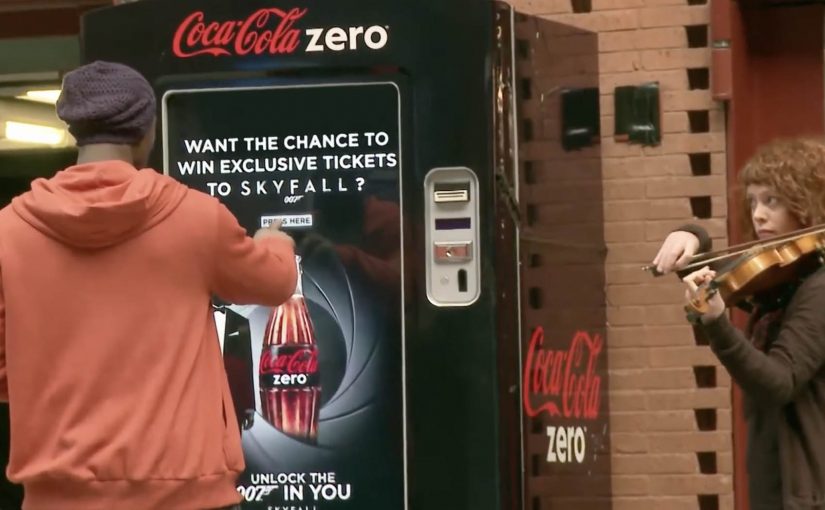
Coke Zero: Unlock the 007 in You

At Antwerp Central Station, Coke Zero challenges unsuspecting passengers to unlock the 007 in them for a chance to win exclusive tickets for the new James Bond movie Skyfall.

The catch is simple. The tickets aren’t free. You have to earn them by going the extra mile and completing the challenge in under 70 seconds.

A station takeover that turns waiting time into play

The setup is built for instant comprehension. A public space. A clear prize. A visible timer. A single instruction: move fast and stay cool.

That clarity matters. In a busy station, you do not have time to explain a brand story. You need a trigger that people understand in one glance and a mechanic that draws a crowd.

The mechanic: a timed “prove you’re 007” sprint

The experience is a countdown challenge. You step in, the clock starts, and you run a sequence of quick tasks designed to test speed, coordination, and composure. Finish within 70 seconds and you win.

This works because the timer turns a movie fantasy into visible stakes that both participants and bystanders can understand instantly.

In high-traffic transit hubs, timed challenges can turn waiting time into a shareable brand moment.

Why it lands: it makes the fantasy feel physical

Bond is not just a character. It is a posture: calm under pressure. The campaign translates that posture into something you can demonstrate with your body, in public, with a deadline.

Extractable takeaway: If your brand borrows meaning from a cultural icon, make the audience perform the meaning in a simple, timed ritual. A clock plus a visible finish line converts “cool story” into “I can do this”.

The station setting also does the work. People already have a reason to be there. The activation adds a burst of purpose to an otherwise idle moment, and the crowd reaction becomes part of the reward.

The business intent: earn attention that travels beyond the station

This is not a subtle idea. It is designed to be watched. Spectators gather, phones come out, and the experience becomes content. Even for people who do not play, the brand still wins a memorable association: Coke Zero equals fast, bold, and game-for-a-challenge.

The real question is whether you can turn borrowed cultural meaning into a public ritual people want to attempt and others want to watch.

What to steal from this timed station challenge

  • Start with a single rule: one sentence that explains how to win.
  • Use an obvious constraint: a countdown is the fastest way to create stakes.
  • Make it watchable: design for a crowd, not just the participant.
  • Reward participation, not perfection: the attempt should feel fun even if people fail.
  • Keep the prize culturally aligned: the reward should match the fantasy you are selling.

A few fast answers before you act

Why do timed challenges work so well in public spaces?

A timer creates instant stakes and makes the outcome easy to understand for both players and spectators. That clarity is what pulls a crowd in seconds.

What’s the core psychological hook in this activation?

It turns identity into action. You are not told to “feel like 007”. You are invited to prove it under pressure.

What should you measure for a stunt like this?

Footfall around the installation, participation rate, completion rate, average watch time for spectators, social shares per participant, and earned media pickup.

What’s the biggest execution risk?

Friction. If onboarding takes too long or rules are unclear, people will not step in. In transit environments, attention is short and drop-off is ruthless.

How do you adapt this idea without a movie tie-in?

Anchor the challenge to any role people want to inhabit: “be the expert”, “be the fastest”, “be the calm one”. Then translate that role into a simple timed sequence with a visible finish line.

EA Sports SSX: SSX Shakes

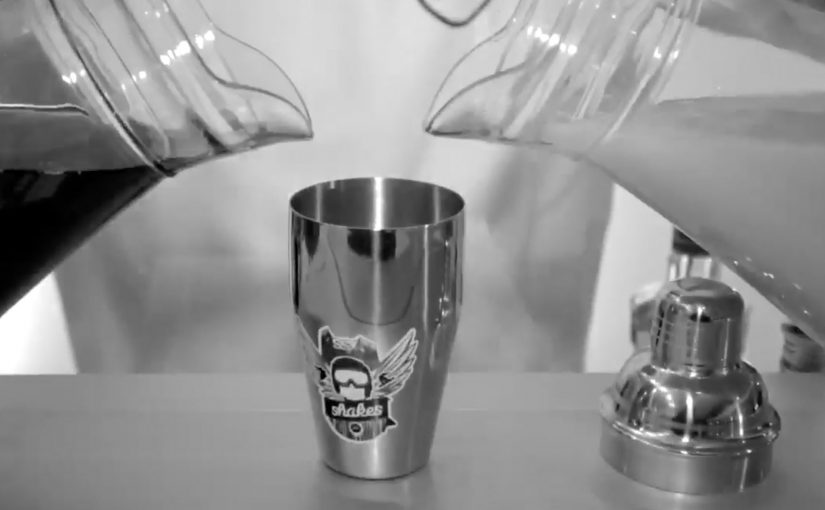
A cocktail order comes in, and a bartender does not reach for the shaker. A pro rider does. The drink gets “shaken” by performing the very snowboard trick it is named after, then handed over fresh to the guest who ordered it.

That is the core of SSX Shakes. A small, invitation-only pre-launch event in Belgium created to generate extra buzz and free press for EA’s SSX extreme snowboarding release on PlayStation and Xbox 360. Duval Guillaume Modem (Antwerp) stages the night around mood and shareability: music, a slope setup, a cocktail bar, riders, and hands-on game play.

How the mechanic turns into media

The mechanism is deliberately tight. Cocktails are named after specific snowboard tricks. Guests choose one. Riders perform the corresponding trick while holding the shaker, then deliver the finished drink. After the event, every blogger and journalist receives a personalised video showing the making of their own SSX shake, packaged for easy sharing with friends, fans, and followers.

In European games marketing where launches depend on earned coverage, the best activations create a photogenic proof point and a ready-to-publish asset for every attendee.

The real question is whether you can hand every attendee a personalised, ready-to-post asset that still feels native to the product story.

Why it lands

It collapses three jobs into one moment. It entertains in the room. It proves the SSX fantasy of trick-driven adrenaline in a physical way. Because the trick is also the “shaker”, the camera captures that fantasy in a single, explainable shot. Then it hands each guest a personalised piece of content that makes sharing feel like showing off a story, not doing a brand a favour.

Extractable takeaway: If your goal is buzz, do not just invite press to watch something. Give them a personalised, category-native moment that can be posted as a complete narrative, without extra editing or explanation. By “category-native”, I mean it uses the category’s own cues and rituals so the story makes sense without context.

What to steal for your next press and influencer activation

  • Build one iconic “single frame”. A rider mid-trick with a cocktail shaker is instantly legible. Your activation needs a moment people can recognise in a second.
  • Make participation the content generator. The guest’s choice determines the trick and the drink. That turns attendees into co-authors of the footage.
  • Personalise the output, not the invitation. The personalised video is the real multiplier. It gives each person a reason to share that is about them, not the brand.
  • Keep the mechanic on-brand. Tricks are not decoration here. They are the core of SSX, translated into a bar ritual.

A few fast answers before you act

What is SSX Shakes in one sentence?

A pre-launch event where SSX-themed cocktails are “shaken” by pro riders performing the matching snowboard trick, followed by personalised recap videos for attendees to share.

Why does the personalised video matter so much?

Because it turns attendance into distribution. Each guest leaves with a finished asset that is already framed for social sharing and blogging.

What is the brand objective behind a concept like this?

To generate earned media and social reach before release by creating a highly visual, retellable moment tied directly to the game’s core fantasy.

How do you adapt this if you cannot produce personalised videos?

Keep the “one guest, one ready-to-share asset” rule, but simplify the output. Capture a short, branded clip or photo that features the guest’s choice and the hero moment, and deliver it to them in a format they can post immediately.

What is the main failure mode if someone copies this format?

If the “hero moment” is not instantly understandable on camera, the event can be fun in-person but produce weak content, and the earned media engine stalls.