
Jameson Irish Whiskey: Blippar Space Invaders

Jameson Irish Whiskey: Blippar Space Invaders

Outdoor ads that turn into a game

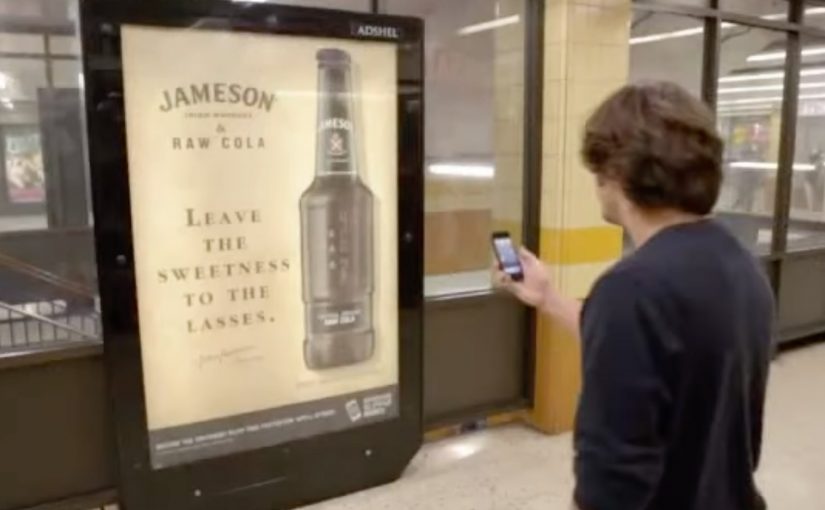
Jameson Irish Whiskey recently launched a huge outdoor campaign, teaming up with augmented reality specialist Blippar for image recognition technology. Here, “image recognition” means the app matches what the camera sees to known Jameson creative and then triggers the experience.

People with the Blippar app could scan any Jameson Irish Whiskey ad or bottle and immediately get immersed in a Jameson Irish Whiskey version of Space Invaders.

How the Blippar scan-to-play mechanic worked

The mechanism was straightforward. A phone camera scan triggered Blippar’s image recognition. That recognition launched an interactive AR experience on the device.

In practice, the physical media became the “portal”. The ad or bottle was the entry point. The phone was the display and controller. The game was the reward.

In spirits and FMCG outdoor campaigns, scan-to-play AR works best when the payoff is immediate and the controls feel natural in a standing, on-the-street context.

Why it landed, and where the interaction could be smoother

The win is immediacy. Scan and you are inside the brand world without a long setup. Because recognition launches the game instantly, it converts a fleeting poster glance into play time.

Extractable takeaway: If you turn physical media into a “scan to reward” portal, deliver the reward within seconds and design controls that match the real-world posture of the moment.

After playing the game myself, I found it would have been a better experience if they had allowed viewer control through tilting the phone around, instead of non-stop tapping at the screen. However, it is still good to see more brands innovating like this.

What the brand was really buying

This was not just about novelty. It was about extending an outdoor campaign into a personal, interactive moment that people could not get from a standard print execution.

The real question is whether your outdoor media can earn voluntary attention, not just reach.

The intent was clear. Increase attention time. Add talk value. Create a reason to engage with the bottle and the ads beyond the first glance.

This pattern is worth copying when you can reward immediately and keep interaction comfortable enough to sustain play.

What to steal for your next AR activation

  • Make the entry point universal. “Scan any ad or bottle” reduces friction and increases participation.
  • Reward immediately. If the scan does not pay off fast, the experience loses the environment it depends on.
  • Design the controls for comfort. Favor natural motion and simple gestures over repetitive tapping when sessions run longer than a few seconds.
  • Use AR to earn time, not impressions. The value is the extra seconds of focused attention, not the novelty headline.

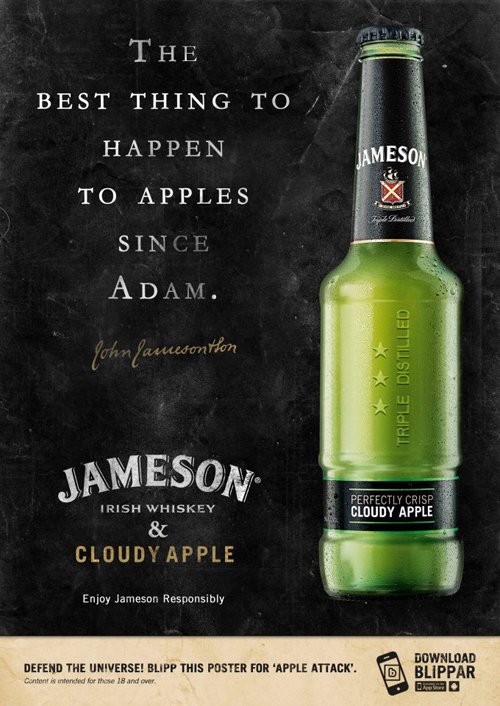
If you would like to give it a try, download the Blippar app on your smartphone and scan the below bottle to start playing.
Jameson Irish Whiskey


A few fast answers before you act

What was Jameson doing with Blippar?

They used Blippar’s image recognition so people could scan Jameson ads or bottles and launch an interactive AR game experience on a smartphone.

What was the core mechanic?

Scan the physical creative with the Blippar app. The scan triggers recognition. The phone immediately launches the game.

Why does scan-to-play work well for outdoor advertising?

It turns a passive glance into an active moment. The ad becomes a portal to content that holds attention longer than print.

What interaction improvement could make this smoother?

More natural viewer control, such as tilting the phone, can reduce fatigue compared to continuous tapping during gameplay.

What is the main takeaway for brands?

Use AR to earn time and engagement by delivering an immediate reward, and make the control scheme comfortable enough to sustain play.
IKEA: A New Kind of Catalog

IKEA: A New Kind of Catalog

Every year, the IKEA Catalog inspires people around the world to create homes they love. For the 2013 edition, IKEA takes the inspiration one step further by bringing technology to the paper catalog and creating a more seamless connection to purchase.

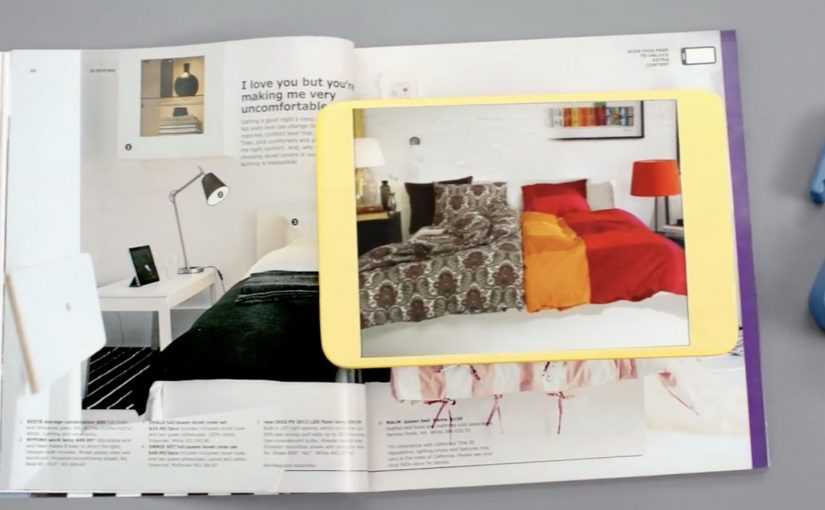
IKEA worked with McCann New York to re-imagine the catalog via a visual recognition app that brings select pages and the offerings within to life. The experience is positioned around inspirational videos, designer stories, “X-ray” views that peek inside furniture, and more.

How the catalog becomes an interface

The mechanic is page recognition. You point your phone at a printed page and the app identifies the exact spread, then overlays or opens the matching digital layer. That is what “visual recognition” means here. The camera view is used to recognize the image itself, so the print can stay clean without obvious codes taking over the layout.

This is interactive print done as a product layer, not as a QR code workaround. The page remains a premium editorial surface, and the interactivity is unlocked through recognition rather than visible markers.

In global retail organizations with massive print distribution, recognition-based layers let brands turn a static catalog into a measurable, updateable experience without redesigning the entire print grammar.

The real question is whether your print can behave like an interface without sacrificing the editorial feel that makes people pick it up in the first place.

Why “X-ray” and stories beat a pure commerce push

What makes this approach land is that it does not start with “buy now.” It starts with curiosity. Here, the “X-ray” layer is a simple cutaway view that lets people see inside furniture to understand utility. Peek inside a unit. Watch the product in context. Hear the thinking behind a room setup. Those are the moments where browsing becomes intent.

Extractable takeaway: If you want print-to-digital to stick, lead with reassurance and curiosity, not a commerce CTA. Use interactivity to remove uncertainty in one fast payoff, not to add a menu of options.

The “X-ray” idea is also a smart translation of a physical store behavior. People open drawers and cupboards in-store to understand utility. This gives a lightweight version of that reassurance from the page.

What IKEA is really building with this

At face value, it is an augmented catalog. Underneath, it is a bridge between inspiration and action. A catalog is already a decision-shaping channel. Adding tappable layers makes it a trackable channel and creates new points where IKEA can educate, reassure, and nudge the path to purchase.

Copyable moves for print-to-digital catalogs

  • Keep the print clean. If the page looks like a code sheet, you lose the lifestyle premium.
  • Use interactivity to remove uncertainty. Show how it works, what fits inside, how it looks in a room.
  • Design for quick wins. One scan should yield something useful immediately, not a long menu.
  • Make the layer repeatable. If it can work on many pages, it becomes a system, not a stunt.

A few fast answers before you act

What is a “visual recognition” catalog app?

An app that recognizes a printed page using the phone camera, then unlocks related digital content tied to that exact spread.

Why is recognition better than QR codes for premium catalogs?

Because it preserves design. Recognition can keep layouts clean and still enable interaction, while QR codes often force visible markers into the page.

What is the “X-ray” feature actually communicating?

Utility and confidence. It helps people understand storage and function without needing to visit a store or guess from a single photo.

What is the main business value of interactive print?

It turns inspiration into measurable engagement and creates additional moments to guide purchase decisions, especially for considered categories like furniture.

What is the biggest risk with print-to-digital layers?

Friction. If scanning is slow, unreliable, or the payoff is thin, people abandon the habit after one try.

Magnum Pleasure Hunt: AR bonbons in Amsterdam

Magnum Pleasure Hunt: AR bonbons in Amsterdam

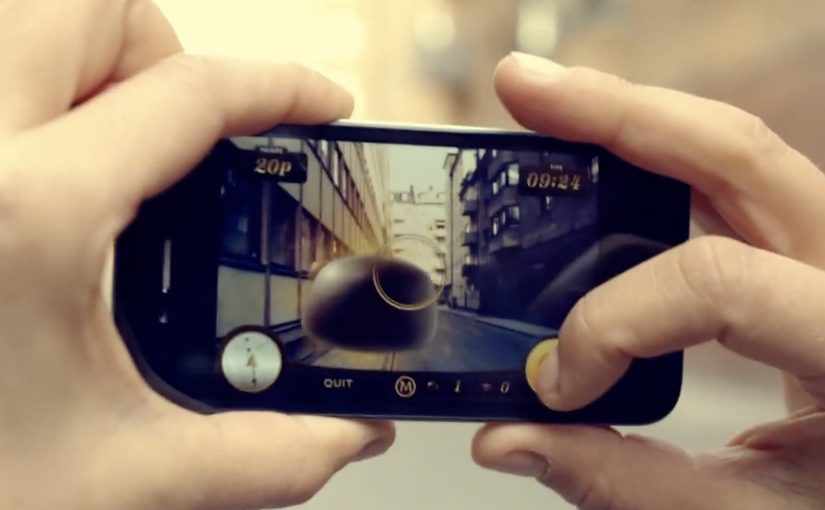
Earlier on in April Magnum launched the second edition of its hit online game Magnum Pleasure Hunt. To extend the campaign further, a real time mobile augmented reality game takes the hunt to the streets of Amsterdam.

The game is currently ongoing and participants between April 22nd and April 29th can use a special mobile app to hunt down 150 chocolate bonbons hidden across 9 locations in Amsterdam, described in some write-ups as centered around the city’s Nine Streets area. The one who claims the most bonbons wins a free trip to New York, while the rest are rewarded with the new Magnum Infinity ice cream.

Why this is a smart extension of a digital hit

The original online game is built for reach and replay. The Amsterdam version adds scarcity and locality: the same “collect the bonbons” mechanic, but tied to time, place, and physical movement, which makes participation feel more like an event than a link.

In European FMCG launches, location-based AR hunts work best when the rules are obvious in seconds and tiered prizes make “one more try” feel worth it.

The real question is whether your AR layer gives people a reason to move now, not just a new way to look at the same brand world.

What the AR layer adds to the experience

The AR layer keeps the mechanic simple, but changes the context by making the hunt visible in public and limited to specific dates and locations.

Extractable takeaway: When you take a proven digital mechanic into the street, pair it with a short window and clear rewards so participation feels like an event, not an app demo.

  • Instant purpose. You are not browsing a branded world. You are on a hunt with a clear target.
  • Real-world urgency. Limited dates and specific locations make the challenge feel live.
  • Social proof by default. People playing in public become the campaign’s moving media.

A quick comparison to Vodafone Buffer Busters

I find the Magnum mobile game to be a toned down version of the Vodafone Buffer Busters game that ran in Germany last September. Either way, this is the right direction. More brands should treat augmented reality as a medium of engagement, not a gimmick.

What to copy from Magnum’s Amsterdam hunt

  • Make the first action obvious. People should understand the goal and the first tap in seconds.
  • Limit the window. A short time period turns “I’ll try it later” into “I should go now.”
  • Use rewards that scale. A big winner prize plus smaller payoffs keeps both competitive and casual players engaged.

A few fast answers before you act

What is Magnum Pleasure Hunt Across Amsterdam?

It is a time-limited mobile augmented reality game that moves Magnum’s “collect the bonbons” mechanic from the web to real locations in Amsterdam.

How do players participate?

Players use a mobile app while out in the city to find and collect virtual bonbons placed at specific locations during the campaign window.

What makes it different from the online Pleasure Hunt?

The online version is a digital-only chase. The Amsterdam version adds time and place, turning the hunt into a real-world activity with location-based stakes.

Why are prizes so central to this format?

Because the effort is physical. A clear top prize plus smaller “everyone gets something” rewards keep motivation high across both competitive and casual players.

What is the key design lesson for AR brand games?

Keep onboarding friction low. If people cannot understand the goal and the first action immediately, they will not start, especially outdoors.