
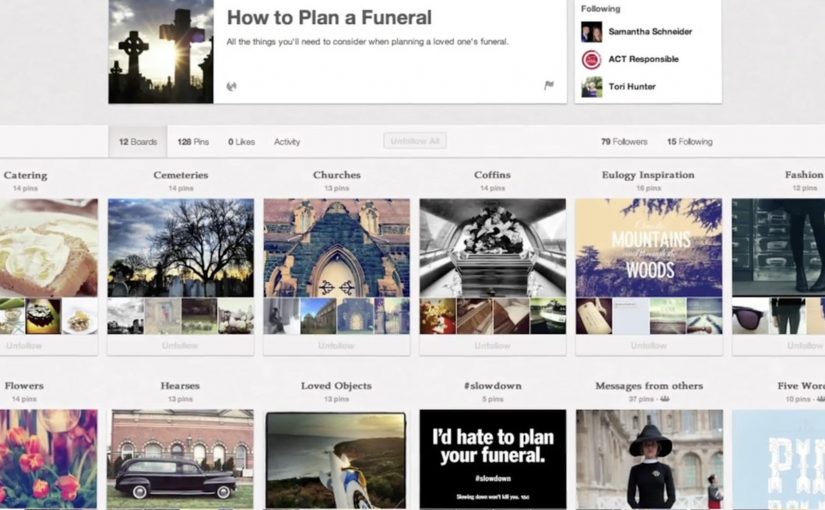
TAC: How to Plan a Funeral

In September 2012, the Transport Accident Commission (TAC) in Australia runs a Pinterest campaign with a line that lands like a punch: How to plan a funeral.

The idea is aimed at girlfriends and mothers of young men. The case frames the problem bluntly. Young men are far more likely to die in a crash than young women, and speeding is positioned as a primary contributor to those fatalities.

How Pinterest becomes a road-safety channel

The mechanism uses Pinterest boards that look like practical inspiration for funerals. Images and pins map to real funeral-planning themes, then steer toward the campaign’s message: “I’d hate to plan your funeral. Slowing down won’t kill you.” That works because the planning format lowers resistance before the safety message lands.

In road-safety behavior change, the most effective interventions often come from trusted relationships rather than institutional authority.

Why it lands

It shifts the emotional weight. Instead of telling a driver what TAC wants, it lets a partner or parent express what they fear. Pinterest is a deliberate platform choice because the boards feel like a real place someone would browse for “ideas”, which makes the moment of recognition more personal and more unsettling.

Extractable takeaway: If you need behavior change, route the message through the person with social permission to say it, meaning someone whose concern will be heard as care rather than control. Then build the media experience so it feels like everyday browsing, not an “ad break”.

What the campaign is really optimizing for

This is not trying to win an argument about enforcement. It is trying to trigger a conversation at home. The work uses a shareable, repeatable line that people can copy in their own words, because a close person saying it carries more force than a government body broadcasting it.

The real question is how to make the warning come from someone the driver will actually hear before the risky behavior happens.

The stronger strategic move here is to design for the relationship, not for the institution.

What to steal for your own safety or health campaign

  • Design for the messenger. Decide who the audience will actually listen to, then craft the creative for that relationship.
  • Choose a platform that matches the behavior. If the message is “planning” and “ideas”, a board format can feel native.
  • Use one line people can borrow. If supporters cannot repeat it verbatim or paraphrase it easily, it will not travel.
  • Make the consequence concrete. “Funeral planning” is an action. It forces imagination to do the work.

A few fast answers before you act

What is the core idea of How to Plan a Funeral?

A TAC Pinterest presence that looks like funeral-planning inspiration, designed to help girlfriends and mothers deliver a more impactful “slow down” message to young men.

Why use Pinterest instead of a typical road-safety ad format?

Because the browsing context feels personal and practical. That makes the emotional message land as something a loved one would stumble into and share, not something an authority announces.

What is the key insight behind the campaign line?

A close relationship can say what an institution cannot. “I’d hate to plan your funeral” is a social message first, and a safety message second.

Who is the message really meant to activate?

Girlfriends and mothers of young men. The campaign is built for the people whose concern is more likely to be heard as care than control.

What is the biggest risk in copying this approach?

If the platform context feels forced or exploitative, people disengage. The creative must feel native to the behavior on that platform, and the tone must stay respectful.
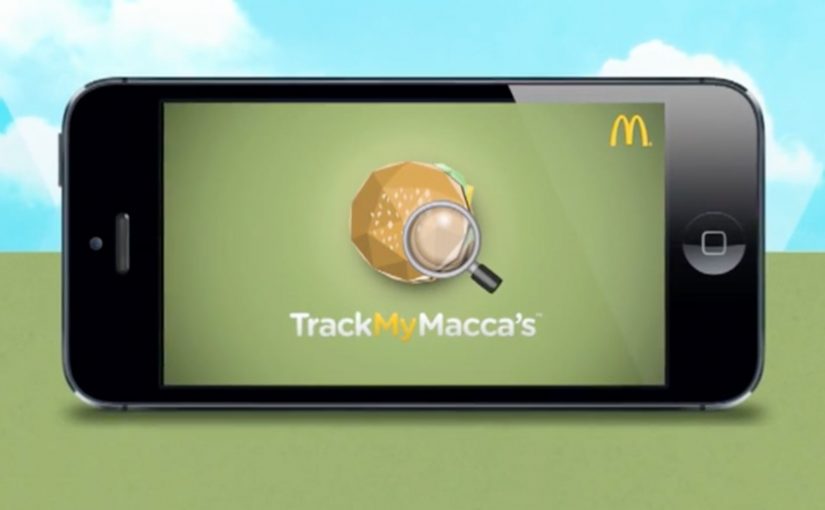
Track My Macca’s: Supply Chain Transparency

McDonald’s in Australia decided to use technology to tackle one of its biggest problems, the disbelief that its ingredients are fresh, locally sourced and of decent quality. So with image recognition, GPS, augmented reality and some serious integration with its supply chain, they put together a full story behind every ingredient people came across while buying food at McDonald’s.

The real challenge: trust, not awareness

This is not a campaign built to shout louder. It is built to answer the skeptical question that sits in the customer’s head at the moment of choice: “Is this actually fresh, and where did it come from?”

The real question is: how do you turn a trust objection into verifiable context at the point of purchase?

Instead of responding with claims, it responds with traceable context. Ingredient by ingredient.

Why the tech stack matters only if it is integrated

Image recognition, GPS, and augmented reality are the attention layer. The credibility layer is the supply chain integration. Here, “supply chain integration” means the experience is pulling from the same operational sourcing and logistics records the business runs on. Without that, the experience would be a glossy story. With it, the experience becomes proof.

If the experience is not tied to operational data, it becomes transparency theater rather than trust building.

  • Image recognition. Identify what the customer is looking at or buying.
  • GPS. Connect the experience to location and local sourcing claims.
  • Augmented reality. Make information feel immediate and tangible in the buying moment.
  • Supply chain integration. Ensure the “story” maps to real sourcing and logistics data.

In high-volume consumer businesses, credibility is won or lost in the buying moment, not on an “about our ingredients” page.

What makes this a strong model for brand transparency

Transparency only works when it is easy. People will not dig through PDFs or corporate sustainability pages while they are ordering lunch.

Extractable takeaway: When trust is the barrier, bring proof to the point of choice and back it with operational data that can stand up to scrutiny.

What to take from this if you run CX, MarTech, or operations

  1. Start with the objection. The customer’s doubt defines the experience.
  2. Proof beats promise. If you want trust, show traceability, not slogans.
  3. Integrate the system of record. Experiences that depend on trust must connect to operational data.
  4. Design for the moment of choice. The best transparency is delivered exactly when people need it.

Here, “system of record” means the operational data sources that govern sourcing and logistics, not a marketing layer that can drift from reality.


A few fast answers before you act

What is “Track My Macca’s”?

It is a McDonald’s Australia initiative that uses mobile technology to show a story behind ingredients, aiming to build trust in freshness, local sourcing, and quality.

Which technologies were used?

Image recognition, GPS, augmented reality, and strong integration with McDonald’s supply chain to connect the experience to real sourcing and logistics.

Why is supply chain integration the critical piece?

Because the experience depends on credibility. Without operational data behind it, the story would feel like marketing. With it, it can function as proof.

What customer problem does this solve?

It addresses disbelief about ingredient freshness and quality by making provenance and context visible at the point of purchase.

What is the transferable lesson for other brands?

If trust is your barrier, design transparency into the customer journey and connect it to your systems of record, so the experience can stand up to scrutiny.

ASICS: Run With Me at the Gold Coast Marathon

ASICS has a fine history not just in running sports, but also in the innovative use of technology. So at the Gold Coast Airport Marathon, a grueling 42km run, they created a powerful demonstration of running and technology by connecting runners with their supporters like never before.

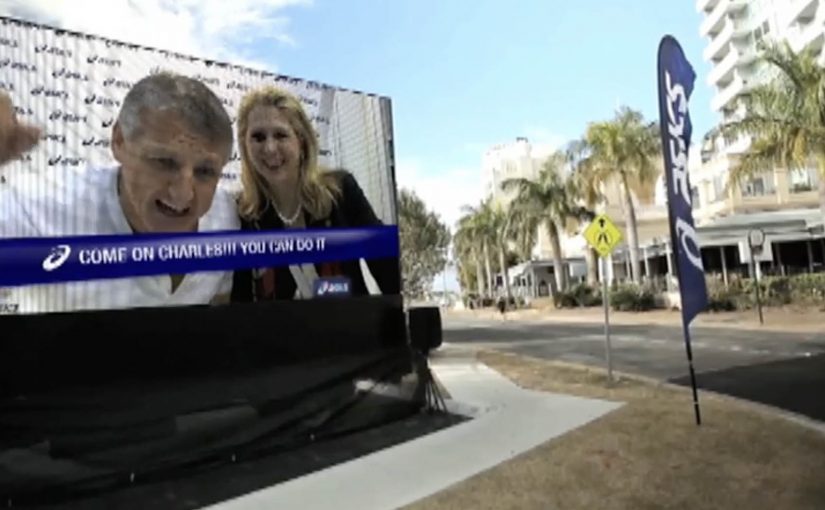
Runners were given RFID timing chips to connect their run with Facebook. RFID, or radio-frequency identification, lets a small chip be detected automatically at checkpoints. This allowed them to automatically post pre-written messages at checkpoints, along with distance run and remaining, live timing, and location data plotted on Google Maps. At the same time, friends and loved ones were able to upload video messages of support, which were triggered and played as runners approached giant screens along the course.

A marathon that posts for you, at the moments that matter

The clever part is not “Facebook integration.” It is the timing. Checkpoints are already emotional beats in a race. Effort spikes. Doubt kicks in. Motivation dips. By tying updates to those exact points, the campaign makes every status feel earned, and every reply from friends feel relevant. The real question is whether you can make that support arrive inside the effort, not after the finish.

Extractable takeaway: Automate sharing only at moments participants already care about, so updates feel like earned progress and support can land at the exact point it matters.

RFID is doing quiet work here. It removes manual posting friction, and it makes the updates feel live rather than staged, because the data is anchored to race progress.

In large-scale sports events, real-time data and social signals can turn spectators into an active support system that changes how the race feels while it is happening.

Support that shows up on the course, not just in the comments

Most event social campaigns keep encouragement on a screen at home. This one brings encouragement into the race environment. The supporter uploads become on-course content, triggered when the runner is near, so the message arrives in the body, not just in the feed.

That shift matters. It turns “cheering” from a passive gesture into an intervention, and it gives runners a reason to care about the system mid-race, not only after finishing. This kind of activation is worth building only when the trigger system is reliable enough to feel invisible to the runner.

Reported outcomes, and what they imply

The campaign reported that 2,000 runners, described as 15%, connected their run with Facebook. It also reported 6,000 messages of support uploaded, 1,000 video messages created at the event, and 35% of runners receiving video support. Additionally, it reported thousands of unique status updates from inside the race, 25,850 unique visitors to the microsite, and tens of thousands of return comments from friends and family.

Even if you strip the numbers back, the strategic takeaway is clear. When you connect performance data to social response, you create a loop. Effort generates updates. Updates generate support. Support reinforces effort.

Steal this support-loop pattern for your next event

  • Attach the experience to natural moments. Checkpoints, milestones, and thresholds beat “post whenever you want.”
  • Automate the boring part. If the participant must manually publish, most will not.
  • Bring support into the physical environment. On-course screens, audio, or wearable prompts outperform distant encouragement.
  • Give supporters a real role. Uploading a message is simple, but it feels meaningful when it is triggered at the right time.

A few fast answers before you act

What is the core mechanic of “Run With Me”?

RFID-triggered race checkpoints publish pre-written social updates, while supporter videos are triggered on giant screens as runners approach.

Why does RFID matter here?

It makes the experience hands-free. The system captures progress automatically, so runners do not have to stop or think about posting.

What makes the supporter videos more powerful than normal social comments?

They appear in the runner’s world during the effort, not after it. Timing plus proximity turns a message into motivation.

What is the biggest risk when building this kind of live experience?

Reliability. If triggers misfire or content appears late, the emotional payoff collapses. The tech has to feel invisible and dependable.

How do you measure success beyond impressions?

Opt-in rate, supporter participation rate, trigger completion rate, and whether the loop changes behavior, for example more mid-race engagement and higher repeat participation intent.