
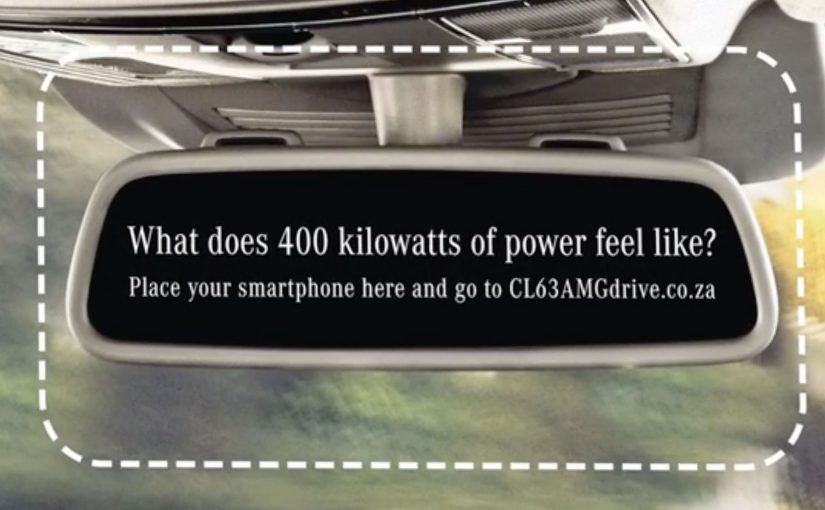
Mercedes-Benz Interactive Print Ad

Mercedes-Benz Interactive Print Ad

The interactive print ad mania continues. After RWB and Axa, we have Mercedes Benz joining in with their ad for the new Mercedes CL63 AMG. Here, “interactive print” means a printed ad that triggers a second action beyond the page itself.

Why “interactive print” keeps showing up

Print is fighting for attention against screens, so the stronger responses are the ones that make print behave a little more like digital. That works because the page stops acting like a finished message and starts acting like a trigger, which gives people a reason to continue.

Extractable takeaway: Interactive print works when the page creates one obvious next step that makes the brand promise feel more vivid, not when it adds novelty without payoff.

In brand marketing, this matters because print only earns another look when it turns attention into a deliberate next step.

What Mercedes-Benz is trying to do

The real question is not whether print can be made interactive, but whether the interaction makes the brand feel more immediate and memorable.

Interactive print is only worth doing when the mechanic sharpens the brand idea rather than distracting from it.

For Mercedes-Benz, the business intent is to make the CL63 AMG feel more active, premium, and attention-worthy by turning a static print placement into a more engaging brand encounter.

The useful takeaway for brands

  • Give print a job. Not just to inform, but to activate.
  • Keep the interaction obvious. If the mechanic needs explanation, it dies on the page.
  • Let the reveal earn the attention. The payoff should justify the extra step.

A few fast answers before you act

What is this Mercedes-Benz post pointing to?

It points to Mercedes-Benz joining the interactive print wave with an execution for the Mercedes CL63 AMG.

What were the earlier references in this interactive print trend?

Earlier examples referenced here include the RWB execution and an AXA-related print activation.

What is the core mechanic of interactive print ads?

The print ad becomes a trigger that invites a second step, so the experience continues beyond the page.

Why does the format matter in 2011?

It helps print compete by creating engagement rather than relying on a static message alone.

What should brands learn from this format?

Brands should use interactivity only when it makes the printed asset more useful, more memorable, or more aligned to the brand idea.
M&M’s: Space Heroes Bookmarklet

M&M’s: Space Heroes Bookmarklet

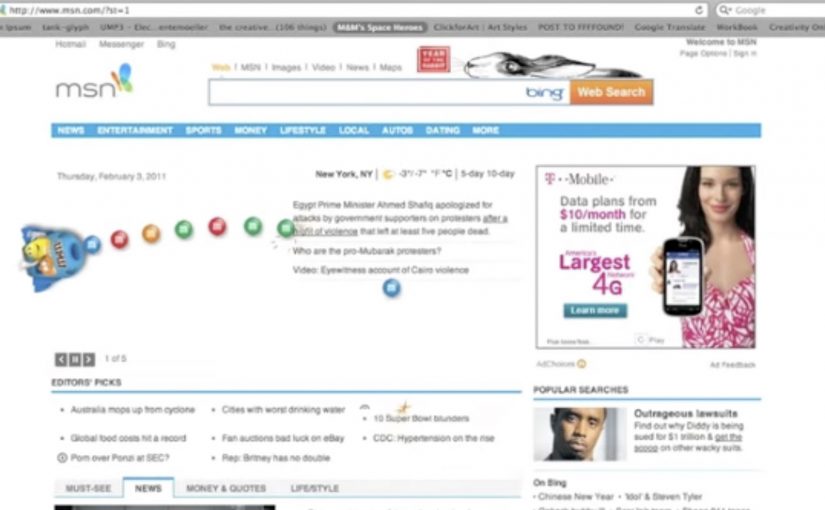
BBDO Denmark created a fun bookmarklet for M&M’s Space Heroes. You drag a little spaceship into your bookmarks bar, then visit any website and start blasting the page content with M&M’s.

A bookmarklet is a small script saved as a browser bookmark, so it can “overlay” an experience on top of whatever page you are currently viewing.

A tiny install that turns the whole web into a playground

The mechanic is deliberately low-friction. No sign-up, no download, no destination site required after setup. The “media” is any page you are already on, and the brand turns up as an interactive layer you can trigger on demand.

In consumer digital marketing, lightweight browser mechanics can create disproportionate delight because they hijack familiar environments without asking people to change habits.

Why this lands

This works because it feels like you discovered a secret feature of the internet. The brand is not interrupting your attention. It is giving you a tool you can deploy when you want, which makes it read as play rather than advertising. The real question is how to make branded play feel user-invited instead of ad-delivered.

Extractable takeaway: If you want interactivity to spread, reduce setup to a single gesture, then let people apply the experience to their own context so every use feels personal and share-worthy.

What the brand is really doing

M&M’s is associating itself with quick, mischievous fun. This is a stronger engagement model than a one-and-done microsite because the user decides when the brand shows up. The bookmarklet format also extends session time without demanding it. People keep it around and trigger it repeatedly, which creates a very different relationship than a one-time campaign visit.

What to borrow from this bookmarklet pattern

  • Make activation instant. One simple action to start the experience beats a long funnel.
  • Let people choose the stage. “Any website” turns the audience into co-creators.
  • Keep it visibly harmless. Stress relief works when it feels playful, not destructive.
  • Offer a clear entry point. A single URL that explains and delivers the tool removes hesitation.

A few fast answers before you act

What is M&M’s Space Heroes?

It’s a bookmarklet-based browser toy that lets you overlay a simple “shooting” interaction on top of any webpage, themed around M&M’s Space Heroes.

How do you use a bookmarklet like this?

You drag the provided item into your bookmarks bar, then click it while viewing any website to launch the experience on that page.

Why does this format work for advertising?

It feels optional and playful. People choose to activate it, which reduces resistance and increases repeat use.

What’s the main risk if you copy this pattern?

Browser support and security perceptions. If the setup feels confusing or sketchy, people will not install it.

How do you measure success for a bookmarklet campaign?

Installs, repeat activations per user, average session time, sharing or screen-recording volume, and downstream brand lift.

Yellow Pages: Hidden Pizza Restaurant

Yellow Pages: Hidden Pizza Restaurant

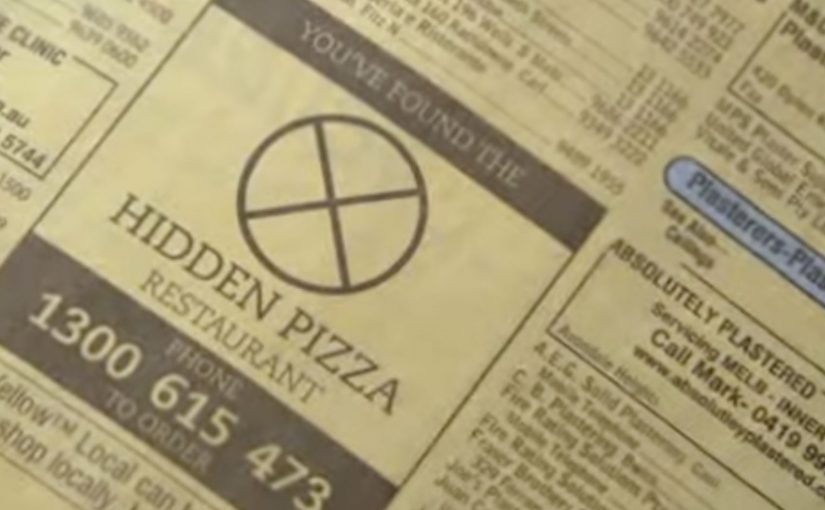
Yellow Pages has broken away from its traditional testimonial style in its Hidden Pizza Restaurant campaign. Created by Clemenger Proximity Melbourne, the campaign is part of Yellow Pages’ annual work designed to show potential advertisers how effective advertising in the Yellow Pages can be.

The idea is as direct as it is bold. Build a hidden pizza restaurant, then do not give customers its contact details. Instead, ask people to look for it the way they would any other business. While the restaurant is open, Clemenger Proximity is busy filming a series of TV ads, supported by print, radio and online executions.

A live proof stunt, not a promise

The mechanism is the message. The restaurant is real, the demand is real, and discovery is intentionally constrained. Reported coverage describes an initial tease via simple local seeding, then a single official path to the contact details. Find the listing in Yellow Pages, call, and receive the location.

In Australian small-business advertising, proof-based stunts like this can reframe a directory from “legacy media” into measurable demand generation.

Why the hunt sticks

It sticks because it converts a boring claim. “we help people find you”. into a public challenge with a reward. The lack of signage and the “go find it” instruction turns search behavior into entertainment, and the filming layer turns real customer effort into reusable evidence for advertisers.

Extractable takeaway: If your product is a utility people take for granted, create a short-lived live test where the only route to success runs through your product. Then document the outcome as proof, not persuasion.

What Yellow Pages is really selling

This is a credibility reset. In practice, that means replacing a weak category claim with a live, public proof that advertisers can understand in seconds.

The real question is whether Yellow Pages can still prove it creates demand when the business itself gives people almost nothing to work with.

The campaign is aimed at advertisers who doubt the channel. By engineering the toughest possible conditions. a business with hidden contact details. Yellow Pages turns its core value into a dramatic, easily explained case. Reported results from award and trade write-ups cite thousands of people successfully finding the restaurant, with a majority doing so through Yellow Pages.

What to steal from Hidden Pizza Restaurant

  • Design a test with an unfair constraint. The constraint is what makes the proof meaningful.
  • Make the behavior the headline. “People found it anyway” is the story.
  • Film real participation. Authentic effort beats polished testimonial scripts.
  • Keep the rule explainable. “Look for it like any other business” is instantly repeatable.
  • Let one channel own the solve. If discovery is the claim, discovery must be the mechanic.

A few fast answers before you act

What is the Hidden Pizza Restaurant campaign?

A Yellow Pages campaign that created a real hidden pizza restaurant and challenged people to find it using Yellow Pages, then documented the results through an integrated rollout.

Why hide the contact details?

To create a clean test of discoverability. If people can still find the business, the directory’s value becomes visible and provable.

What makes this more convincing than testimonial ads?

It replaces opinions with behavior. People either find it or they do not. The footage shows the finding happening.

What is the biggest risk in a stunt like this?

Leakage. If the address spreads through uncontrolled channels, the test loses clarity and the proof becomes disputable.

How can a smaller brand apply the same logic?

Create a short, controlled challenge where your product is the only legitimate path to the reward, then publish the documented outcome as evidence.