
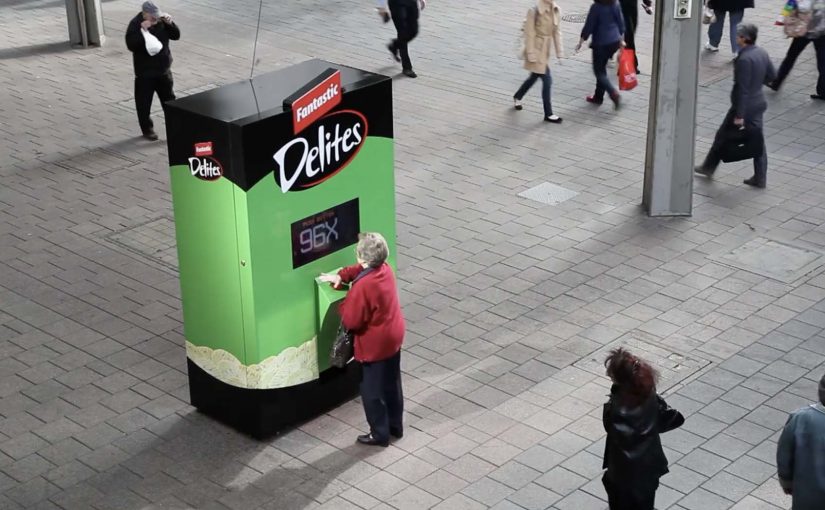
Fantastic Delites: Delite-O-Matic

Fantastic Delites: Delite-O-Matic

In this latest example, ad agency Clemenger BBDO Adelaide set out to see how far people will go for a free pack of Fantastic Delites.

So a machine dubbed the “Delite-O-Matic” was created that gave people a free pack of Fantastic Delites by means of pushing a button hundreds of times or performing challenges. It was then put out on the streets to prove that because Fantastic Delites taste so good, people would go to incredible lengths to get them.

Sampling that people choose to earn

Interactive vending machines are a great way to get consumer participation and engagement on the ground. There are tons of examples out there, of which some have been covered here.

The mechanic that makes it watchable

The mechanism is effort-based reward. The machine sets an instruction, the participant complies, and the prize is dispensed only after the effort is visible. The escalating “work” becomes the entertainment, and the entertainment becomes the message.

In FMCG sampling and retail activations, interactive vending machines are a repeatable way to exchange effort for product trial.

That structure works because visible effort gives the crowd a simple story to follow before the product appears.

Why it lands

This works because it turns sampling into a story people can instantly judge. The point is not only “free snack”. The real question is what kind of visible effort makes a simple product feel worth watching and worth wanting. Each extra button press or challenge makes the product feel more desirable, and the crowd becomes a built-in audience.

Extractable takeaway: When you make the cost of entry visible, you turn a giveaway into a social moment. That moment carries the brand further than a silent handout ever could.

What to steal from Delite-O-Matic

  • Make the exchange legible: people should understand the rule in one glance, and the effort should be obvious on camera.
  • Escalate, then release: tension comes from “will they do it”. Satisfaction comes from the dispense moment.
  • Keep the prize simple: the product is the hero. The machine is the stage.
  • Design for bystanders: the best sampling stunts recruit a crowd even before the first pack comes out.
  • Let participation become proof: the more people comply, the stronger the implicit claim becomes.

A few fast answers before you act

What is the Delite-O-Matic?

It is an interactive vending machine activation that dispenses a free pack of Fantastic Delites after people complete button-mashing or challenge-style tasks.

Why use effort instead of a simple giveaway?

Effort creates a story. It increases attention, pulls in bystanders, and makes the reward moment feel earned, which boosts recall and sharing.

What’s the key behavioral trick?

Visible commitment. When people publicly invest effort, the product feels more “worth it”, and the scene becomes entertainment for everyone around.

Where does this work outside snacks?

Anywhere trial is the goal and the product is easy to dispense or unlock. Beauty samples, quick-service food, entertainment promos, and event activations.

What’s the main risk?

If the tasks feel humiliating or unfair, the tone can flip. The sweet spot is playful challenge with a clear, quick payoff.
smart Argentina: The Tweet Commercial

smart Argentina: The Tweet Commercial

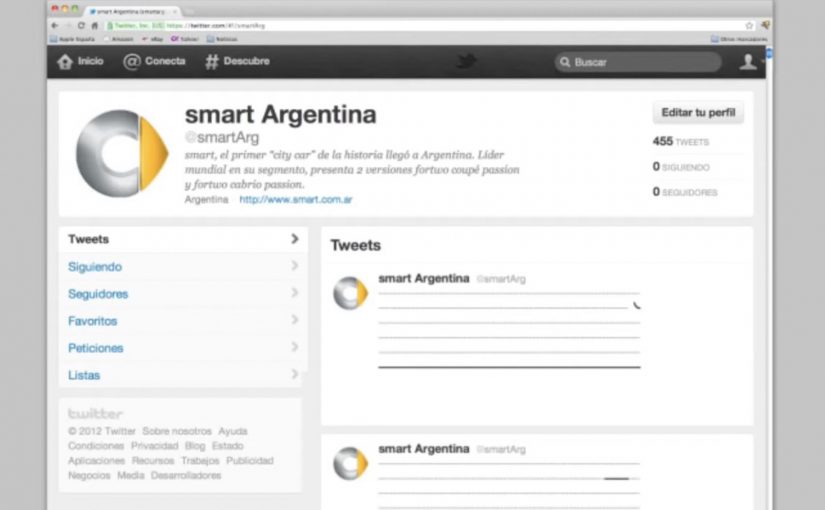
Argentina continues to set the standard in creative Twitter campaigns. In this latest execution, when you visit smart’s official account for Argentina, you might think some kid got in there and had his way with the keyboard. In reality, the feed is built from carefully crafted ASCII art tweets (images built from text characters) that stack into an animated sequence.

A Twitter timeline that behaves like a commercial

The mechanic is simple and slightly mischievous. The smart Argentina team publishes hundreds of ASCII frames as consecutive tweets, then relies on Twitter’s keyboard navigation to “play” them quickly. The result is billed as a Twitter-based animated commercial built from the timeline itself.

In consumer brand social media marketing, repurposing native interface behavior into a brand experience is one of the fastest ways to earn attention without buying more media.

How to watch it the intended way

Visit the smart Argentina twitter account and hold down the “J” key to move rapidly through the tweets and see the flipbook effect. Alternatively, the video below captures the idea as it was meant to be experienced.

Why this works, even though it is “just tweets”

It treats a constraint as a canvas. The 140-character format becomes the production rule, and the feed becomes the screen. That restraint is also the brand fit. A small car brand using a small-message platform to create a big-format effect is a neat piece of coherence. Because the viewer has to actively scroll to make it move, the act of watching feels like participation, which makes the trick easier to remember and repeat. The real question is whether you can make a platform’s native navigation feel like a viewing ritual, not a gimmick.

Extractable takeaway: If the interface can become the playback engine, you can turn a feed into a format, and a format into shareable proof of craft.

Steal the timeline-as-commercial pattern

  • Build the ad out of the platform. If the medium is the message, people are more likely to show others how it works.
  • Exploit one native behavior. Here, a single shortcut becomes the playback engine.
  • Make the payoff legible in seconds. The moment the animation “clicks”, the story tells itself.
  • Let craft signal effort. Hundreds of frames reads as obsession, and obsession reads as share-worthy.

A few fast answers before you act

What is “The Tweet Commercial” in one line?

A flipbook-style animation made from hundreds of ASCII tweets, designed to “play” as you move through smart Argentina’s Twitter timeline.

What role does the “J” key play?

It uses Twitter’s keyboard navigation to advance quickly through tweets, effectively turning the timeline into a fast-scrolling animation reel.

Why is the “world’s first” claim risky to repeat as fact?

Because “first ever” is hard to prove across a platform’s full history. It is safer to treat it as how the work was billed at the time.

What is the transferable lesson for brand teams?

If your platform is saturated with conventional posts, build a sequence that only makes sense in the native interface. The novelty becomes the distribution.

What is the main execution risk if platform behavior changes?

If keyboard shortcuts or timeline behavior change, the “playback” may break. Treat the navigation trick as a bonus, and make sure the idea still holds up when captured as video.

GOL: Valentine’s Flight Seat Challenge

GOL: Valentine’s Flight Seat Challenge

Brazilian airline GOL ran a Facebook activation designed to grow its online community and raise brand awareness in a highly competitive airline market. The insight behind it was simple. A trip can be one of the most romantic Valentine’s gifts to receive.

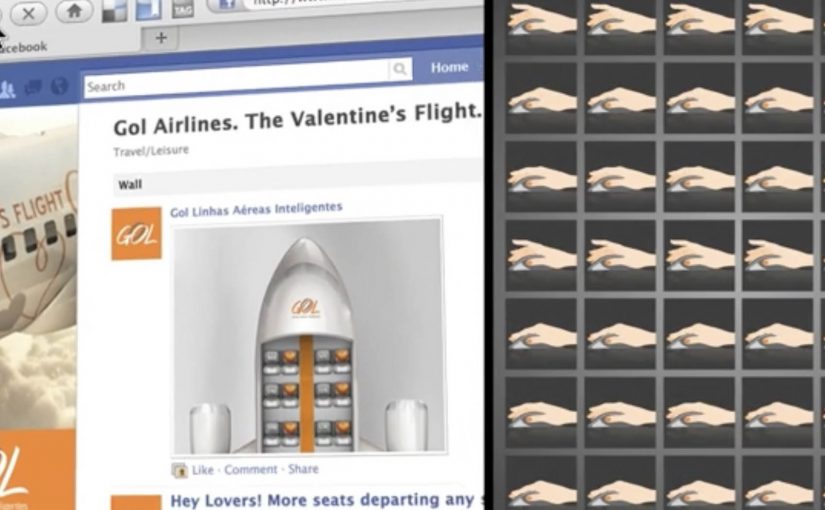
Over the Valentine’s weekend, GOL posted a series of images featuring empty airplane seats on its Facebook wall, without warning. The first people to see each image and comment the correct seat numbers won a pair of return tickets to any of GOL’s destinations.

The campaign was reported to have grown GOL’s Facebook community from 12,000 to over 200,000 in three days, making it number one in its category for the period.

A giveaway that rewards attention, not effort

The mechanism is a speed game disguised as a romantic prize. You do not fill out a form or write a story. You notice a post. You read a seat layout. You comment a number faster than everyone else.

In mass-market consumer categories, lightweight “attention rewards”, small prizes for noticing and reacting in the feed, can outperform complex promotions because they fit how people already behave in social feeds.

Why it lands

The execution stacks three accelerators. Surprise timing. A simple visual puzzle. A high-value reward that feels emotionally relevant to the weekend. That combination converts scrolling into urgency, and urgency fuels sharing and repeat checking, even among people who never win. The real question is whether your winner logic is instantly believable at feed speed.

Extractable takeaway: If you want rapid community growth, design a loop where the behaviour is already native to the platform, and the winner selection is instantly credible. Speed plus clarity beats creativity-plus-forms.

What the brand is really buying

Beyond awareness, this format buys habit. People learn that the page can drop value without notice, so they follow, refresh, and invite friends to watch too. The prize is the hook. The real outcome is an audience that has trained itself to pay attention at the brand’s tempo.

Steal this: Surprise-seat giveaway loop

  • Use a recognisable visual trigger. A seat map is instantly readable, even at feed speed.
  • Keep participation to one action. Commenting is frictionless. That matters more than polish.
  • Make the rules self-verifying. Everyone can see the seat numbers and understand who was first.
  • Lean on surprise scheduling. Unannounced drops drive repeat checking far better than a fixed timetable.
  • Match prize to context. A Valentine’s weekend mechanic wants a prize that feels like a shared experience.

A few fast answers before you act

What is the Valentine’s Flight Seat Challenge in one sentence?

It is a Facebook giveaway where GOL posted surprise images with empty seat layouts, and the first users to comment the correct seat numbers won return tickets.

Why does “first to comment” work so well on Facebook?

Because it rewards attention and speed, which are native behaviours in a feed. It also creates a visible, easy-to-trust winner logic.

What makes the seat map a strong creative device?

It is instantly legible, visually distinctive in the feed, and turns the brand’s core product into a simple game mechanic.

What is the biggest risk with this format?

Perceived fairness. If timing, moderation, or winner confirmation is unclear, the campaign can trigger backlash rather than growth.

What should you measure beyond follower count?

New follower retention after the weekend, engagement rate on subsequent posts, repeat participation behaviour, and whether awareness lift correlates with search and booking intent.