
Billboard Brasil: On Hold Jam Session

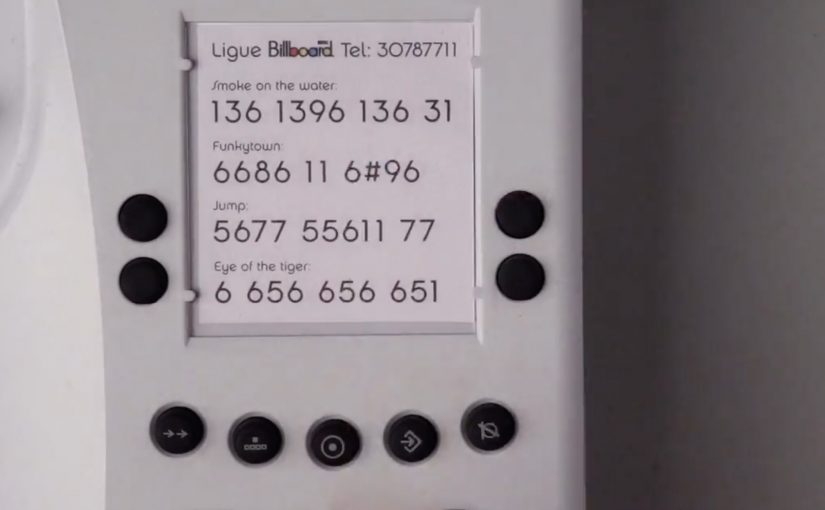
You call a magazine subscription line and get put on hold. Instead of elevator music, you get a prompt that turns your phone keypad into an instrument, so you can jam along while you wait.

Turning hold time into play time

Billboard Magazine features the best of pop music and entertainment in Brazil and, as they frame it, waiting on hold is one of the most boring music moments ever. So their ad agency AlmapBBDO creates the “On Hold Jam Session”, which makes the moment into a fun interactive experience and reflects the magazine’s concept of music and entertainment.

To make the magazine subscribers aware of this new on-hold feature, they send direct mail explaining how one could jam along with their phone buttons when they are put on hold at Billboard Magazine.

Why the mechanic is so effective

The mechanism is simple. Use the tones behind the phone keypad to trigger musical parts, so every button press feels like progress. It replaces passive waiting with viewer control, meaning the caller can shape what they hear in real time. That changes the emotional quality of the same time slice.

Extractable takeaway: If you cannot remove a wait, give people one simple action that produces immediate feedback, so the time feels shorter and more personal.

Definition-tightening: this works because phone buttons generate distinct audio tones that can be mapped to beats, riffs, or samples. The caller does not need instructions beyond “press keys to play”.

In subscription media and entertainment brands, turning unavoidable waiting into a participatory moment is a direct way to make the brand feel lived, not just consumed.

What Billboard is really buying

This is not a content campaign in the usual sense. It is a brand behavior demonstration. If Billboard is about music culture, the brand should show up even in the most unmusical moment, customer service hold time. The real question is whether your brand shows up when the customer is stuck, not only when the customer is browsing.

It also reframes a service weakness into a memorable touchpoint. The caller is more likely to tolerate the wait, and more likely to talk about the experience afterward.

Patterns for turning dead time into play

  • Target dead time. Waiting, queuing, loading, and holding are underused attention windows.
  • Make the first interaction obvious. One prompt, one action, instant feedback.
  • Turn friction into a feature. If the wait cannot be removed, redesign what the wait feels like.
  • Promote it with a physical cue. Direct mail works here because it sets expectation before the call happens.

A few fast answers before you act

What is the “On Hold Jam Session” idea?

It turns phone hold time into a playable music moment by letting callers create beats or melodies using their keypad while they wait.

Why does interactivity matter when someone is on hold?

Because it converts passive waiting into active participation, which reduces boredom and makes the time feel shorter.

How do phone buttons become a music controller?

Each keypad press produces a distinct tone that can be mapped to sounds. The system listens for the tones and triggers matching audio parts.

What is the business benefit beyond “fun”?

A better service experience, higher memorability, and a stronger brand association, plus increased word of mouth because the moment is easy to describe.

What is the main execution risk?

If the audio feedback is delayed or confusing, callers will abandon the interaction and it becomes just another frustrating hold.
Newcastle Brown Ale: Shadow Art Billboard

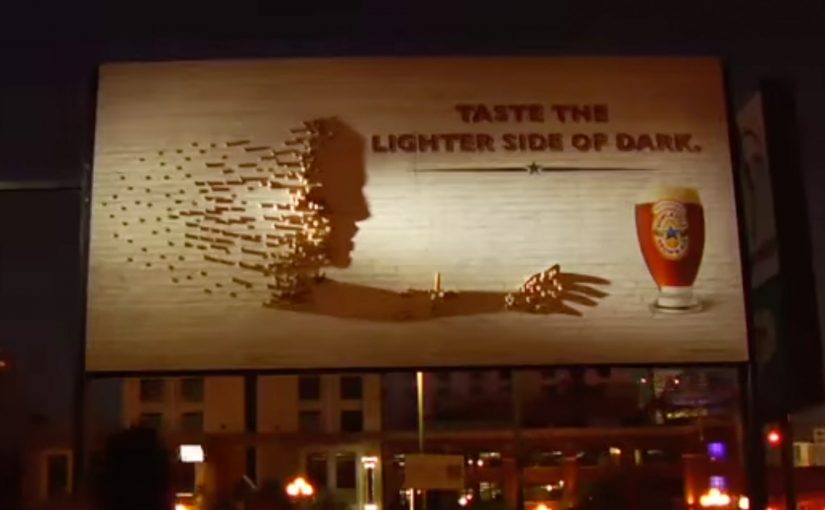
Newcastle Brown Ale’s Shadow Art has debuted in San Diego’s nightlife hub, the Gaslamp district, now through the end of September. Using only a single light source and thousands of Newcastle Brown Ale bottle caps, two New York shadow artists partnered with Newcastle to bring to life a shadow sculpture spanning 128 square feet. Shadow art is an installation that reads abstract until a specific light angle casts a deliberate image.

How it works when the sun goes down

By day it reads like an abstract field of caps. By night, the light angle does the magic. The caps become a pixel grid, and the shadow resolves into a clear image that connects directly to the brand world and the “Lighter Side of Dark” idea. Because the image only resolves under the right light angle, it invites a second look and conversation in a noisy street.

In dense entertainment districts where outdoor media competes with movement, neon, and noise, physical interactivity that rewards a second look beats anything that needs time to decode.

The real question is whether your outdoor idea earns a second look without asking for extra attention.

Why it lands

It makes the reveal the reward. The billboard does not shout at you. It waits until the conditions are right, then surprises you with an image that feels like you discovered it.

Extractable takeaway: Out-of-home becomes memorable when the medium changes state based on real-world conditions like light and viewpoint. If the message only appears when the environment cooperates, the audience feels like they unlocked it.

It uses the product as raw material. Bottle caps are not a metaphor. They are literally the building blocks, which makes the craftsmanship feel inseparable from the brand.

It turns a static surface into a time-based experience. You do not just “see an ad”. You experience a transformation. That shift is what creates talk value in public spaces. Talk value here means it gives people a simple reason to bring it up to others in the moment.

Borrow from Shadow Art billboards

  • Design for a two-stage read. First glance should intrigue. Second glance should reward with clarity.
  • Make the material part of the story. When the build uses brand-native ingredients, the proof feels baked in.
  • Choose locations where “stop and stare” is natural. Nightlife zones work because people are already scanning, wandering, and socializing.
  • Anchor the payoff to one simple brand line. The reveal should resolve into a message people can retell in a sentence.

A few fast answers before you act

What is “shadow art” in an advertising context?

An installation that looks abstract from one angle or in one lighting condition, but becomes a clear image when a specific light source and viewpoint create the intended shadow.

Why use bottle caps instead of printed graphics?

Caps add texture, depth, and authenticity. They also turn the build into a craft story that people talk about, photograph, and share.

What makes this work in a place like the Gaslamp district?

Because it competes with nightlife the right way. It creates a moment people can discover and show to friends, rather than trying to out-shout the environment.

What is the business intent behind an installation like this?

To generate earned attention and brand distinctiveness by creating a public experience that feels “worth a look”, then “worth a share”.

What is the most transferable lesson?

Build a reveal that is conditional on the real world. Light, angle, and time can do the targeting for you without any data.

Axe Paraguay: The Sexiest Billboard

A billboard goes up during the World Cup season and instantly hijacks attention. Not because it is bigger or brighter, but because it deliberately fuses football energy with a provocative visual that people cannot ignore.

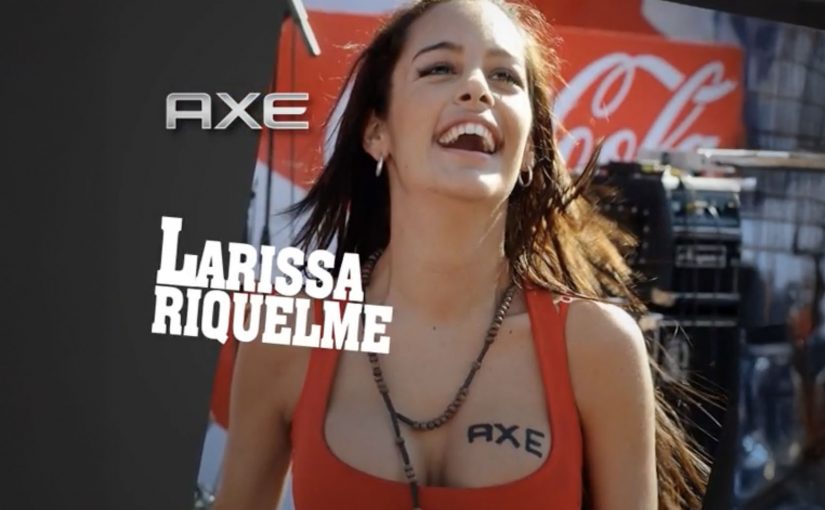
During the 2010 Football World Cup, Axe Paraguay faced the challenge of standing out from other brands with a very low budget. Their objective was to create free press about their brand and at the same time get everybody’s attention.

So their agency Biedermann McCann fused what men love the most, soccer and women. They created the “sexiest billboard” which got everybody’s attention and, as described at the time, generated millions of dollars worth of free press.

Why a single billboard can punch above budget

The mechanism is straightforward. Use a culturally overloaded moment, the World Cup, then pick a creative trigger that travels beyond the street. The billboard is not only media. It is a press object designed to be talked about, photographed, and repeated. Because it is built to be photographed and repeated, it turns one paid placement into many retellings.

Extractable takeaway: When budget is tight, design the idea so it leaves the street on its own. Anchor it to a high-attention moment and make the trigger legible enough that people can retell it without extra context.

In event-driven, low-budget marketing, a highly legible outdoor stunt can earn disproportionate coverage when it turns a public moment into a sharable story.

The real question is whether your creative is designed to travel beyond the placement.

What the campaign is really optimizing for

This is not built for persuasion-by-argument. It is built for attention and retellability. By retellability, I mean how easily someone can describe the idea in one sentence without seeing it. The billboard creates a reaction first, then lets the brand hitch a ride on the reaction through earned media and conversation.

Stealable patterns for low-budget breakouts

  • Pick one cultural accelerant. Major sports events compress attention. Use that compression.
  • Design for “tell a friend”. If people can describe the idea in one sentence, it spreads.
  • Build for cameras, not just eyes. If it photographs clearly, it leaves the street faster.
  • Separate provocation from confusion. Shock without clarity becomes noise. The idea still needs one obvious link back to the brand.

A few fast answers before you act

What is Axe Paraguay’s “Sexiest Billboard”?

A World Cup-season outdoor stunt designed to stand out on a small budget by combining football culture with a provocative visual so it earns attention and press coverage.

Why is the World Cup context important here?

Because attention is already concentrated. A strong trigger in that window is more likely to be noticed, shared, and picked up by media.

What is the main success metric for this kind of idea?

Earned media and conversation. The billboard is designed to generate coverage and sharing beyond its paid placement.

What is the core creative risk?

Provocation can overshadow the brand. If people remember the stunt but not who did it, the attention is wasted.

How do you adapt the approach without copying the tactic?

Keep the structure. Attach to a cultural moment, build a simple, legible trigger, and design the output so it is easy to photograph and retell.