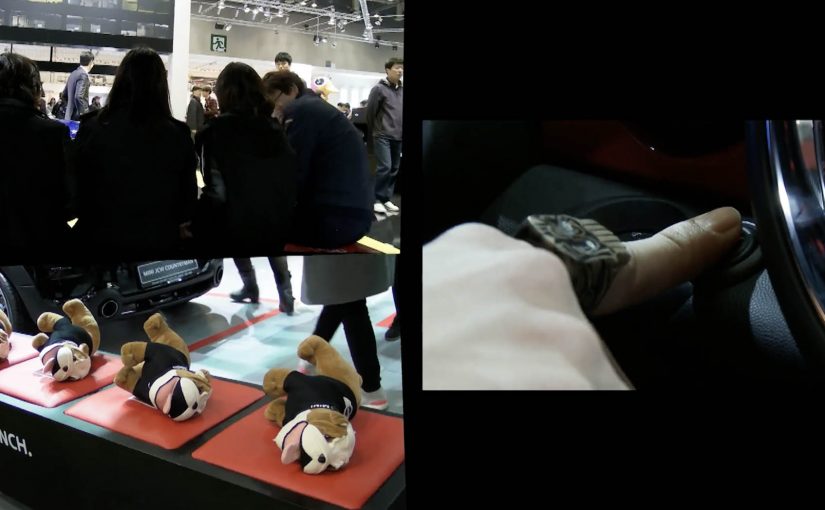
During the Geneva Motor Show 2012, MINI found a novel way to get people talking about the MINI Countryman. A special vibrating bench was installed on the street. Every time someone sat down, a MINI would sneak up from behind and rev its engine. The bench would then vibrate and capture some great reactions.
A bench that turns engine power into a punchline
The mechanism is beautifully low-tech. The car is the soundtrack, and the bench is the amplifier. The moment a passer-by becomes the participant, the installation delivers a sudden physical sensation that is impossible to ignore and hard not to laugh at.
In event-adjacent street activations, the fastest route to earned attention is a one-step setup with an instantly readable payoff.
The real question is whether you can turn a brand cue into a physical joke in under one second.
Why it lands
This works because it creates a clean before-and-after. Calm street moment. Sit down. Surprise rev. The body reacts before the brain explains. That involuntary reaction is the content. It is also brand-consistent. A MINI launch does not need to lecture about features when it can dramatise “fun” through a simple interaction.
Extractable takeaway: If you want people to share, design for an automatic reaction and make the trigger obvious. The best “reaction marketing” needs no explanation and no rehearsal. Here, “reaction marketing” means engineering an immediate, involuntary response that becomes the content.
What MINI is really buying with a vibrating bench
The goal is talkability at the edges of the show, outside the exhibition hall where not everyone will see the product stand. The bench turns the city into a distribution channel, and it gives the model a personality. Playful. Slightly mischievous. Confident enough to sneak up on you. This is a stronger use of attention than explaining “fun” in copy.
Steal the one-step reaction loop
- Use a familiar object. A bench is self-explanatory, which removes instruction friction.
- Make the trigger binary. Sit down. Experience the effect. No steps in between.
- Keep the payoff physical. Tactile moments are more memorable than visuals alone in busy streets.
- Design for the crowd. The bystanders are the multiplier. They laugh, film, and recruit the next sitter.
- Protect safety and consent. Surprises should startle, not scare. Calibrate intensity and timing.
A few fast answers before you act
What is the Thrill Bench in one sentence?
It is a street installation where sitting on a bench triggers a nearby MINI to rev, making the bench vibrate and creating a shareable surprise reaction.
Why does this work during an auto show?
It reaches people beyond the show floor and turns the city into a stage, generating attention and social sharing without buying additional media.
What makes this “reaction marketing” effective?
The reaction is genuine and immediate. Viewers trust real behaviour more than scripted claims, and the format is easy to film and share.
What is the biggest execution risk?
Intensity. If the vibration feels aggressive or unsafe, the moment flips from fun to discomfort and sentiment turns negative.
What should you measure in a similar activation?
Participation rate, bystander clustering, video shares, sentiment, and whether the stunt lifts search, dealership queries, or event footfall in the same period.