
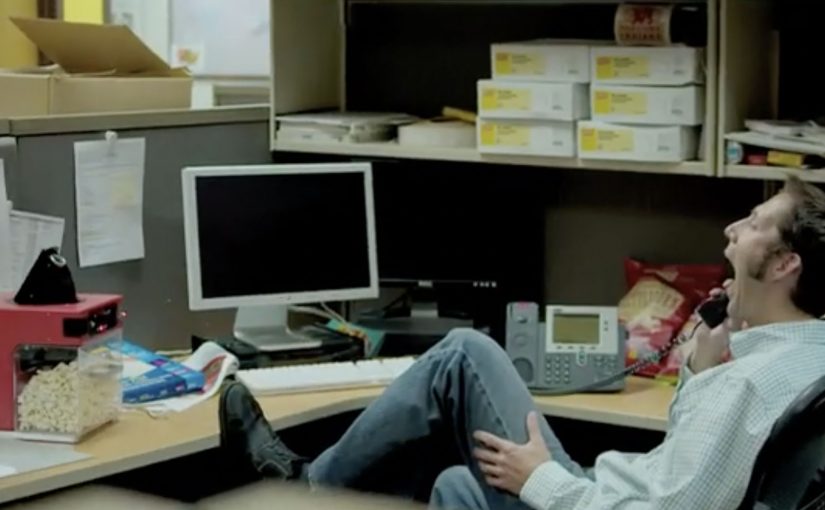
Popcorn Indiana: The Popinator

You say “pop”. A machine swings toward you and launches a single piece of popcorn into your mouth.

Thinkmodo created “The Popinator”, a gadget built as a playful piece of brand content. It is presented as a voice-triggered system that can pinpoint where the spoken word originated in a room, then fire popcorn in that direction. Popcorn is described as being shootable up to 15 feet, and the device is described as intended for indoor use.

How the gag is engineered

The mechanism is deliberately simple to explain. A keyword prompt. Direction finding. A rotating launcher. One kernel per “command”. The build turns a familiar snack habit into a mini spectacle that feels like a “future gadget”, even if you never plan to own one.

In consumer marketing where product messages blur quickly, a physical prop that demonstrates one absurdly clear benefit can generate more talk than another round of feature claims.

Why it lands

It works because it compresses the whole story into a single, repeatable moment. Say the word. Watch the machine react. See the payoff. The format is built for office viewing, quick sharing, and the social proof of “we tried it and it actually did something”.

Extractable takeaway: If you want earned reach fast, create a one-line premise people can test in their heads instantly, then design the payoff so it reads clearly on camera without explanation.

What the brand is really buying

This is not only about popcorn. It is about attention and imagination. The Popinator reframes an everyday product as something playful and engineered, then lets the internet do the distribution work by debating whether the gadget is “real” and how it works. The real question is whether one absurd, repeatable demo can make a commodity snack feel worth talking about. The stronger brand move here is making the behavior memorable, not pretending the hardware is the story.

What to borrow from The Popinator

  • Build a single, legible “demo moment”. One trigger. One reaction. One payoff.
  • Make the prop do the talking. The less narration required, the more shareable the clip becomes.
  • Design for repeat attempts. Repetition is content when the mechanism is satisfying to watch.
  • Let curiosity drive comments. “Is it real” is a distribution engine when handled responsibly.

A few fast answers before you act

What is The Popinator?

A popcorn-launching machine created as brand content, presented as firing kernels toward whoever says the word “pop”.

What is the core mechanism?

A keyword prompt triggers direction-finding, then a rotating launcher fires one kernel toward the sound source.

Was it a real product you could buy?

It is presented as a prototype-style gadget for content. Some coverage from the time frames it as a marketing stunt rather than a commercial device.

Why do “fantasy gadget” videos travel so well?

They borrow the credibility of product demos while delivering entertainment. Viewers share them as a mix of “I want this” and “no way this is real”.

What is the safest reusable lesson for brands?

Turn a mundane product habit into a surprising, visual demonstration that can be explained in one sentence and enjoyed in under a minute.
La Senza: The Cup Size Choir

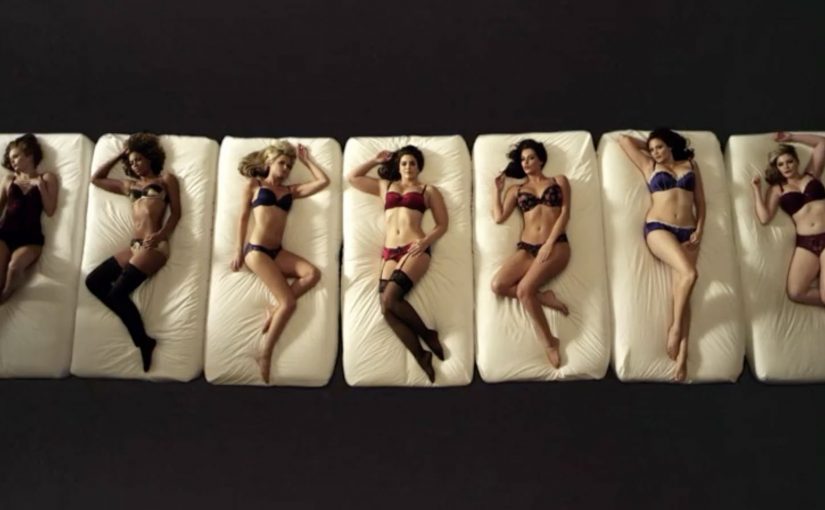
In this holiday video from London ad agency Karmarama, Canada-based lingerie maker La Senza presents a novel Christmas choir. Women in their underwear lie on a puffy piano, each singing the musical note represented by their bra size, from A to G.

A Christmas choir built from cup sizes

The hook is immediate. A to G becomes a scale. The set becomes a keyboard. The cast becomes the instrument. It is a simple idea that explains itself in seconds, and it gives the viewer a reason to watch again just to catch how the “notes” are assigned.

How the mechanic sells the range

Instead of listing products, the film turns product variety into a performance system. Each cup size is framed as a distinct note, and the choreography is built around sequencing those notes into a familiar holiday tune.

In holiday retail marketing, the quickest way to earn attention is to turn the product range into entertainment people can instantly understand.

Why it lands as a share

The format is cheeky, high-contrast, and easy to summarize. That makes it naturally social, because people can describe it in one sentence and still do it justice. The “keyboard” visual also creates a clear pattern, so even casual viewers feel like they are in on the joke.

Extractable takeaway: When your product offer is breadth, not one hero feature, convert that breadth into a simple system the audience can see and repeat, and the message sticks without explanation.

The intent behind the wink

This is brand entertainment with a retail job to do. It keeps La Senza top-of-mind during a gifting season and spotlights that the brand serves a wide range of sizes, while the tone keeps it light enough to travel beyond existing customers.

The real question is whether the performance makes that size range memorable enough to travel beyond the existing customer base.

How to turn range into a shareable system

  • Make the organizing idea visible. A to G as notes is instantly legible.
  • Use a familiar frame. A holiday tune lowers comprehension cost.
  • Sell the range without “catalog copy”. Show variety as a system, not as a list.
  • Keep the runtime tight. Short spectacle beats long explanation for sharing.
  • Let the craft do the persuasion. Production, choreography, and rhythm carry the message.

A few fast answers before you act

What is the core idea of The Cup Size Choir?

Assign musical notes to bra cup sizes and build a performance that turns product range into a simple, watchable system.

Why does this work as holiday advertising?

It is easy to understand, easy to retell, and it uses a seasonal structure people already recognize, so the message lands quickly.

What is the main brand message?

That the brand offers a broad size range, communicated through entertainment rather than product claims.

What is the biggest risk with this kind of execution?

If the tone feels gratuitous or distracting, the audience remembers the stunt but forgets the brand or the point.

How can a different category copy the approach safely?

Translate “range” into a clear system. Use a familiar cultural frame. Keep the mechanic obvious, and let the craft carry the story.

Heineken Italy Activation

One of the most sacred moments for a lot of guys is watching football with friends. But as time goes by, that moment is increasingly at risk. So Heineken, with the help of ad agency JWT Italy, decided to remind their audience of what is at stake, right on the evening of a UEFA Champions League match: Real Madrid vs AC Milan.

A prank built around a real tension

The craft here is that Heineken does not try to “own football” with another sponsor message. It stages a situation that dramatizes the threat to the ritual, then resolves it in a way that feels like a reward for fans.

How the activation works

In simple terms, this is an activation. That is an in-person experience designed to trigger conversation, participation, and earned sharing, not just impressions.

The setup plays on a familiar dynamic. Partners and friends pull football fans away from the match with an alternative plan, then the brand flips the evening by revealing the game and turning the “loss” into a surprise watch party moment.

In European football culture, match nights are one of the last reliably shared rituals. Brands that win here do it by protecting the ritual, not interrupting it.

Why it lands

This works because it is built on empathy. It starts with a truth about modern life and competing plans, then turns the brand into the friend who restores the moment. It is entertainment with a clear social payoff, not entertainment for its own sake. The real question is whether your brand can credibly protect the ritual instead of borrowing its attention.

Extractable takeaway: If you can turn a threatened shared moment into a felt relief, the brand earns a role people want to talk about, not just a logo people saw.

A useful way to phrase the mechanism is this. If you can make people feel you defended their time with their friends, they will remember you differently than a logo on a perimeter board.

Business intent: earn affinity, then earn retell

Heineken is not just chasing attention. It is buying a story that people want to retell the next day. That story carries the positioning in a way a standard spot cannot. Heineken. Made to entertain.

Steal this for ritual-protecting activations

  • Start with a threatened ritual. If the audience feels a real loss, the payoff lands harder.
  • Make the brand the rescuer, not the interrupter. The reveal should feel like relief, not a sales pitch.
  • Design for retelling. If a friend cannot explain it in 20 seconds, it will not travel.
  • Let the product stay in the background. The memory is the asset. The label is just the signature.

A few fast answers before you act

What is an “activation” in marketing terms?

An activation is a designed experience, often live or in the real world, that drives participation and sharing. Its output is conversation and earned media, not only paid reach.

Why do ritual-based activations work so well?

Because rituals are emotionally protected. If a brand can credibly defend a ritual, it earns affinity that is hard to replicate with standard advertising.

What is the core mechanism in this Heineken example?

Create a credible threat to a valued moment, then flip it into a surprise payoff where the brand is the enabler of the restored experience.

What needs to be true for a prank activation to feel positive?

The audience must feel safe and rewarded at the end. The reveal has to resolve the tension quickly, and the outcome must be better than what they expected.

How do you measure success for this kind of work?

Look for retell signals and intent signals. Retell signals are evidence people repeat the story to others. Intent signals are evidence people take a next step, like searching, visiting, or asking where to buy.