
Homeless Fonts: Fonts from Cardboard Signs

Homeless Fonts: Fonts from Cardboard Signs

When you walk by a homeless person holding a cardboard sign, you usually see an anonymous face struggling to survive. Homeless Fonts flips that moment. It turns the most visible part of street life. The handwriting. Into something people and brands can actually pay for.

From street sign to typeface

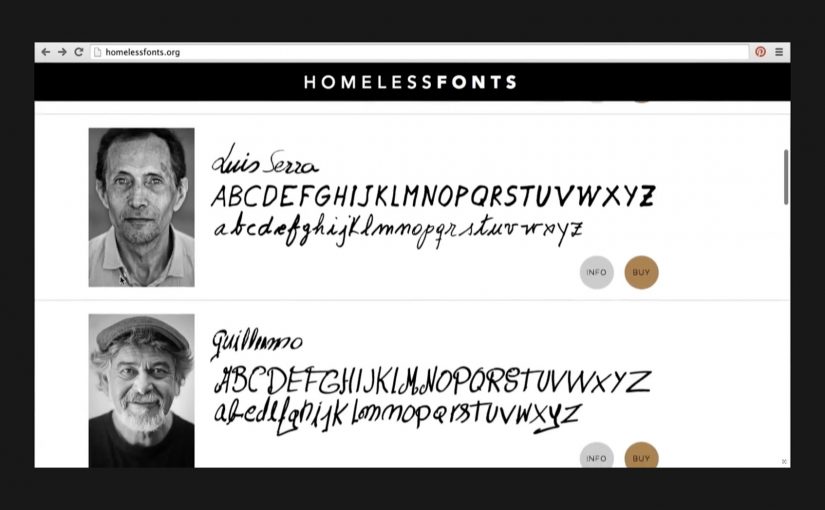
The Cyranos McCann teamed up with the Arrels Foundation in Barcelona to launch HomelessFonts.org. The site features fonts built from the real handwriting of local homeless people, available for purchase by marketers who want something more human than a default type library.

Here, a “font” is a downloadable typeface file that designers can license and use across ads, packaging, and digital interfaces, just like any other professional typeface.

In urban European cities, design-led micro-commerce can convert overlooked skills into dignified income streams.

Where the money goes

The money raised from the website is intended to support accommodation, food, social programs, and health care for people experiencing homelessness. For more information visit www.HomelessFonts.org.

Why this lands

It works because it asks brands to buy a useful asset instead of “donating to a cause.” You are not funding an abstract promise. You are paying for a tool that visibly changes the tone of your message, and the purchase itself carries a story your audience can recognize instantly.

Extractable takeaway: If you want purpose marketing to stick, attach the donation mechanic to a practical, reusable brand input (a font, a template, a dataset, a sound pack) so the act of funding also improves the work.

What it’s really trying to change

The real question is whether brands will pay for contribution instead of performative concern.

This is a stronger model than pure cause messaging because it gives people commercial value, not just visibility.

Beyond fundraising, the campaign reframes homeless people from passive recipients to contributors with identity and craft. The typefaces carry names and personality, and that shifts the conversation from pity to participation.

What to steal from Homeless Fonts

  • Sell a tool, not a feeling. Build the fundraising mechanic around something buyers genuinely need.
  • Make the proof visible. The output (handwriting) is instantly recognizable, which makes the story easy to retell.
  • Design for everyday reuse. The more places the asset can live (print, digital, packaging), the more sustainable the model becomes.
  • Keep the transaction simple. Clear product. Clear price. Clear destination for proceeds.

A few fast answers before you act

What is Homeless Fonts?

It’s a collection of purchasable fonts created from the handwriting of homeless people in Barcelona, sold via HomelessFonts.org.

Who created it?

The project was launched by the Arrels Foundation in partnership with Cyranos McCann.

How do brands actually use the fonts?

Like any licensed typeface. Designers can apply them in headlines, posters, packaging, social content, landing pages, and campaign visuals to add a distinctly human texture.

What does buying a font change versus asking for donations?

It turns support into a market exchange for a useful asset. That reduces “charity fatigue” and gives brands a concrete output that carries the story forward every time it’s used.

Where is the money intended to go?

The campaign describes proceeds being used for accommodation, food, social programs, and health care supporting people experiencing homelessness.

NAB: The Honesty Experiments

NAB: The Honesty Experiments

Australian bank NAB positions Australians as an honest lot, and argues they deserve honest credit cards to match. To bring that promise to life, they conducted a series of “honesty experiments” and published the results on YouTube.

Incorrect Change

Lost Wallet

Leaky Pockets

From a product claim to a public proof loop

The mechanism is a classic credibility builder. A “public proof loop” means turning a claim into a repeatable test, then publishing the outcome so the audience can judge it. Run simple real-world tests where people can choose honesty, film the outcome, then let the audience do the judging rather than the brand doing the telling.

In retail banking categories, trust is built faster through observable behaviour than through promises and price claims.

The real question is whether a trust claim can be converted into something people can judge for themselves.

For trust-starved categories, this is a stronger play than another round of product-feature messaging.

Why it lands

These films work because they invite a low-friction emotional conclusion. People want to believe the best of others, and the experiments are structured to deliver that relief, then attach it to the brand stance. The content is also inherently shareable because it is about character, not about banking mechanics.

Extractable takeaway: If you want to own “trust,” do not describe it. Show a behaviour that audiences can recognise as trust in action, then connect it back to the product promise in one simple line.

Then NAB escalates to “thank you” in real time

To say thanks in the biggest possible way, NAB followed the experiments with a real-time stunt that thanked honest passers-by immediately after they returned lost objects.

What the second phase adds that video alone cannot

  • Immediate reciprocity. Honesty is met with an instant reward, not abstract praise.
  • A bigger emotional beat. Surprise gratitude creates a stronger memory than “you did the right thing.”
  • Proof at street level. The brand shows up in the moment of integrity, not after the fact.

What to replicate from NAB’s honesty experiments

  • Pick one human truth. “Most people are honest” is clearer than a bundle of values.
  • Design the choice point. The story lives in a single decision. Keep it simple and legible.
  • Let people self-identify. The viewer should be able to imagine themselves in the situation.
  • Add a second act. If phase one proves the belief, phase two can reward it and deepen the brand role.
  • Protect credibility. Be transparent about rules and ensure the reward does not feel staged or selective.

A few fast answers before you act

What are the “honesty experiments” in one sentence?

A set of filmed, real-world tests where strangers can choose to act honestly, used to support NAB’s “honest credit cards” positioning.

Why do social experiments work for trust-based brands?

They replace claims with observable behaviour. Viewers decide what the outcome means, which feels more credible than advertising language.

What does the real-time thank-you stunt add?

It turns the brand from narrator into participant, rewarding honesty immediately and creating a stronger emotional memory.

What is the biggest risk with this format?

Credibility erosion. If viewers suspect manipulation, selective editing, or unclear rules, the trust message can backfire.

What should you measure beyond views?

Brand trust lift, message association with the product, sentiment, share rate, and whether the work changes consideration versus competitors in the same period.

Marmite: Bringing Home the Kiwis

Marmite: Bringing Home the Kiwis

A centenary gift that tastes like home

Sanitarium Marmite is a Kiwi staple and a national icon of 100 years. Today, one in five Kiwis live abroad. Many of these 600,000 Kiwis miss their Marmite, as it is hard to get overseas.

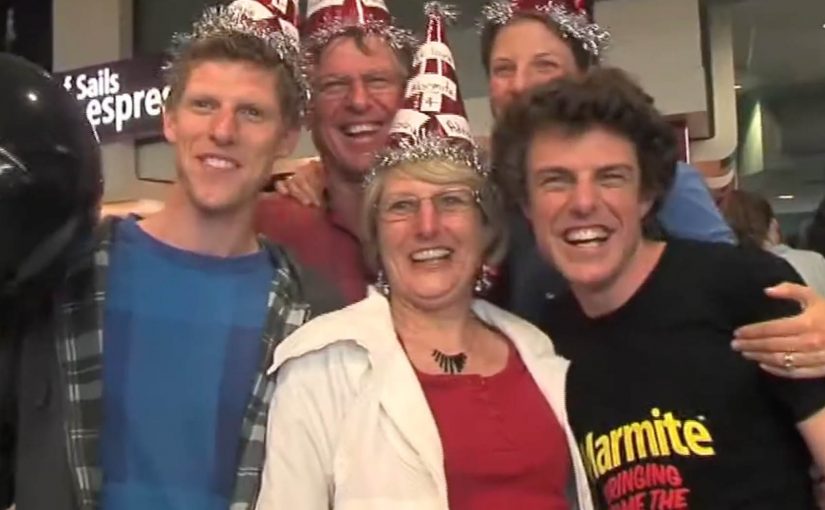
So to commemorate its 100th year in New Zealand, Ogilvy Auckland launched a contest which reunited long-lost Kiwis with their homeland and everything they love about it, including Marmite.

The mechanic: one-way tickets as a proof of intent

All the interested candidates had to do was tell the Marmite judges what makes them, or their loved ones, a deserving candidate to avail one of the 100 one-way free air tickets from anywhere in the globe. The one-way ticket is the proof of intent, because it commits the brand to the reunion, not just a symbolic gesture.

A diaspora is the portion of a country’s people living overseas, often staying emotionally tied to “home” through food, language, sport, and ritual.

Marmite’s “Bringing Home the Kiwis” is a centenary contest that offered 100 one-way flights to bring overseas New Zealanders back home, using the return itself as the campaign’s emotional centerpiece.

In small countries with a large diaspora, local brands can act as a bridge by enabling a real reunion.

Why it lands: it makes nostalgia actionable

Most “homesickness” marketing stays symbolic. This one turns longing into logistics. The prize is not merchandise. It is presence. That is why the story travels. It is instantly understandable, and emotionally high-stakes without feeling manufactured.

Extractable takeaway: When the emotion is separation, the strongest brand move is a mechanism that creates presence, not another object that points to it.

The business intent behind the generosity

The brand is buying disproportionate meaning. Marmite becomes a shorthand for “home,” and the campaign demonstrates it through a gesture people talk about long after the winners land.

It also solves a real friction point in the insight. If the product is hard to get abroad, then “bring them back” is a bolder way to dramatize what the brand represents.

This is the right kind of generosity when your brand promise is “home” and your audience’s friction is distance.

The real question is whether you are willing to make your positioning physically true for a small number of people, rather than symbolically true for everyone.

Nice idea, but it is clearly in the same family as “bring them home” diaspora campaigns, including JWT Argentina’s 2009 effort, titled “Bring Home the Argentinians”.

What to steal if you want a diaspora idea that is more than a slogan

  • Use a prize that embodies the insight. Flights beat gift packs when the emotion is separation.
  • Keep entry simple, but make the stories rich. Let candidates supply the narrative energy.
  • Build a clear number hook. “100 for 100 years” is easy to remember and retell.
  • Make the payoff visible. Arrivals and reunions are the credibility layer, not a voiceover.

A few fast answers before you act

What is Marmite’s Bringing Home the Kiwis campaign?

It is a centenary contest that offered 100 one-way flights from anywhere in the world to bring overseas New Zealanders back home. People nominate themselves or loved ones with a short story, tying the brand to the emotional idea of “home”.

Why does the “one-way ticket” prize work so well?

Because it turns nostalgia into logistics. The reward is presence, not merchandise, so the brand promise feels demonstrated rather than advertised.

Why is “100 for 100 years” a smart structure?

It is a simple number hook that is easy to remember and retell. It also makes the generosity feel purposeful instead of arbitrary.

What is the real business intent behind the generosity?

Marmite buys disproportionate meaning and becomes shorthand for “home,” while dramatizing a real friction point. It is hard to get abroad, so the campaign makes “home” the centerpiece.

What makes the story travel beyond New Zealand?

The payoff is visible and universal. Arrivals and reunions act as the credibility layer, so the idea works as a story, not just a claim.

What should other brands copy from this pattern?

If your positioning is emotional, make the mechanic physical. Choose a prize that embodies the insight, keep entry simple, and let real people supply the narrative energy.