For enterprise consumer brands, the hard problem is rarely showing that AI can generate possibilities. It is making a new capability legible enough that brand, R&D, and commercial teams can align around a use case worth scaling.
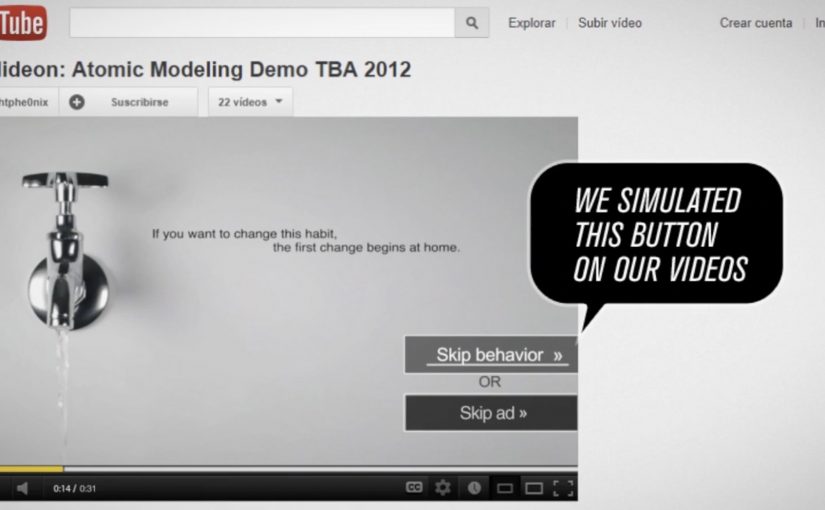
In 2014, Oscar Mayer showed how powerful scent becomes when it stops behaving like a message and starts behaving like a mechanic. Its bacon alarm let people wake up to the sound of sizzling bacon on the stove, while the brand inserted itself into a daily habit instead of a one-off impression.
Fast forward to 2026, and NotCo is pushing scent from playful activation into AI-enabled product development. With Giuseppe AI and its fragrance formulation work with Cramer, a Latin American multinational in flavors and fragrances, NotCo is showing how a sensory cue can become a personalized product proposition. Giuseppe is positioned as an end-to-end product development platform, meaning it helps move from idea to formulation to scalable output within one workflow.
The enterprise value is not the AI label. It is the shorter path from idea to formulation to a testable proposition that different teams can understand in the same way.
How Aroma Best Friend makes Giuseppe easy to understand
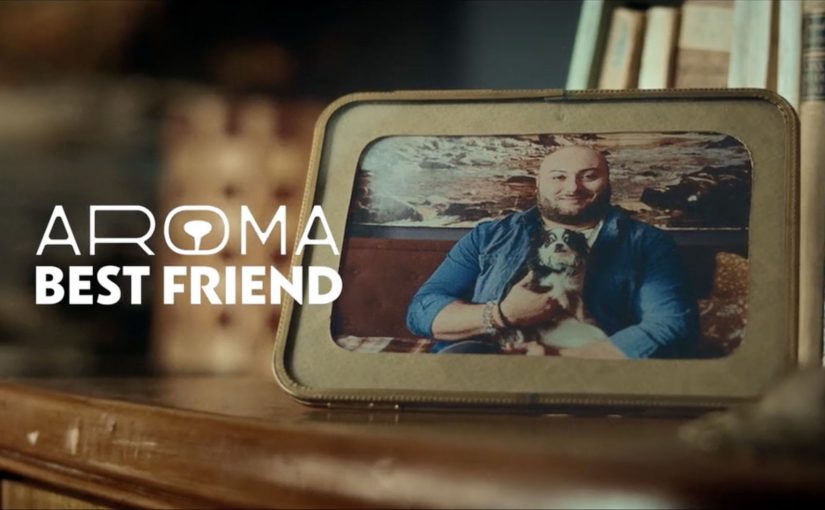
Aroma Best Friend does not try to explain AI through dashboards, technical architecture, or speed claims. It explains the platform through a very human tension point: a dog struggling when its owner leaves home. The story is simple, emotional, and commercially useful at the same time.
The mechanism is easy to retell. The campaign presents a personalized fragrance generated from the owner’s scent profile so a dog is left with an olfactory stand-in for presence. An olfactory profile is the identifiable mix of volatile compounds associated with a person’s scent signature.
In consumer goods, this is the kind of AI story that travels fastest because it links formulation capability to a sensory outcome people can instantly understand.
The film frames the idea around making your dog happier, which keeps the promise focused on an outcome instead of a technology demo.
Why this lands harder than most AI demos
Most AI campaigns still make the same mistake. They tell you the model is powerful and then expect the audience to infer the commercial value. Aroma Best Friend works better because the technology claim is attached to a felt problem and a tangible output, which makes the platform easier to understand and easier to remember.
Extractable takeaway: AI becomes more persuasive when it is shown solving a problem people can emotionally grasp, not when it is described as a capability stack. The sharper the human tension and the clearer the output, the stronger the commercial story.
Scent is not decorative here. It is the proof. That turns Giuseppe from a backstage R&D engine into the source of a new kind of product experience. NotCo is not just advertising AI. It is advertising the kinds of product experiences AI can now help create.
The business play behind the emotion
The real question is whether an AI platform can turn an invisible R&D capability into a story that brand teams, partners, and future buyers instantly understand.
The official waitlist for the product makes clear that joining does not guarantee access to or availability of the product. That suggests this is as much about validating demand and capturing interest as it is about launching a ready-to-scale offer.
For consumer brands, that is where this kind of capability starts to matter beyond innovation theater, when it can move from a compelling demo into a reusable workflow for formulation, proposition testing, and commercial prioritization.
That is the smarter move. Aroma Best Friend works as a campaign, a proof-of-capability demo, and a demand signal test at the same time. For operators, the bigger signal is that one use-case-led demo can align capability storytelling, demand capture, and internal buy-in around the same proof point. Instead of saying that Giuseppe enables personalization and creativity, NotCo dramatizes a specific version of personalization that people can picture, repeat, and remember.
What FMCG and CPG teams should borrow now
- Turn capability into consequence. Do not market the model first. Market the human outcome the model makes possible.
- Use one emotionally legible use case to explain a broader platform. Aroma Best Friend is about dogs on the surface, but the deeper message is that Giuseppe can work where formulation and personalization matter.
- Make the demo do triple duty. The strongest AI campaigns should explain the platform, test demand, and create a reusable proof point for internal adoption and partner sell-in.
- Choose outputs people can feel, not just read about. Text is easy. Fragrance is harder. That is exactly why this idea carries more weight.
- Prove customization through specificity. Personalized fragrance is stronger than generic AI-powered personalization because it gives the claim an object, a use case, and a memory.
A few fast answers before you act
What is Aroma Best Friend really marketing?
Aroma Best Friend markets a personalized scent concept for pet separation anxiety on the surface, but at a deeper level it markets Giuseppe AI as a product-development engine that can move into formulation-led use cases.
Why does this explain Giuseppe better than a typical AI demo?
It explains Giuseppe better because it connects the technology to a human problem and a sensory output. That makes the platform easier to understand than abstract claims about intelligence, speed, or creativity.
Is Aroma Best Friend already a scaled product launch?
Not yet in any proven commercial sense. The waitlist language makes clear that joining does not guarantee access to or availability of the product, so the initiative still functions as a signal test as much as a launch story.
Why is scent such a strong choice for this idea?
Scent carries memory, comfort, and presence more directly than most brand cues. That gives the campaign emotional force and turns formulation technology into something people can instantly imagine in use.
What should marketers and innovation teams steal from this?
They should steal the structure. Start with a real human tension, let the technology solve it in a tangible way, and make the output specific enough that people can retell the story in one sentence.