
IKEA: Paul “The Chair”

IKEA: Paul “The Chair”

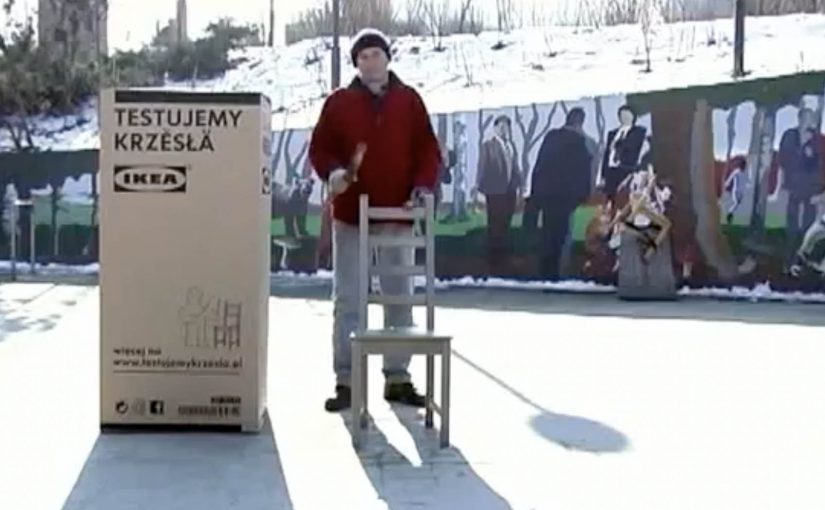
For years, a street performer has been playing on chairs outside Warsaw Central Station. Locals call him Paul “The Chair”.

JWT Warsaw turns that real-world detail into a simple social mechanic for IKEA. In practice, that means a repeatable audience action and brand response that people can join and watch unfold. Let the people who follow IKEA Warsaw decide which chairs Paul should test next, then publish the results back on the IKEA Poland Facebook page. The campaign claims the loop worked fast. Within seven days, IKEA Warsaw fans reportedly increased by 70%.

From street credibility to Facebook voting

The mechanic is a fan vote with a built-in payoff. The audience chooses the chair. Paul tests it. IKEA posts the result. That structure converts passive scrolling into a repeatable reason to come back, because every vote creates anticipation for the next video.

In social-led retail marketing, giving viewers control over what gets demonstrated turns content into participation rather than promotion.

Why it lands

This works because the “expert” is not a paid spokesperson archetype. It is a recognizable local character with a believable, slightly odd credential. Seven years of playing chairs in public. The voting layer also makes the brand feel less like it is broadcasting and more like it is hosting. People are not just watching furniture content. They are steering it, and that makes sharing and returning feel earned.

Extractable takeaway: If your product range is broad and hard to browse, create a recurring format where the audience picks the next item, and make the result public quickly so the loop trains repeat attention.

What IKEA is really buying

The real question is whether IKEA can turn chair browsing into a repeatable act of participation instead of another passive product feed.

The stronger play here is product familiarity through participation, not fan growth for its own sake. The immediate goal is fan growth and interaction, but the deeper goal is product familiarity. Repeated exposure to specific chair models. Subtle proof of sturdiness and usability. A social reason to talk about chairs without sounding like a catalogue.

What retail marketers can lift from this

  • Borrow a credible “tester”. Find a person whose real-life behavior makes them a believable evaluator of your category.
  • Let the audience choose. A simple vote is enough to create ownership and return visits.
  • Close the loop fast. The shorter the time between vote and result, the more the mechanic feels alive.
  • Make each post an episode. Recurrence beats one-off virality for retail ranges.

A few fast answers before you act

What is the core idea of “Paul The Chair”?

IKEA turns chair testing into a recurring social series by letting fans vote on which chairs a local performer, Paul “The Chair”, should test next.

Why does the audience vote matter?

Voting converts attention into commitment. People are more likely to return and share when they helped choose what happens next.

What does this teach about product-range marketing?

You do not need to explain the whole range. You need an ongoing format that makes individual items discoverable one at a time.

What is the key credibility lever here?

The tester’s story. A real person associated with chairs in public life makes the premise feel less like advertising and more like a local truth.

What is the biggest execution risk?

If the results content feels slow, repetitive, or over-produced, the vote becomes a gimmick and the loop stops rewarding repeat attention.
Volvo C70: The Wife-Swapping Parody Spot

Volvo C70: The Wife-Swapping Parody Spot

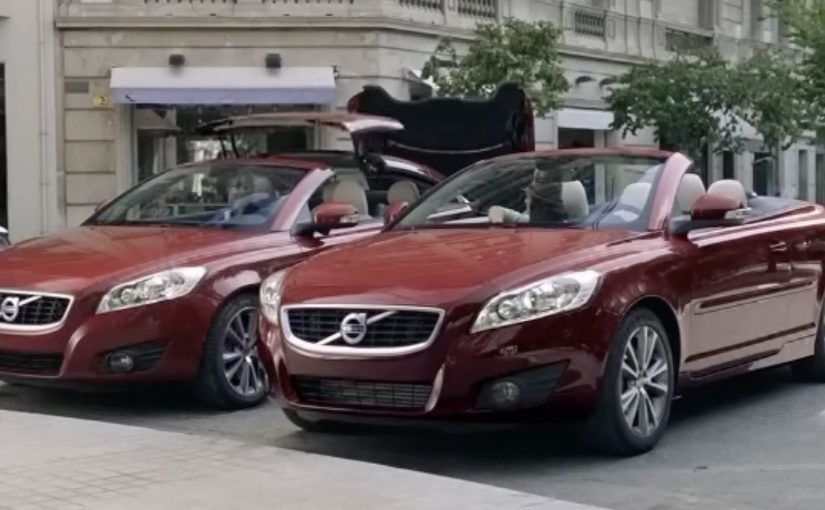
Volvo’s new C70 comes with an available “wife-swapping feature”. That is the joke this video runs with, presented in the familiar language of a premium car commercial, then pushed into outright parody.

The gag: take the feature list seriously, then break it

The mechanism is simple. Use the polished grammar of an automotive feature demo, then introduce one outrageous “benefit” that clearly does not belong. The contrast does the work. It is recognizably a car ad in format, and obviously not a car ad in intent.

In premium automotive marketing, parody “feature demo” films can be a fast way to generate word-of-mouth when the real product story risks blending into category sameness.

Why it lands as a shareable clip

It is short, instantly legible, and built around one line people can repeat. It also plays on a familiar consumer pattern: most of us have seen enough car advertising to recognize the tropes, so the subversion is easy to process and easy to pass on.

Extractable takeaway: If your category is saturated with similar promises, a single sharp subversion can earn more recall than ten more seconds of conventional feature narration.

What this kind of spoof is really useful for

This is not about explaining the car. It is about attention and memory.

The real question is whether the joke reinforces the brand you want to be remembered for, or just the joke.

Satire can do that well because it gives people a reason to share that is social, humor, surprise, and “you have to see this,” rather than “here is a product message.”

How to borrow the spoof “feature demo” safely

  • Use a familiar format. Parody works best when the audience recognizes the template immediately.
  • Anchor it in one repeatable line. If people can quote it, they can share it.
  • Keep the craft “too good” for the joke. High production language makes the twist hit harder.
  • Know your boundary. Satire travels fast, but it can also polarize. Decide what you will not joke about.

A few fast answers before you act

What is this Volvo C70 video actually doing?

It uses the structure of a premium car commercial, then inserts an absurd “feature” to turn the entire piece into satire.

Why does parody often outperform a straight product film online?

Because the share incentive is emotional and social. People share what makes them laugh or surprises them, not what feels like a brochure.

What is the main creative risk with spoof ads?

Confusion and brand harm. If the joke reads as mean-spirited or unclear, people remember the controversy instead of the point.

When is parody a bad idea?

When your product requires trust-first communication, or when the joke could be interpreted as targeting a group of people rather than a marketing trope.

What is the transferable lesson for marketers?

Format hacking. Start with a template the audience already understands, then flip one element to create surprise and talkability.

Johnnie Walker: A Walk Through Brand History

Johnnie Walker: A Walk Through Brand History

A brand history told on foot, in one breath

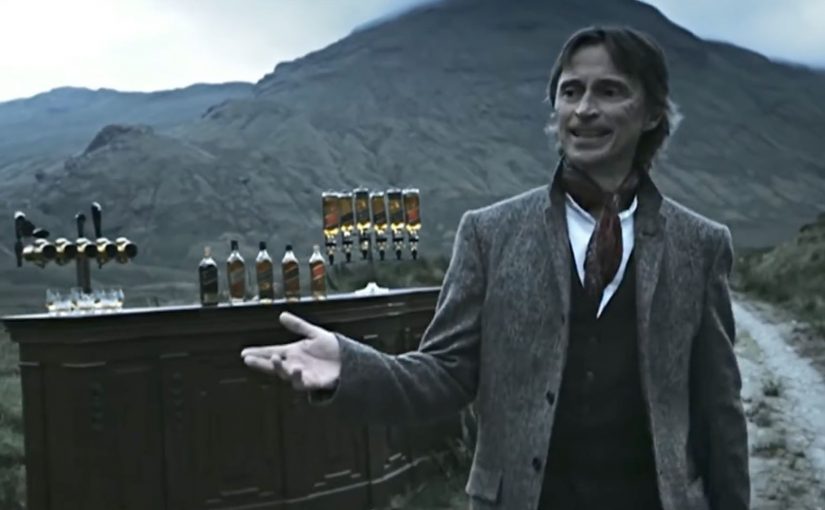
This is about as cool as it gets when telling the history behind your brand. Johnnie Walker and BBH London get Scottish actor Robert Carlisle to narrate the story while walking through the misty Scottish Highlands.

How the idea works once you look past the scenery

The format is disarmingly simple. A single, uninterrupted walking monologue where the scenery keeps moving and the story keeps building, with no hard cuts to “sell” the message. That continuity works because the viewer stays inside one continuous moment, so narrative momentum does the persuasion.

In global FMCG marketing, long-form storytelling can earn attention when it treats the viewer like a participant in the journey rather than a target of a spot.

Why it lands: it refuses to behave like a commercial

This is not a commercial. At least not in the traditional sense. It never ran on TV. It never will. Probably because it is not a nice, short, and sweet 30 seconds long with a fancy logo and URL at the end.

Extractable takeaway: Restraint can be the point. The film feels like a confidence move when the brand lets the message arrive through tone, pace, and presence, not through urgency or repetition.

The business intent: build equity in the “keep walking” idea

The walk is not just a setting. It is the brand metaphor made literal. Movement signals progress, ambition, and continuity, which aligns neatly with premium positioning and long-term brand memory.

The real question is whether your brand can make its story feel like a journey people choose to join, rather than a message they are forced to endure.

For premium brands, this kind of voluntary long-form storytelling is a stronger equity builder than squeezing the same idea into a claim-heavy 30 seconds.

What to steal without copying the Highlands

  • Pick a format that proves the point. Here, a continuous walk embodies persistence better than any tagline could.
  • Trade polish for presence. One voice, one take, real atmosphere. That authenticity carries further than over-produced montage.
  • Let the viewer do the “meaning-making”. The story invites interpretation instead of forcing claims.
  • Design for voluntary viewing. If it cannot survive outside TV, it is not built for modern attention.

A few fast answers before you act

What is the Johnnie Walker film concept here?

A long-form brand story delivered as a single walking monologue through the Scottish Highlands, narrated by Robert Carlisle.

How does the format work mechanically?

It relies on an uninterrupted take and a continuous narrative arc, using movement and pacing to keep attention without conventional ad cuts.

Why does it feel different from traditional advertising?

Because it does not compress into a 30-second claim-and-logo structure. It earns attention through storytelling, tone, and cinematic restraint.

What is the business goal of a piece like this?

To build premium brand equity and strengthen the “keep walking” association by making progress and momentum tangible and memorable.

What is the most transferable takeaway for other brands?

Choose a narrative format that embodies your proposition, then design it to be watched by choice. Not by interruption.