
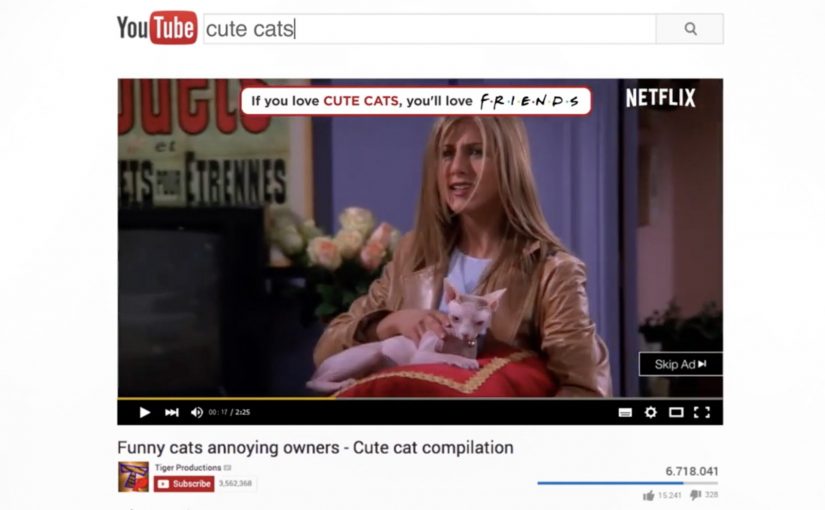
Netflix: The Friendly Pre-Roll Campaign

How do you make a sitcom like Friends, which went off the air 12 years ago, a year before YouTube even existed, seem relevant to online video viewers today.

To promote the ability to stream all 10 seasons, Netflix launched a nostalgic pre-roll campaign built on a simple insight: no matter what you search for or watch, there is almost always a Friends moment that relates to it. The execution was described as tagging thousands of videos so that the pre-roll you see matches the context of what you are about to watch.

Contextual nostalgia, delivered as a punchline

The mechanism is a library-plus-matching system. Take a deep archive of instantly recognizable scenes. Build a mapping between common viewing contexts and a specific Friends clip that “fits”. Then serve those clips as short pre-rolls in front of the videos people already watch, so the relevance lands before the viewer has time to skip.

In subscription streaming marketing, making older catalog content feel culturally current often depends on matching the show to what people already care about in the moment.

The real question is whether older catalog content can feel native to what the viewer is already doing right now. The stronger strategic move here is the match, not the memory.

Why it lands

This works because it flips pre-roll from interruption into payoff. Instead of asking viewers to care about Friends, it proves the show’s range by meeting them inside their existing interests. The result feels like the platform “gets you”, and the show feels less like nostalgia and more like a living reference library.

Extractable takeaway: If you can match your IP to the viewer’s current context fast and accurately, you turn targeting into entertainment. Entertainment earns attention where generic pre-roll loses it.

What this teaches about contextual catalog promotion

  • Build a mapping, not a montage: relevance comes from one perfect clip, not from throwing many at the viewer.
  • Exploit depth as a feature: long-running shows have breadth. Treat that breadth like a targeting asset.
  • Design for the skip button: the first seconds must communicate “this is for you” immediately.
  • Let the idea do the explaining: the best contextual ads are self-evident without a voiceover.
  • Use nostalgia as utility: the memory hit matters, but the contextual “fit” is what makes it feel current.

A few fast answers before you act

What is “The Friendly Pre-Roll Campaign”?

It is a Netflix campaign that uses short Friends scenes as pre-roll ads, matched to the context of what people are searching for or about to watch.

Why use Friends for this?

Because the show has a huge library of recognizable moments across everyday topics, which makes contextual matching feel natural rather than forced.

What makes this different from uploading clips to a channel?

The value is in placement and matching. The clip appears where the viewer already is, and it relates to what they are doing right now.

What is the core marketing job it solves?

It makes older content feel current by connecting it to today’s viewing contexts, instead of relying on “remember this” nostalgia alone.

What is the biggest execution risk?

Bad matching. If the clip feels irrelevant, the magic collapses and the pre-roll becomes just another interruption.
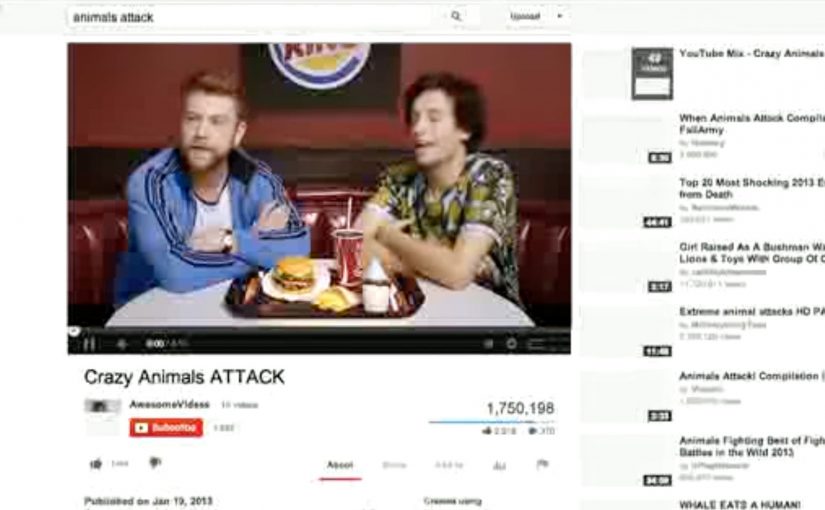
Burger King: Anti Pre-Roll Pre-Roll

Turning the internet’s biggest annoyance into the idea

The smartest digital work often starts with a blunt truth the audience already feels. Burger King’s take on pre-roll irritation is a clean example of that approach.

Pre-rolls on YouTube are considered as one of the most annoying things on the internet. Here, “pre-roll” means the ad that plays before a video starts.

It is a fact that even Burger King acknowledges, even though they profit enormously from them.

So for their campaign in New Zealand they decided to take a slightly different approach. They created 64 videos that made fun of the annoying pre-rolls and then tailored it to the video that was about to be watched.

How 64 tailored pre-rolls made interruption feel relevant

The mechanism was contextual creative at scale.

Instead of running one generic pre-roll, Burger King produced a library of short spots designed to match the viewer’s intent. The pre-roll referenced the type of content about to play, making the interruption feel less random and more like a commentary on the moment. By “contextual creative,” I mean variants that change based on the content about to be watched.

That shift matters because it changes the viewer’s question from “how fast can I skip?” to “what are they going to say about this one?”

The real question is: can you turn the skip reflex into a moment of curiosity.

In global consumer brands buying always-on video, contextual creative is the simplest way to make paid interruption feel earned.

Why self-aware interruption can win attention

Pre-roll is hated because it steals time and breaks flow.

Extractable takeaway: If you cannot remove an interruption, acknowledge it and pay it back with relevance.

This idea reduced that emotional tax by acknowledging the annoyance and using humor to create alignment with the viewer. When a brand says what people are already thinking, it earns a small amount of trust. Tailoring the message to the next video adds a second reward: relevance.

In other words, it does not remove the interruption. It makes the interruption entertaining enough to tolerate.

The business intent behind mocking the format

The intent was to keep the media advantage of pre-roll while reducing the brand penalty that comes with it.

By turning the format itself into the joke, Burger King aimed to increase watch time, reduce skip reflex, and improve brand sentiment. The audience still gets interrupted. But they feel understood, and that changes how the brand is remembered.

If you have to run pre-roll, self-aware contextual creative is a cleaner play than pretending the format is not annoying.

What to steal for your next video campaign

  • Start with a shared frustration. If the audience already dislikes the format, acknowledge it instead of pretending it is fine.
  • Make relevance the reward. Contextual tailoring can turn an interruption into a moment of curiosity.
  • Scale with a clear template. A creative system. Many variants. One consistent joke structure.
  • Earn seconds, not impressions. In pre-roll, attention quality is the real KPI.

A few fast answers before you act

What did Burger King do differently with pre-roll in New Zealand?

They created 64 pre-roll videos that mocked the annoyance of pre-roll and tailored the message to the video the viewer was about to watch.

What was the core mechanism?

A library of contextual creative variants designed to match viewer intent, making the interruption feel relevant and humorous.

Why does self-aware humor work in an interruptive format?

Because it aligns the brand with what viewers already feel, reducing irritation and increasing willingness to watch.

What business goal did this support?

Improving attention quality and sentiment while still benefiting from the reach and placement of pre-roll media.

What is the main takeaway for brands?

If you cannot remove an interruption, redesign it so the audience gets a payoff. Relevance and humor are two of the fastest payoffs available.