
Ikea PS 2014 Instagram Website

You open Instagram and land on Ikea_ps_2014. The grid does not look like a typical brand feed. Each tile behaves like a navigation button. Benches. Tables. Storage. You tap a category image, reveal hidden tags, and jump straight into product views. Instagram becomes the website.

The idea. A catalog built inside Instagram

Ikea has made a name for itself as a trustworthy and affordable source of stylish home decor. In Russia, to promote the PS 2014 collection, Ikea teams up with Moscow-based agency Instinct to approach Instagram in an entirely new way.

How it works. Categories in the grid, products in the tags

The Ikea_ps_2014 Instagram account serves as the campaign website. Each post represents a product category like benches or tables. When you tap a category image, hidden tags reveal “links” to the products within that category.

Here, “hidden tags” are simply Instagram photo tags used as tap targets, so navigation stays inside native Instagram behavior.

Every one of the 34 items in the collection also receives its own Instagram account. For example ps_laptop_station and ps_side_table.

The real question is whether you can turn a platform habit into structured product discovery without forcing people out of the app.

In consumer brands promoting a collection across many items, this pattern uses a social grid as a lightweight category tree.

Why it matters. An app used beyond its intended design

The Instagram app is certainly never meant to be an Ikea catalog website. The mechanism is simple: category posts behave like menu tiles, and tags behave like links, so thumbs do what they already do in Instagram. That is why the experience feels like browsing, not “clicking out”. This is worth copying when the native UI can carry the journey end-to-end, not when you need heavy comparison, configuration, or checkout.

Extractable takeaway: If a platform already has a grid, a tag system, and a tap habit, you can repurpose those primitives into navigation and keep discovery inside one familiar surface.

Where it connects. Earlier “feed as experience” examples

Earlier this year, Mazda and JWT Canada turned the car-maker’s Instagram feed into an interactive road trip, replacing specs with images and videos that followed the vehicle on an epic adventure. Over the course of four months, the campaign “Long Drive Home” helped grow Mazda Canada’s Instagram following by more than 300%.

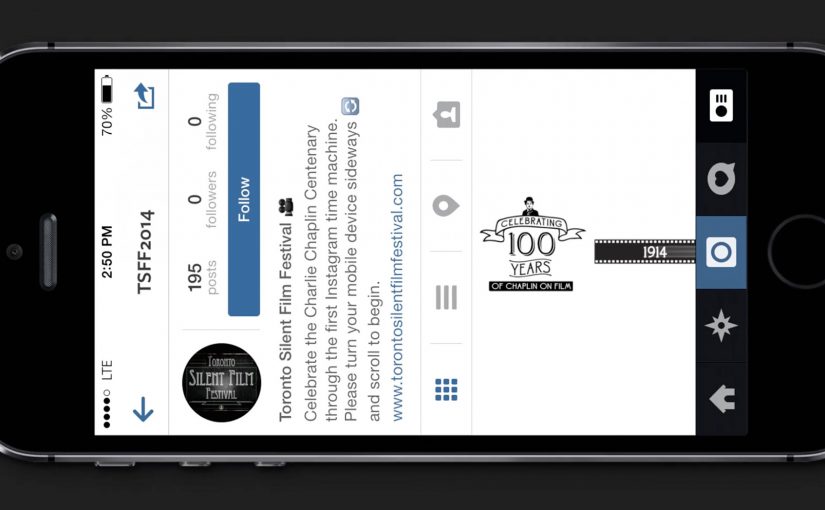
Similarly, the Toronto Silent Film Festival turned its feed tsff2014 on its side, creating an interactive timeline complete with factoids and video clips to celebrate Charlie Chaplin’s 100 years on film.

What to copy from this build

  • Start with categories. Treat the grid as a menu so users can self-select a path.
  • Use tags as links. Turn existing tap targets into jumps to deeper product views.
  • Keep the journey native. Let the platform’s follow, view, and tag behaviors do the work.
  • Design for scan first. Make each tile legible as navigation, not just as content.

A few fast answers before you act

What is the Ikea PS 2014 Instagram website?

A campaign that uses an Instagram account as a navigable catalog. Grid posts act as categories, and photo tags act as links to product accounts.

How do people navigate it?

Users tap category images in the grid, reveal the photo tags, and jump to specific product pages inside Instagram.

What is the key execution detail?

Each PS 2014 product gets its own Instagram account, so exploration happens via Instagram’s native follow, view, and tag behaviors.

Why does this work on mobile?

It turns a familiar mobile habit, browsing a feed, into structured discovery without forcing users into a new interface.

What is the transferable pattern?

Treat platform constraints as UI elements. Build navigation out of what the platform already provides instead of fighting it.
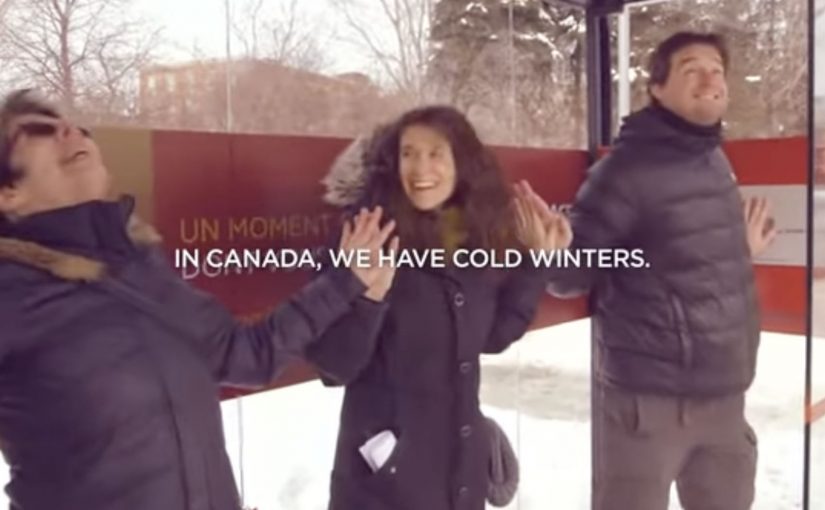
Duracell Moments of Warmth: Heated bus shelter

In a winter of ice storms and a polar vortex, moments of warmth are few and far between. So to change that, Duracell Quantum batteries in Canada retrofit a bus shelter with heaters, but the only way to get the heat to work is through a human connection, people joining their hands.

The shelter is set up so warmth only kicks in when two or more commuters complete a simple circuit by touching the contact points and holding hands in the middle.

Why “warmth you earn together” is the right mechanism

This idea works because the product promise is experienced, not explained. Because the heaters only turn on when strangers complete the circuit together, “power” turns into instant relief you can literally feel while you wait. This is the right pattern when you can prove your claim with a sensory payoff in under a minute.

Extractable takeaway: An ambient activation, meaning a brand experience built into the environment, lands fastest when the reward is physical and only unlocks through simple cooperation.

In cold-weather urban transit, small prompts that reward cooperation can turn waiting time into a shared moment, and into a brand story.

The real question is whether your interaction rule makes strangers coordinate in seconds without a staffer, a screen tutorial, or a social script.

What makes the interaction memorable

  • Clear rule in seconds. No app, no signup, no instructions beyond the physical cues.
  • Instant feedback. The reward is heat, right now, right where you are standing.
  • Social proof built in. Every new person who walks up sees the behavior and understands what to do.

Steal the cooperation trigger

  • Make the benefit tangible. If your claim is about performance, choose an output people can sense.
  • Use a cooperative trigger. Shared actions create a story people retell without prompting.
  • Keep the loop short. If it takes more than one minute to understand, street attention disappears.
  • Let the environment do the explaining. Physical design beats copy when you only have a few seconds.

A few fast answers before you act

What is “Duracell Moments of Warmth”?

It is an ambient bus shelter activation where heaters only activate when commuters connect physically, turning “power” into a felt experience.

How does the bus shelter get activated?

Two or more people complete a simple circuit by touching the shelter’s contact points while joining hands, which triggers the heating system.

Why does the hand-holding mechanic matter?

Because it forces cooperation. The brand benefit is delivered through a human moment, which makes the warmth feel earned and memorable.

What is the brand message in one sentence?

In cold winters you need power, and sometimes the best power comes from connecting with other people.

What is the main lesson for experiential marketing?

If you want people to remember a claim, make them participate in a mechanism that behaves like the claim.

Toronto Silent Film Fest: Instagram trailers

You open Instagram, land on a feed of black-and-white stills, and start scrolling fast. Suddenly the images “move” like a flipbook. It feels like a tiny silent-movie trailer hiding inside a platform that is supposed to be static photos.

The month before, Fox used Vine to mash up a Wolverine trailer and stir hype. Now the Toronto Silent Film Festival borrows the same instinct, then applies it to Instagram. It promotes the event with what it bills as a first-of-its-kind set of Instagram trailers that only really work on a smartphone.

An Instagram trailer, in this format, is a sequence of consecutive still frames posted as individual images. When you scroll rapidly, your thumb becomes the playback control and the feed becomes the projector.

In niche cultural events marketing, the fastest way to earn attention on a small budget is to turn a platform’s native behaviour into the medium.

The trick lands because the mechanic matches the subject. Silent films are built on frame-by-frame illusion. Instagram is built on frame-by-frame browsing. Put the two together and the experience feels clever, not forced.

Why this works better than a normal trailer drop

A standard trailer asks for time and attention up front. This asks for curiosity first. You discover the motion by accident, then you replay it because you want to confirm what you just saw. That discovery loop is the real distribution engine. For a social-first launch, this is a better opener than dropping a normal trailer because it earns replays before it asks for commitment. By “discovery loop” I mean the accidental motion, the immediate replay to confirm it, and the urge to show someone else.

Extractable takeaway: If you can turn a native gesture into a repeatable “did you see that?” moment, you can earn attention and sharing without asking for a click.

What the campaign is really doing

It is less about explaining the festival and more about attracting the right kind of audience. If you enjoy the hack, you are probably the kind of person who will enjoy the program. The format acts like a filter for taste.

The real question is whether your launch gives people a simple action that doubles as playback and sharing.

This work is credited to Cossette, and it later picked up industry recognition for using mobile behaviour as the creative device, which fits the strategy. Make the idea itself feel like a silent-film magic trick.

What to steal for your own social-first launch

  • Exploit a native gesture. Scrolling is a universal habit. Build around it.
  • Make discovery the hook. The best “first play” happens when people think they found something.
  • Match mechanic to meaning. Frame-by-frame browsing is a perfect metaphor for silent-film motion.
  • Keep the explanation optional. If the concept needs a paragraph to understand, it will not spread.

A few fast answers before you act

How do Instagram trailers work in this campaign?

The trailer is split into many still frames and posted as consecutive images. On a phone, you scroll quickly through the feed to simulate motion like a flipbook.

Why does this feel “right” for a silent film festival?

Silent cinema is fundamentally frame-based illusion. This mechanic recreates that feeling using modern thumb-scrolling, so the medium reinforces the message.

What is the main advantage over posting a normal video?

Discovery. People do not just watch. They figure it out, replay it, and show someone else how it works.

What kind of brands or events can use this pattern?

Anything with a strong visual identity and a story that benefits from “reveal”. Especially cultural events, launches, and limited-time programs where curiosity drives consideration.

What is the biggest risk with platform hacks?

If the experience only works in a narrow usage mode, many people will miss it. The mechanic needs to be obvious enough that first-time viewers understand what to do within seconds.