
Norte Beer: Photoblocker

After their successful campaigns for Andes Beer in Argentina, Del Campo Nazca Saatchi & Saatchi is back with another beer campaign. This time it is a TV ad that highlights another Argentine beer-related invention.

A beer cooler that fights the camera flash

The invention is described as the Norte “Photoblocker”. A functional beer cooler fitted with sensors that detect camera flashes. When a flash goes off nearby, it fires back its own burst of light to overexpose the photo and make faces hard to recognize.

In nightlife culture and bar marketing, protecting privacy in public spaces is a relatable tension that spreads fast through word-of-mouth.

Why it lands

The idea works because it turns an everyday annoyance into a “brand-powered solution”. Being tagged in a messy night-out photo is a modern fear, and the Photoblocker is a simple, visual punchline that makes the benefit obvious without explanation. It also sets up a clean contrast. With Photoblocker versus without Photoblocker. That before-and-after logic is perfect for TV, but it also hints at a real-world stunt, which is where the campaign earns extra talk value.

Extractable takeaway: If you can productize a social pain point into a physical prop that demonstrates itself in one second, you get both a clear story and a repeatable proof moment people will retell.

What the brand is really doing

This is less about claiming a taste difference and more about claiming a role in the night. The real question is how a beer brand can become useful in the exact social moment where embarrassment starts. Norte positions itself as “on your side” in the club. The brand becomes the enabler of freedom, mischief, and plausible deniability, with a device that dramatizes that promise.

What to borrow from this nightlife privacy stunt

  • Start from a real behavioral pain. Here it is social photo-tagging anxiety.
  • Build a prop that shows the benefit instantly. One flash. One ruined photo. No explanation needed.
  • Use an obvious contrast format. “With / without” is easy to remember and easy to share.
  • Make the stunt feel usable. Even if it is promotional, it should look like something you would want in real life.
  • Keep the brand role credible. The solution must feel like it belongs in the product’s world.

A few fast answers before you act

What is the Photoblocker, in one sentence?

A beer cooler that detects camera flashes and fires back light to spoil photos taken nearby.

Why is this a “beer campaign” and not just a gadget gag?

Because it connects directly to a drinking occasion and positions the brand as a protector of nightlife freedom, not just a beverage.

What makes the mechanic so shareable?

It is visual, instantaneous, and easy to explain. People understand the benefit the moment they see a flash ruin a photo.

What is the biggest credibility risk?

If the audience thinks it is impossible or staged, the “solution” stops being funny and becomes just an ad trick. The execution has to look functional.

How can other brands apply this pattern without copying it?

Identify a socially painful moment in your category, then build a simple, physical demonstration that resolves it in a way anyone can understand at a glance.
BGH: Big Nose Discount

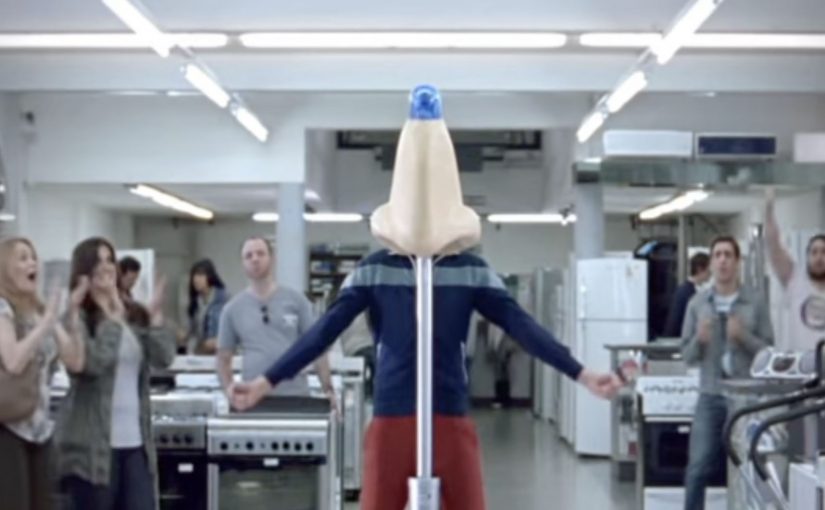
BGH Air Conditioners in Argentina wanted to promote their new line of silent air conditioners. So agency Del Campo Nazca Saatchi & Saatchi came up with a whacky integrated campaign called “Big Nose”.

Together they created the Nose-O-Meter, an in-store device capable of measuring noses. If your nose was big enough to touch the sensor, an alarm would go off and you could win a 25 percent discount.

How the Nose-O-Meter mechanic works

The mechanism is a simple, physical test that turns a product message into a game. Try your luck in-store. Hit the sensor with your nose. Trigger the alarm. Unlock the discount. Online, visitors could upload a profile picture to see if their nose might qualify, and the site pointed shoppers to the nearest Nose-O-Meter location.

That works because a visible pass-or-fail moment makes the product story easy to grasp, repeat, and film in seconds.

In Latin American appliance retail, in-store stunts that turn a functional claim into a public, repeatable challenge can generate attention without needing heavy media spend.

Why it lands

It uses an instantly readable visual proxy. A “silent” product is hard to demonstrate in a store, but a loud alarm creates a memorable contrast that people talk about. The absurdity lowers the barrier to participation, and the discount gives a clear reason to play rather than just watch.

Extractable takeaway: When your benefit is hard to demo, build a playful proxy people can physically perform. Then attach a real reward so the joke converts into action.

What the campaign is really trying to do

The real question is whether a silly retail mechanic can make a hard-to-demonstrate product benefit talkable enough to drive store traffic and sales.

This is awareness plus retail movement. The Nose-O-Meter creates footfall and talk value. The online upload tool extends reach, adds a low-friction entry point, and helps direct people into stores where the discount can close the sale.

Retail activation cues worth borrowing

  • Turn the claim into a test. A measurable moment is easier to film, share, and repeat.
  • Design for spectators as well as players. Public stunts work when watching is entertaining and playing is simple.
  • Use a two-step funnel. Lightweight online interaction that drives to a physical conversion point.
  • Make the reward meaningful. A real discount keeps the activation from feeling like a pure gimmick.

A few fast answers before you act

What is Big Nose in one sentence?

An integrated BGH campaign where a Nose-O-Meter measures your nose in-store, and if it hits the sensor you win a 25 percent discount.

Why include an online photo upload tool?

It lets people self-check and engage remotely, then nudges them toward the nearest in-store device where the discount is actually won.

How does this connect to “silent” air conditioners?

It avoids a technical demo and instead creates a talkable stunt that carries the brand name and offer into conversation, then relies on the discount to drive purchase consideration.

What makes this more than a pure gimmick?

The mechanic ties the joke to a concrete retail reward, so participation has a practical payoff rather than ending as a laugh with no next step.

What is the main risk with humor-led retail activations?

If the mechanic is unclear or the reward feels small, people will watch and laugh but not convert. Clarity and payoff have to be immediate.

Nike: República Popular do Corinthians

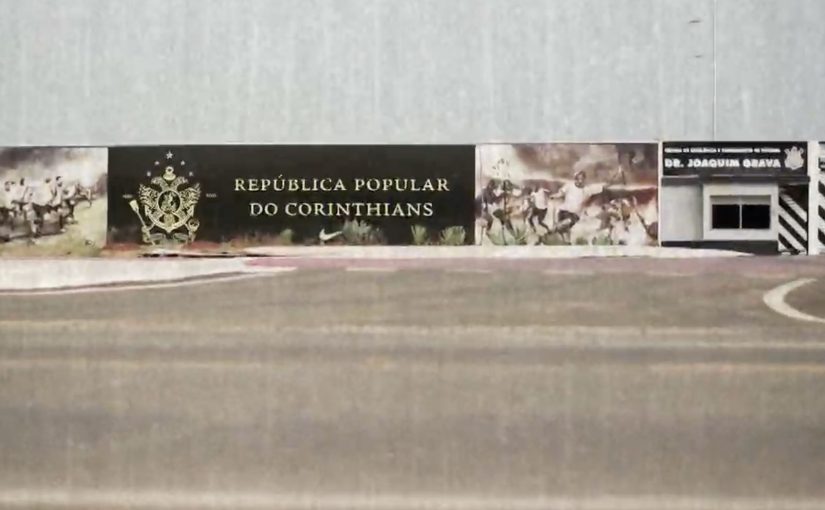
Corinthians celebrated its 100th anniversary in 2010. Nike’s response is not a one-off jersey drop or a polite tribute film. It is a whole new country.

“República Popular do Corinthians” reframes the club’s fanbase as a nation. With supporters reported in the tens of millions, the campaign leans into the idea that this “country” would outsize many real ones by population, and treats that as the brief.

Building a nation, not a slogan

The mechanism is full institutional cosplay. That is, a deliberately official-looking build-out of symbols, rules, and institutions, executed with enough detail that it feels official. F/Nazca Saatchi & Saatchi São Paulo designs the assets a nation “needs”. A coat of arms. A flag. Documents. Legislation. Currency. Heroes. An embassy. Even a president.

In fan-led sports cultures, identity symbols and rituals often travel further than product messages because supporters use them to perform belonging in public.

Why it lands with 30 million people watching

This is a campaign that gives fans something to do, not just something to admire. The “country” frame turns fandom into citizenship, and citizenship invites participation. Collect the documents. Fly the flag. Use the language. Carry the identity. The real question is whether you have a community identity people already perform, or just an audience that only consumes.

Extractable takeaway: When your audience already behaves like a community, stop treating them like a segment. Give them a shared “operating system”. Symbols, rules, roles, and artifacts that let them express membership without needing the brand in the room.

It also sidesteps the usual anniversary trap. Instead of nostalgia-first storytelling, it builds a living structure fans can inhabit, which makes the celebration feel ongoing rather than commemorative.

The commercial intent hiding inside the romance

The emotional story is belonging. The business outcome is demand. A nation needs uniforms, badges, and visible markers of identity, and the campaign makes those markers socially meaningful.

The legacy write-up around the work describes substantial earned attention, including a reported figure of $7,800,000 in free media coverage. Separate from that media value claim, the campaign is also publicly associated with industry recognition, including being named “Idea of the Year” by the Saatchi & Saatchi network’s Worldwide Creative Board.

Stealable moves from the Corinthians “nation”

  • Build an identity kit. Go beyond a logo. Create artifacts people can carry, collect, and display.
  • Make participation the message. If it only works when watched, it is fragile. If it works when used, it spreads.
  • Design for self-propagation. Fans should be able to recruit other fans without a brand explanation deck.
  • Let the world “recognize” it. Embassies, documents, and rituals create the feeling of legitimacy, which is what turns a joke into a movement.

A few fast answers before you act

What is “República Popular do Corinthians”?

It is a Nike campaign that frames Corinthians supporters as citizens of a fictional nation, complete with national symbols and official-seeming artifacts, created to celebrate the club’s centenary.

What is the key mechanism that makes it memorable?

Completeness. Instead of one hero asset, it builds an entire identity system. Flag, documents, currency, roles, and an “embassy” that makes the nation feel legitimate enough to participate in.

Why does the “nation” metaphor work so well for sports fans?

Because fandom already behaves like identity. The nation frame gives supporters a structured way to express belonging, recruit others, and turn private loyalty into public signals.

How can a non-sports brand use this pattern without forcing it?

Start with a real community behavior you can amplify, then design a small set of artifacts and rituals that make participation easy. If people will not use it without you promoting it, simplify the kit until they do.

What is the smallest version of this you can ship?

Make one role feel real, then give it one symbol and one usable artifact. If people can adopt it without instructions, you have something that can spread without constant brand narration.