
Forever Wild: YouTube Interventions

You click a trending video for a quick distraction, and suddenly the content you came for is interrupted by a stark message about rhino poaching. The contrast is the point. It forces you to notice what you normally scroll past.

Forever Wild, described as a no-budget anti-poaching initiative, wanted to make the illegal rhino horn trade feel urgent and push people to sign a petition intended for the US Congress. Ogilvy Cape Town responded with “YouTube Interventions”, remixing the format of popular videos so viewers looking for frivolous entertainment were confronted with the cost of their online attention.

A “YouTube intervention” is a deliberate disruption of an existing video viewing pattern. Instead of asking people to search for a cause film, the campaign inserts a cause message into what people are already watching, then uses that interruption to drive a clear action.

In global digital culture, the scarcest resource is attention, and the most effective cause work often borrows distribution from the very platforms that usually dilute serious messages.

The campaign’s urgency is framed through a common warning at the time, that rhinos could disappear within roughly a decade if poaching continued to escalate. Whether the viewer is convinced or sceptical, the interruption makes the question unavoidable. What are you spending your time on, and what does that choice enable?

The real question is whether you can borrow attention without breaking trust.

Why hijacking “silly” videos is the strategy

This idea does not compete for attention on merit alone. It piggybacks on attention that already exists. By choosing trending videos, the campaign meets people where their behaviour already is, then flips the emotional tone fast enough to create discomfort, reflection, and action.

Extractable takeaway: If you can’t buy reach, borrow an existing attention stream, then earn the right to ask for action with sharp contrast and a clear next step.

What the intervention format does better than a PSA

A normal PSA is easy to avoid. You skip it, scroll past it, or never choose it in the first place. An intervention changes the default. The viewer is already in viewing mode, already committed to watching something, and the disruption creates a brief window where a petition ask can actually land.

This is a better default than a traditional PSA when your biggest constraint is distribution, not storytelling.

Recognition that helped the idea travel

The work was described as being recognised in awards circuits in the period, including a Clio Awards shortlist and a Loeries medal for media innovation, which helped amplify the case beyond the initial view counts.

Practical steals from the intervention format

  • Borrow existing distribution. Put the message inside an attention stream people already trust and use.
  • Make the action immediate. Interruption without a clear next step is just shock.
  • Keep the device simple. The format should be explainable in one sentence.
  • Use contrast intentionally. Comedy or fluff next to crisis creates cognitive friction, and friction creates memory.

A few fast answers before you act

What are “YouTube Interventions” in this campaign?

They are remixed versions of trending videos that insert a rhino-poaching message into the viewing experience, then direct viewers to sign a petition.

Why target people watching frivolous content?

Because that is where volume lives. The campaign uses the audience’s existing behaviour and turns it into a moment of confrontation, rather than hoping people will seek out a serious film.

What problem does this solve for no-budget causes?

Distribution. Instead of paying for reach, the campaign borrows reach from content that is already spreading.

How does this avoid feeling like generic “shock advertising”?

By tying the disruption to a specific action. The message is not only “this is terrible”, it is “sign here”, with the interruption acting as the attention gate.

What is the biggest risk with intervention-style tactics?

Backlash. If the disruption feels deceptive or manipulative, viewers reject the message. The creative has to be transparent about why it is interrupting and what it wants people to do.
Amnesty International: Sound of Amnesty

This year, charity and human rights organization Amnesty International France turns its signatures petition drive at www.marathondessignatures.com into a musical “hymn to freedom” with Paris-based agency La Chose.

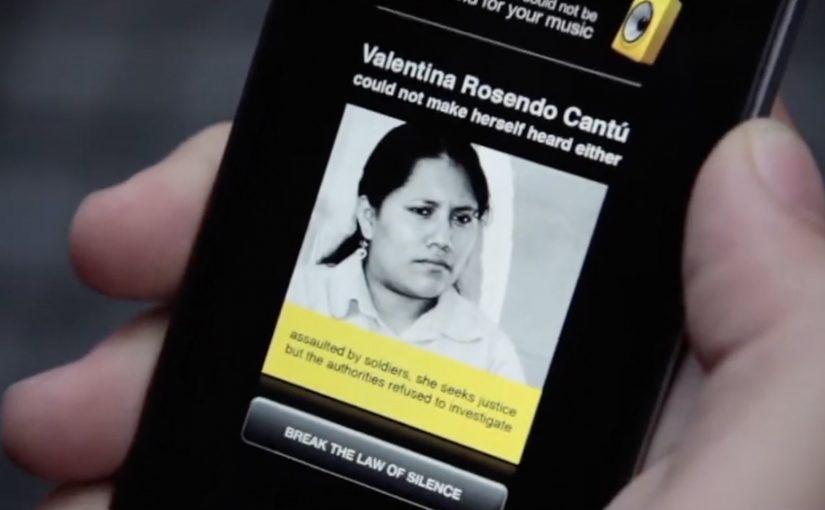
The campaign behaves like a normal petition drive, with one twist: every digital signature releases the next note of an exclusively written song, “The Sound of Amnesty”. To push the idea further, Shazam is used as a distribution channel. When Shazam fails to recognise a song, the app displays a call-to-action message alongside a case story, including: “Valentina Rosendo Cantu could not make herself heard either. Assaulted by soldiers, she asked for justice but the authorities refused to investigate”.

Why the “next note” mechanic works

Most petitions are emotionally important but mechanically flat: sign, share, done. Here, the signature becomes a trigger with immediate feedback. The song becomes a living progress indicator, and every participant can feel they are adding something tangible, not just adding their name to a counter. Because each signature produces an instant, shared “next note” payoff, participation feels consequential, which makes repeat shares and completion more likely.

This is a stronger petition pattern than a static signature counter because it turns support into a felt moment of progress.

Why Shazam is the clever amplifier

Shazam normally appears when you are already paying attention to music. By placing the petition inside the “recognition failed” moment, meaning when the app cannot match a track, the campaign catches people at a point of curiosity and mild frustration. The message reframes that friction as a metaphor for unheard voices, then gives users something concrete to do.

Extractable takeaway: Borrow an existing attention ritual, then use the moment’s friction to make the cause legible and the next action immediate.

In digital petition drives, tying each signature to a shared artifact that literally progresses can turn passive support into collective anticipation.

The real question is whether your petition makes progress feel personal, or just counts people.

Results and escalation

Reportedly, the campaign collected 150,000 signatures, described as a 500% increase from the previous year. The track was also produced on CD and sent to Amnesty’s targeted authorities, turning digital participation into a physical advocacy artifact.

Patterns to copy in petition drives

  • Give every action an immediate consequence. “You unlocked the next note” beats “thanks for signing”.
  • Use an existing habit. Hijacking a familiar moment inside a popular app can outperform building a new destination experience.
  • Make progress audible or visible. A petition counter is abstract. A song evolving over time is memorable.
  • Connect the mechanic to the meaning. The “not recognised” moment mirrors the core human-rights theme: not being heard.

A few fast answers before you act

What is “The Sound of Amnesty” in one line?

A petition drive where each signature unlocks the next note of an original song, turning advocacy into a progressively revealed “hymn to freedom”.

How is Shazam used in the campaign?

When Shazam cannot recognise a song, it displays an Amnesty message and invitation to sign, using the failure moment as a metaphor for silenced voices.

Why does the “unlock the next note” mechanic increase participation?

It adds instant feedback and a shared sense of progress, making signatures feel like contributions to a collective outcome.

Do you need Shazam to replicate the pattern?

No. The transferable move is to piggyback on an existing user habit and turn an ordinary support action into a small, satisfying reveal that people want to share.

What is the most transferable lesson?

If you want more signatures, do not only ask for support. Turn the act of signing into a small experience people can feel and share.

Keep a Child Alive: Digital Death

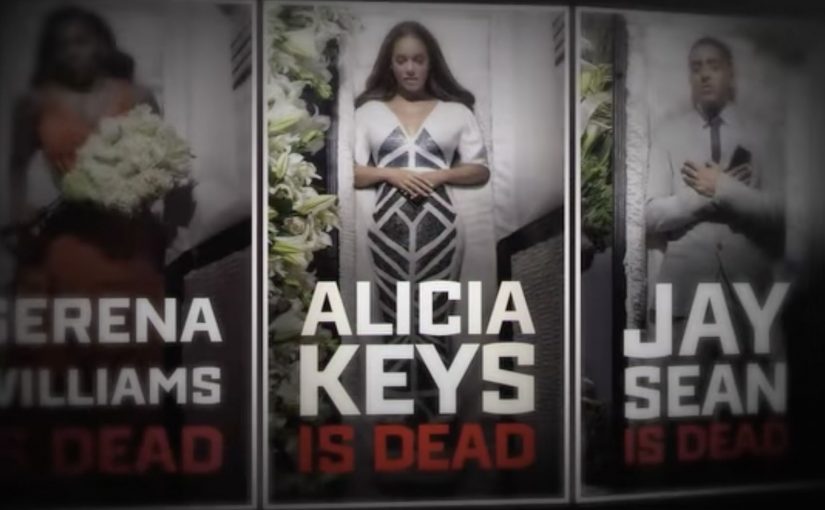
On December 1st, Hollywood died a digital death. Here, “digital death” means celebrities voluntarily going silent on social platforms until donations reach a public fundraising goal. The world’s top celebrity tweeters sacrificed their digital lives to give real life to millions of people affected by HIV/AIDS in Africa and India. Here are their full last tweets and testaments until $1,000,000 is raised to buy their lives back via www.buylife.org.

How “digital death” is made to feel real

The mechanism is brutally simple. Celebrities stop posting. Their accounts point fans toward a donation goal. The audience “buys back” each digital life by contributing toward the $1,000,000 target, with last messages and testament-style videos used as the emotional fuel for the ask.

In celebrity-led social media culture, attention is often treated like currency, and this campaign makes that trade explicit.

Why the stunt spreads

It is built on a clean tension. Fans want access. The cause needs money. Turning silence into a paywall is provocative enough to spark debate, and that debate becomes distribution.

Extractable takeaway: If you need a fundraising idea to travel fast, create a single, legible “lock and unlock” mechanic that people can explain in one sentence, then tie the unlock to a fixed, public goal.

What the campaign is really optimizing

The real question is whether borrowed celebrity attention can be converted into meaningful action for the cause before the stunt burns out.

This is not only about donations. It is about forcing a moment of self-awareness. If people can mobilize instantly for celebrity updates, can they mobilize the same way for lives impacted by HIV/AIDS. The smart part is not the silence itself, but the way it converts attention into a public, measurable ask.

Update: Celebrity Twitter Ban Campaign a Bust, Can’t Raise $1 Million; Stars Freak Out

On December 07, 2010, the New York Post reported that the campaign was struggling to reach the $1 million target at the expected pace, and that a wealthy supporter contributed $500,000 to help move the total forward so participating celebrities could resume posting.

What to steal from this mechanic

  • Make the action loop explainable in one sentence. “Donate to unlock them” is instantly repeatable.
  • Use a fixed, public target. It makes progress visible and easier for others to join.
  • Turn participation into an artifact. “Last tweets” and “testaments” give supporters something to share that carries the ask.
  • Design for pacing, not just launch. If the goal is ambitious, plan how the middle period stays energized when novelty fades.
  • Keep the cause visually present. The celebrity hook gets attention, but the beneficiary story must stay foregrounded.
  • Anticipate backlash and write the guardrails. Scarcity mechanics can feel manipulative. Be explicit about why the constraint exists and where the money goes.

A few fast answers before you act

What was “Digital Death”?

A fundraising stunt where celebrities stopped posting on social platforms, directing fans to donate toward a $1,000,000 goal to “buy back” their digital lives.

Why use “last tweets and testaments”?

It heightens the emotional stakes, and gives fans a final message to react to and share, which helps the donation mechanic travel.

What is the core mechanic that makes it work?

Silence as scarcity. The celebrity’s absence creates demand, and the public donation goal turns that demand into a measurable collective action.

What was the main criticism?

That tying celebrity access to donations can feel manipulative, and that the stunt risks turning a serious cause into a spectacle about famous people.

What is the transferable lesson for cause campaigns?

Build a single, explainable action loop, then make the outcome visible. People give more readily when they can see progress toward a clear target.