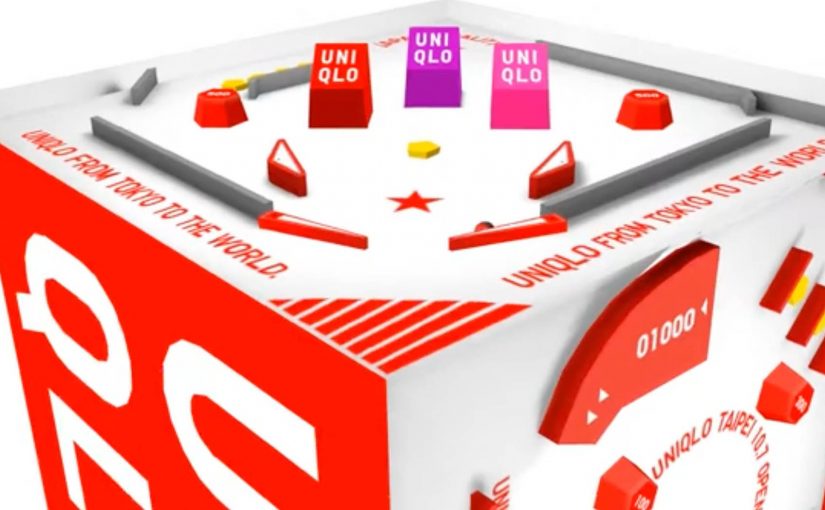
Here is another cool digital campaign from UNIQLO, this time they are promoting the launch of their new UK store via an online pinball machine (built in Papervision) that is socially connected.
You start with a single ball, but on connecting with Facebook you get a bonus 3 to help you climb the leader board for a share of thousands in prizes.
UNIQLO are well known for their digital campaigns and this once again hits the mark, providing a seriously simple pinball machine that feels so easy to master that you’ll be there, racking up some great brand engagement time over the campaign.
Why a simple game is a strong store-launch mechanic
A new store opening is a local moment. A game turns it into a repeated behavior. If the experience is light, fast, and replayable, it can generate more total attention than a one-off announcement.
Extractable takeaway: For store launches, a lightweight replay loop can compound attention over days, not just spike it once.
- Instant entry. You can play immediately without committing time to learn.
- Built-in replay loop. “One more try” is the whole point of pinball.
- Competition creates stickiness. Leaderboards turn casual play into a goal.
Social connection as a value exchange
The Facebook connection is not framed as “follow us”. It is framed as a direct advantage in the game. Extra balls. Better odds of climbing the leaderboard. A clearer path to prizes. Here, the value exchange is simple: you trade a Facebook connection for immediate in-game advantage.
That is the important shift. Social is not an add-on. It is a gameplay benefit, which makes the opt-in feel earned rather than demanded.
The real question is whether your “social” step feels like friction, or like a fair trade that makes the experience better.
What this teaches about gamification done properly
- Keep the mechanic obvious. If people do not understand how to win, they leave.
- Reward the right action. Extra balls is a reward that directly improves the experience.
- Make progress visible. Leaderboards and scores give people a reason to return.
- Make prizes feel real. A “share of thousands” is a tangible incentive that fits the competitive loop.
In retail launch marketing, a simple replay loop can outperform a big announcement because it turns curiosity into time spent.
What to take from this if you run retail or digital campaigns
- Design for time spent, not just reach. A replayable game builds engagement minutes, not impressions.
- Use social as a functional advantage. Tie opt-ins to benefits users actually value.
- Let the format do the messaging. A campaign that is fun is a campaign people return to voluntarily.
- Keep the barrier to entry close to zero. The simpler the first 10 seconds, the better the retention.
A few fast answers before you act
What is UNIQLO “Lucky Machine”?
It is a socially connected online pinball game built to promote the launch of a new UNIQLO UK store, with leaderboards and prizes.
How does Facebook connection change the experience?
Connecting with Facebook gives players a bonus three balls, improving their chances to climb the leaderboard and compete for prizes.
Why is pinball a good format for engagement?
It is quick to start, easy to replay, and naturally encourages “one more try”, which increases time spent with the brand.
What is the main growth mechanic?
A simple value exchange. Social connection provides a direct gameplay advantage, which drives opt-ins without heavy persuasion.
What is the transferable lesson for campaign design?
If you want engagement time, choose a format that is inherently replayable, then attach social behaviors to real user benefits.