USG People, one of the world’s biggest outsourcing companies, launched ikki.be. A portal for freelancers in search of new projects. The mission was to build awareness among freelancers and get them to sign up.
What they learned is simple. One of a freelancer’s biggest concerns is getting paid on time. Which they usually do not. So instead of another feature-led pitch, they created a physical reminder that lets freelancers “recall” the accounts department of late payment, with a little smile. Here, “recall” means prompting the payer to act by making the delay impossible to ignore.
An invoice that complains for you
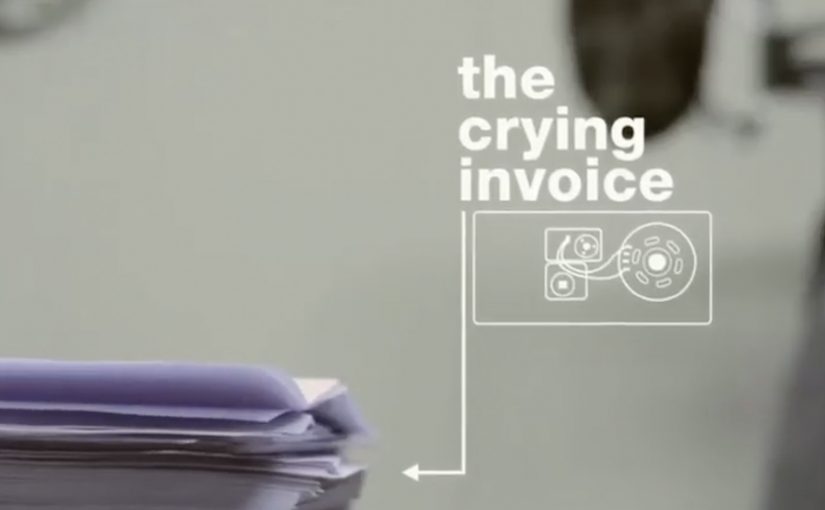
The execution is the product truth turned into a prop. A mailed invoice that starts to cry when the envelope is opened. Case write-ups describe the trigger as a simple sensor reacting when the invoice is exposed, so the sound becomes unavoidable in the moment the payment decision is made. That matters because the trigger turns a forgettable invoice into an unavoidable emotional cue at the exact moment payment is being processed.
In European B2B lead generation for freelance marketplaces, the fastest attention often comes from solving a cash-flow anxiety rather than talking about platform features.
Why it lands
It lands because it reframes a painful, familiar workflow into a moment of social pressure that feels playful rather than aggressive. The invoice does the awkward part, and the person opening it becomes the one who has to explain why it is “crying”. That flips the emotional burden away from the freelancer chasing and onto the payer delaying.
Extractable takeaway: If your audience shares a recurring frustration, build a small object or mechanic that creates a socially visible cue at the exact decision point, then let that cue do the persuasion instead of your copy.
What the business intent really is
This is awareness built on relevance. It ties ikki.be to a pain point that every freelancer recognizes immediately, and it makes the brand memorable through a single, repeatable story people will retell. This is the right kind of B2B awareness work because it earns memorability by dramatizing a real freelancer pain instead of dressing up a feature list. The real question is how to make your brand useful at the moment the pain is felt, not just visible before it happens.
What to borrow from this payment-pressure idea
- Start from a shared anxiety. Build the message around what keeps your audience up, not what your roadmap shipped.
- Move the moment to where decisions happen. Here, the reminder appears at envelope-open time, not in a banner.
- Use humor as a pressure valve. Playful discomfort can be more effective than aggressive escalation.
- Make it explainable in one line. “It cries when you open it” is instant word of mouth.
A few fast answers before you act
What is “The Crying Invoice”?
A physical invoice that audibly cries when opened, designed to nudge late payers and spark conversation around paying freelancers on time.
Why does this work better than a standard awareness ad?
Because it appears inside a real payment workflow and turns a private delay into a socially noticeable moment, without needing confrontation.
What problem is the campaign solving for ikki.be?
It makes the portal relevant by anchoring it to the most common freelancer concern. Getting paid on time.
What is the main risk with this approach?
If the gimmick feels mean-spirited or humiliating rather than playful, it can trigger backlash and reduce goodwill.
How can another B2B platform copy the pattern?
Identify the shared operational pain, then create a lightweight intervention that shows up at the decision point and makes the issue easy to talk about.