
Dortmund Concert Milk: Taste the Season

Dortmund Concert Milk: Taste the Season

Konzerthaus Dortmund has world-class acoustics and artists, but it still faces the familiar challenge. Most people do not automatically choose classical music. For the 2010/2011 season, Jung von Matt was asked to pull more of the “not naturally interested” public into the hall.

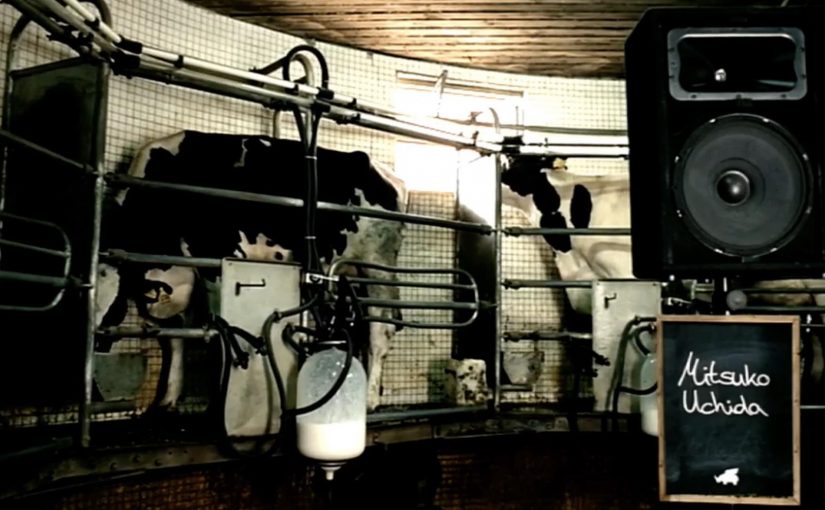
The solution makes the promise literal. Let people experience music with their sense of taste. The campaign leans on the often-cited idea that cows produce more milk when exposed to classical music, so selected works from the new season were played to cows. The milk was then sold in shops as Dortmund Concert Milk, offered in nine varieties, with each bottle carrying information about the season.

How “Konzertmilch” turns a program into a product

The mechanic is a clean chain. Take repertoire from the upcoming season. Route it through a surprising production setting. Package the output as a retail product that people can encounter in everyday shopping, with the concert hall story printed on the bottle. The milk becomes both a sampling metaphor and a distribution channel for the season narrative. That works because the product format carries the concert hall story into low-pressure moments where curiosity is easier than commitment.

In German cultural institutions, campaigns often have to earn attention from people who do not self-identify as classical-music audiences.

Why it lands

It collapses distance. “Great acoustics” is hard to imagine if you are not already a fan, but “taste the music” is instantly legible. The cow premise gives the idea a folklore-like stickiness, and the retail format makes the campaign feel less like advertising and more like something you discover.

Extractable takeaway: When your category benefit is experiential but hard to preview, build a proxy people can physically encounter in daily life. Then let packaging carry the story and the call-to-action.

What the activation is really optimizing for

This is designed to create first contact with non-attenders. The real question is how to make a concert hall feel low-friction before anyone commits to a ticket. This is smart audience-growth work because it uses everyday retail to make the first step feel casual rather than elite. Retail shelves provide scale, repetition, and social permission. Buying a bottle is a low-risk way to engage with a concert hall brand, and the printed season information turns that impulse into a next step.

What to steal for your own audience growth

  • Translate the promise into a sensory shortcut. If people cannot imagine the experience, give them a proxy they can touch, taste, or keep.
  • Ship the story as packaging. A bottle label can do the work of a brochure, but in a context where people actually read it.
  • Use “varieties” to signal curation. Multiple flavors create collectability and invite comparison, which increases repeat exposure.
  • Make the concept easy to retell. If the whole campaign fits into one sentence, it travels further than the media plan.

A few fast answers before you act

What is Dortmund Concert Milk in one sentence?

A retail activation where cows listen to selected works from Konzerthaus Dortmund’s season, and the resulting milk is sold as “Konzertmilch” in multiple varieties with season info on the bottle.

Why does this help a concert hall reach non-attenders?

Because it moves the brand out of the venue and into everyday life, using a low-commitment product encounter to spark curiosity about the season.

What is the key creative move?

Turning an intangible promise, “experience music”, into a concrete proxy people can literally consume, and then using that proxy to carry the program message.

What is the main risk when copying this approach?

If the novelty overwhelms the cultural offer, people remember the gimmick but not the program. The packaging and narrative must keep pointing back to the season.

Does the cow premise need to be scientifically proven for the idea to work?

No. The campaign works at the level of curiosity and retellability, but the bottle story still has to keep leading people back to the concert season rather than leaving them with only the stunt.

Golf Digest: Desert Disruption

Golf Digest: Desert Disruption

Golf Digest wanted to remind golf enthusiasts that they can improve their game with the magazine. Rather than saying it in a predictable headline, Memac Ogilvy Dubai chose a faster route to attention. A prank designed to disrupt the region’s biggest golf event and get people to pick up the magazine.

The point is not to out-shout the tournament. It’s to create a moment of interruption that only resolves when you engage with the brand asset sitting right there in your hands.

Disruption as distribution

A prank at a live event works when it forces a choice. Ignore it and stay confused. Or reach for the one object that explains what’s happening. In this case, the magazine becomes the “decoder”, meaning the one object that explains what’s happening, which makes pickup feel like participation, not like being sold to.

In sports event marketing, a well-timed interruption can convert spectators into participants, as long as the payoff is immediate and easy to understand.

Why this lands

This works because it ties the brand benefit to a behaviour you can measure. Magazine in hand. Pages opened. Content consumed. The prank is not the product. It is the trigger that makes people re-experience Golf Digest as a practical tool for better play, instead of as background media. The real question is whether the interruption makes the magazine feel more useful, not merely more visible.

Extractable takeaway: If you need to revive a “useful” product people have stopped actively choosing, design an event moment where the product is the simplest way to regain control and understand what’s going on.

What to steal from event disruption

  • Make the brand the resolution. The disruption should only make sense once someone engages with your asset.
  • Use the right arena. Do it where your core audience is already emotionally invested.
  • Keep the explanation short. If the prank needs a long briefing, the moment dies.
  • Turn interest into a physical action. Pickup, flip, keep. Behaviour beats impressions.

A few fast answers before you act

What is Golf Digest’s “Desert Disruption” idea?

It’s a prank-based event activation designed to interrupt attention at a major golf event and prompt spectators to pick up the magazine as the way to understand the moment.

Why use a prank to sell a magazine?

A prank creates immediate curiosity. If the magazine is positioned as the fastest explanation or payoff, pickup becomes a natural reaction.

What does this communicate about Golf Digest?

That it is not only entertainment. It is positioned as a practical resource for improving your game.

What is the key success condition for this pattern?

The disruption must be legible quickly, and the magazine must clearly resolve the confusion with an instant payoff.

What can go wrong with event disruption?

If it feels unsafe, disrespectful to the sport, or unclear, it can trigger annoyance instead of curiosity. The tone and timing matter as much as the idea.

Liaison Dangereuse: Striptease Shopping

Liaison Dangereuse: Striptease Shopping

Valentine’s lingerie shopping, turned into a show

Liaison Dangereuse, a German lingerie brand, gave Serviceplan a creative challenge: increase lingerie sales around Valentine’s Day.

Seduction always works. So what about making the buying experience attractive and unique for men by giving them the opportunity of buying lingerie directly from the body of beautiful models, and pairing that with a memorable striptease? Thus a new way to sell online lingerie was created.

The mechanism that changes behavior

The idea reframes checkout as participation. Instead of browsing product grids, the customer “shops” from the model, which makes selection feel more like discovery than transaction, and reduces hesitation at the moment of choice.

In European ecommerce and performance marketing, the fastest lever is reducing hesitation by making the path to purchase feel emotionally easy and socially tellable.

The real question is whether you can turn your highest-friction step into a guided, retellable moment without breaking brand trust.

This kind of mechanic is worth copying only when it fits your brand voice and clear consent boundaries.

Why it lands with the intended buyer

This is built for a very specific Valentine’s reality: many male buyers want help choosing, and they want the moment to feel confident, not awkward. A guided, theatrical experience removes indecision and makes the purchase feel like part of the gift.

Extractable takeaway: When the buyer feels unsure about choice, redesign selection so confidence is the default and the mechanic becomes the story.

Earned media as a built-in distribution layer

Serviceplan not only generated free media coverage from major websites, newspapers and magazines in Germany, it also reported additional traffic of 155% to the Liaison Dangereuse website. Reported sales went up by 50% during the promotion.

Click here to watch the video on Ads of the World website.

Steal this conversion mechanic

  • Design for the buyer’s emotion. Remove embarrassment and decision anxiety. Add guided confidence.
  • Make the shopping path the story. If the mechanic is inherently retellable, distribution comes with it.
  • Focus the experience on the highest-friction moment. Choice, not payment, is often the real dropout point.
  • Measure what matters. Track uplift in qualified traffic, add-to-cart rate, and conversion, not just press mentions.

A few fast answers before you act

What is “Striptease Shopping” for Liaison Dangereuse?

It is a Valentine’s-focused ecommerce activation that lets shoppers buy lingerie through a model-led, striptease-style interface, turning product selection into a playful, guided experience.

Who is the experience designed for?

It targets gift-buyers who feel unsure about lingerie choices. The mechanic reduces awkwardness and indecision by making selection feel assisted rather than self-directed.

What is the behavioral mechanism that improves conversion?

It reframes checkout as participation. By turning browsing into a simple, story-like interaction, it reduces hesitation and makes the purchase feel emotionally easy.

Why did it generate strong earned media?

The buying mechanic is unusual and instantly demonstrable. That makes it easy to describe, easy to show, and inherently shareable across press and social channels.

What results were reported from the promotion?

Campaign summaries reported +155% website traffic and +50% sales during the promotion period.

What is the key risk to manage with “seduction” mechanics?

Brand fit and boundaries. If the experience feels exploitative or off-brand, the attention can backfire. The idea needs clear intent, consent, and tone discipline.