
13th Street: Last Call Interactive Horror

Last year Lacta Chocolates came up with a web-based interactive love story called Love at first site. Now Jung von Matt and Film Deluxe take the same “viewer participation” impulse into a darker genre with an interactive horror experience designed for cinemas. Here, viewer participation means the audience can influence what happens on screen instead of only reacting to it.

The movie is called Last Call by 13th Street, and it is billed as the first interactive horror movie in the world.

How the film turns a screening into a live conversation

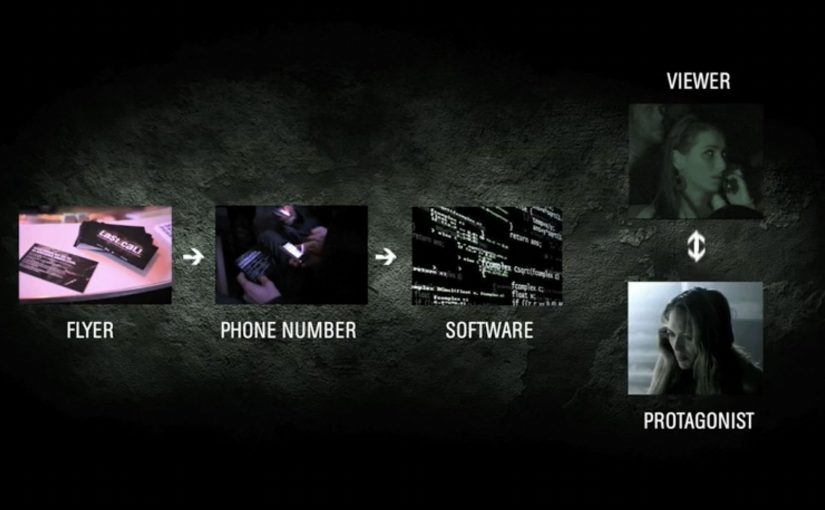
The core mechanic is simple and high-stakes. The audience can communicate with the protagonist through specially developed speech recognition that turns one participant’s answers, delivered via mobile phone, into on-screen instructions.

Instead of passively watching a character make bad decisions, one viewer gets pulled into the story and has to direct what happens next, under pressure, in front of a room full of people.

In European entertainment marketing, the strongest channel ideas are the ones that turn passive viewing into a shared physical experience.

Why it lands: it converts fear into responsibility

Horror is already interactive in your head. You are constantly thinking “don’t go in there” or “run”. Last Call makes that internal commentary explicit, then gives the viewer control at exactly the moment when tension is highest. That works because it turns private fear into public responsibility, which intensifies tension instead of interrupting it.

Extractable takeaway: If you want interactivity to feel meaningful, make the choice time-critical and socially visible. When a whole room watches one person decide, even simple branching choices feel heavier.

The intent: make a channel brand feel like an event

This is not interactivity for its own sake. It is a positioning play. The real question is whether the interaction makes 13th Street feel like the only place this kind of horror experience could happen.

The phone call is the hook, but the real product is the shared story people retell afterwards: “someone in our screening got the call”.

What to steal for your own interactive storytelling

  • Choose one decisive moment: interactivity works best when it happens at a peak, not throughout.
  • Keep the command vocabulary tight: yes or no, left or right, stay or flee. Clarity beats cleverness.
  • Make the interaction legible to spectators: the audience should understand what the caller chose without needing explanation.
  • Design for group emotion: the collective tension and reaction is part of the value.
  • Build the “retellable” sentence: “the character called an audience member” is stronger than any tagline.

A few fast answers before you act

What makes Last Call “interactive”?

A participant receives a mobile phone call and speaks choices that are translated via speech recognition into commands, which trigger different follow-up scenes.

Why use a phone call instead of a web interface?

A phone call feels personal and urgent, which matches horror. It also keeps the participant’s hands free and the interaction fast enough for a live screening.

Is this a real branching film or a gimmick?

It works like a branching structure with pre-produced scenes, selected based on a small set of recognized commands. The novelty is the live calling mechanic in a cinema context.

What is the biggest risk when copying this format?

Latency and ambiguity. If recognition is slow or choices are unclear, tension collapses. The interaction has to feel instantaneous and unmissable.

What is the transferable principle beyond horror?

Put the audience in a single, decisive role at a high-emotion peak. One clear decision, delivered fast, can create a stronger memory than many shallow interactions.
KLM: Economy Comfort

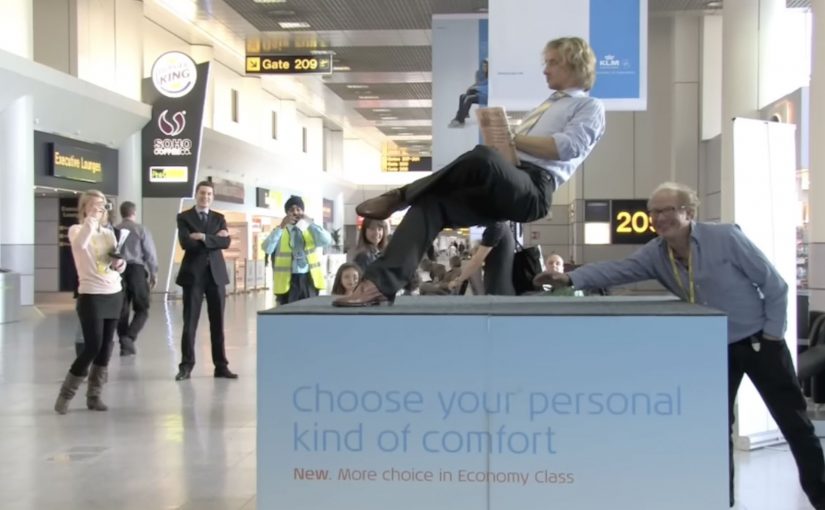
Dutch ad agency Rapp Amstelveen has magician Ramana appear in a European airport, performing his levitation trick to advertise KLM’s comfortable Economy Comfort seats.

A comfort claim made physical

The execution picks a familiar magic trope. Levitation. And places it in a high-friction environment where comfort actually matters. Airports. Waiting. Stress. The stunt is easy to understand even without copy, and the metaphor does the selling: this seat makes the journey feel lighter.

How the mechanism earns attention

Mechanically, it works because it is a live interruption, meaning a real-world moment people witness in person, that behaves like entertainment first and advertising second. People stop because something unusual is happening, then the brand message arrives as the explanation for the spectacle.

In travel and airline marketing, making an abstract benefit feel tangible is often more persuasive than repeating feature lists.

In European travel brands, context-led demonstrations often outperform abstract comfort claims.

Why it lands in an airport context

The location is the multiplier. In an airport, audiences are already thinking about space, fatigue, and the next few hours of their life. A “comfort” message is not a concept. It is an immediate desire. That makes the metaphor feel relevant rather than random.

Extractable takeaway: When the promise is comfort, place the proof where discomfort is already top of mind, so the message lands as a relief, not a claim.

What KLM is really buying with a stunt like this

Beyond awareness, the intent is memorability for a paid upgrade. Economy Comfort is the kind of product that can disappear into pricing tables. A public demonstration gives it a story. The real question is whether your upgrade has a story people will repeat after they leave the airport. And stories travel further than seat specs.

Steal this move for paid upgrades

  • Use a single, legible metaphor. If the audience can “get it” in one second, you win the next ten.
  • Stage it where the benefit is felt. Context turns a claim into a reminder of a real pain point.
  • Let entertainment open the door. Make the first moment about curiosity. Make the second moment about the brand.
  • Turn a feature into a story. Especially for upgrades and add-ons that otherwise live in fine print.

A few fast answers before you act

What is the core idea behind KLM Economy Comfort?

A live levitation stunt in an airport used as a physical metaphor for a more comfortable flight experience.

Why use a magician for a seat upgrade?

Because comfort is hard to “prove” in an ad. A simple spectacle makes the promise feel immediate and memorable.

What role does the airport setting play?

It is where people are already primed to care about comfort, waiting, and travel fatigue. The message meets them at peak relevance.

What is the transferable lesson?

When your benefit is abstract, demonstrate it with a single visual metaphor, in the environment where the benefit matters most.

How can you adapt this if you cannot do a live stunt?

Use a single visual metaphor you can demonstrate in the place where the benefit is felt, then let the brand message arrive as the explanation.

BrandAlley: Oxford Circus FlashWalk

Shoppers hit Oxford Circus and suddenly the crossing becomes a runway. A quick catwalk appears, cameras come out, and the crowd freezes because this is not what people expect in the middle of a busy high street.

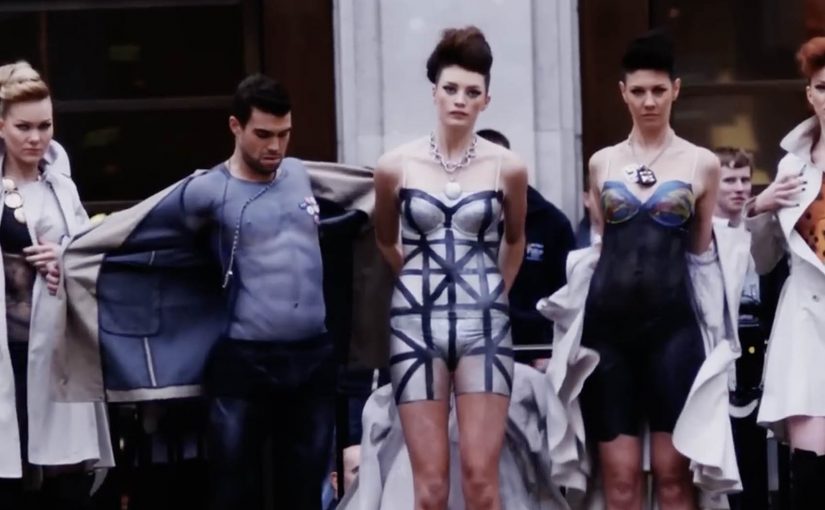
BrandAlley’s FlashWalk, a pop-up runway walk staged in public, uses a simple escalation. Models walk a catwalk route in public, styled with body paint rather than clothing, and the spectacle does the rest. It is designed to stop people mid-stride and turn street attention into store intent.

Why this breaks through retail clutter

In high-footfall retail streets, the strongest activations turn a familiar place into a short, unmistakable moment that people feel compelled to witness. Most retail messages compete on price and repetition. This competes on surprise. The catwalk format is instantly readable, so the idea does not need explanation. The audience understands what is happening in seconds, then stays for the contrast between a polished runway and an everyday street.

Extractable takeaway: If you can turn a familiar public space into an instantly recognisable format, you can earn attention before you spend on persuasion.

What BrandAlley is really buying

The real question is whether the moment gives people a story they want to repeat immediately. This is a footfall play built on earned attention. The real “media” is the crowd that gathers, the photos that get taken, and the story people tell immediately afterwards. The brand gets remembered because the moment was unusual, not because the copy was persuasive. If you can stage it safely and legally, a live street moment beats another static poster for first-time attention.

How to turn a street moment into footfall

  • Pick a location that already concentrates your audience. If the street is busy, your stunt scales faster.
  • Use a format people recognise instantly. A catwalk reads at a glance, which reduces friction.
  • Design for documentation. If the crowd films it, distribution becomes automatic.
  • Link the spectacle to a clear next step. The moment should point to the store or the sale without needing a second campaign to explain it.

A few fast answers before you act

What is the BrandAlley Oxford Circus FlashWalk?

It is a street-level catwalk stunt at Oxford Circus designed to stop passers-by and drive attention and footfall to BrandAlley, using a runway-style “flash walk” moment.

Why use a catwalk format for retail marketing?

Because it is instantly legible. People understand “runway” without instructions, so the stunt grabs attention fast and creates a crowd effect.

What makes this different from a typical outdoor ad?

Outdoor ads ask you to notice. This asks you to watch. The experience turns the street into the medium, which tends to generate photos, sharing, and conversation.

What is the biggest risk with shock or surprise stunts?

If the spectacle does not connect back to the store or the offer, you get attention without action. The link to the retail goal must be obvious on the day.

When does a footfall stunt outperform a discount campaign?

When you need cut-through, not only conversion. A stunt can reintroduce the brand to people who have tuned out price noise, then the offer does its job afterwards.