
Yellow Pages: Yellow Chocolate

Yellow Pages: Yellow Chocolate

A phone directory brand sells a real chocolate bar, and the public lines up to buy it. That is the core twist behind Yellow Pages New Zealand’s “Yellow Chocolate”.

When a “job to be done” becomes a product on a shelf

The premise is simple and weird enough to travel. A regular New Zealander, Josh Winger, is tasked with creating, marketing, and distributing a chocolate bar that “tastes like the colour yellow”, using only businesses he can source via Yellow Pages across print, online, and mobile.

Here, a “job to be done” means the practical outcome people need help achieving, not the channel they use to achieve it.

The campaign is described as starting with a call for entries and then turning Josh’s progress into episodic content that pulls people into the build, not just the reveal.

How it works as an integrated proof, not a stunt

The mechanism is a live product demonstration disguised as entertainment. The brand does not claim usefulness. It forces a public, time-boxed build where every dependency is a Yellow Pages lookup, and the finished output is a retail product that carries the proof story with it.

That works because a public build turns a vague claim of usefulness into a visible chain of evidence people can watch, judge, and later buy.

At Cannes Lions 2010, the work is listed as winning a Gold Lion in Media, a Silver Lion in Titanium and Integrated, and a Bronze Lion in Cyber.

In mature categories where a brand needs to prove relevance to a search-first audience, turning the proof into something people can buy and share compresses “brand promise” into observable behavior.

Why “taste like yellow” sticks

An abstract brief invites participation. People argue about what “yellow” should taste like, contribute ideas, and then follow the build to see whose intuition survives contact with manufacturing, packaging, distribution, and retail reality.

Extractable takeaway: If your product is a utility people underestimate, stage a public build where your tool is the only allowed method. Then ship a tangible artifact that carries the proof narrative into everyday life.

What Yellow Pages is really buying

This is repositioning by demonstration. The chocolate bar is a carrier for a bigger reset: Yellow Pages is not an “old book your parents used”. It is framed as a modern system that can still help anyone get a job done, end to end, under real constraints.

The real question is whether a legacy utility can make usefulness feel current again without leaning on nostalgia or category habit.

What the results are described as

Results are reported as unusually strong for something that is, technically, a piece of marketing communications. The bar sold for $2. Some supermarkets reportedly sold out on launch day, and some bars were later traded online for up to $320. The campaign is described as building an online audience of more than 80,000, including around 16,000 Facebook fans and about 800 Twitter followers.

What to steal for your next “prove it” campaign

  • Make the constraint the headline. “Only use businesses found via X” is clearer than any brand manifesto.
  • Design for contribution. Pick a problem the audience can argue about in public, then let them feed the build.
  • Ship an artifact. A real product, sample, tool, or output beats a landing page when you need belief, not awareness.
  • Carry the proof inside the thing. Packaging and POS that explain “how it was made” extends the story past the content moment.

A few fast answers before you act

What is the Yellow Pages “Yellow Chocolate” campaign?

It is an integrated campaign where Yellow Pages challenges a participant to create and launch a chocolate bar that “tastes like yellow” using only Yellow Pages listings to source everything needed. The finished bar becomes the proof artifact.

Why does a physical chocolate bar matter here?

Because it turns an abstract brand claim into observable reality. People can buy the output, and the story of how it was made becomes a portable demonstration of the directory’s usefulness.

Which Cannes Lions awards is it listed as winning?

Cannes Lions listings for 2010 show the work winning a Gold Lion in Media, a Silver Lion in Titanium and Integrated, and a Bronze Lion in Cyber.

What outcomes are reported?

Reported outcomes include rapid sell-outs in some supermarkets, bars traded online for high prices, and sizeable social followings. Some recall and usage-lift figures are also reported, but vary by secondary retellings.

What is the transferable principle?

When you need to change perception of a legacy utility, do not argue. Force a public build where your tool is the only allowed method, then ship the proof as a tangible artifact.

Flashback Book Facebook App

Flashback Book Facebook App

You scroll through years of Facebook updates, realise how quickly your best moments disappear into the feed, then hit a button to turn them into something you can actually keep. Flashback Book takes your statuses and photos and produces a printed Facebook book you can hold.

The brief. Launch a Facebook platform without the usual gimmicks

Bouygues Télécom asks ad agency DDB Paris to come up with an idea to launch their Facebook platform. The goal is to go beyond using profile pictures in a funny way, or pranking friends with small jokes.

The insight. We post every day, then forget what we shared

DDB looks at the way we use Facebook and finds a simple truth. Even though we use the social networking site every day, we forget our favourite moments we share online. So they create an app that changes that, and keeps Facebook, in a book.

How the Flashback Book is created

Facebook ads engage people to participate in the creation of their books and receive a printed copy of their statuses and photos. You can also choose up to 10 friends to add into your book, as well as the desired timeframe, whether it is your birthday, your wedding, or from the very beginning of your profile.

That works because a few simple choices turn passive scrolling into light curation, which makes the printed outcome feel personal without making the experience feel like work.

Why turning the feed into a book lands

The real question is how you make a social platform feel valuable when most social content is designed to disappear into the next post. The answer here is to turn forgotten updates into a keepsake. This is a smarter launch move than another lightweight Facebook stunt because it gives people something worth finishing.

Extractable takeaway: When people feel their digital history is worth preserving, participation stops feeling like promotion and starts feeling like recovery.

In social platforms built on endless feeds, one durable way to create value is to convert personal traces into something people can keep, gift, or revisit.

After only two days they receive 15000 fans, and the limited edition of 1000 books are gone in only an hour.

What to steal from turning social memories into products

  • Turn the feed into a tangible artefact. A physical output makes “I should do this later” become “I want this now”.
  • Let users curate with a few meaningful choices. Timeframe and included friends are enough control to feel personal without slowing the flow.
  • Use life events as the organising logic. Birthdays and weddings are natural prompts for reflection and gifting.
  • Make the reward feel scarce and real. A limited edition run pushes completion and makes the outcome feel worth the effort.

A few fast answers before you act

What is Flashback Book in one sentence?

It is a Facebook app concept that turns your statuses and photos into a printed book, so your favourite moments live outside the feed.

What choices does the user control?

You choose the timeframe and can include up to 10 friends, which makes the book feel personal and event-based rather than generic.

Why does a physical book work as a social idea?

Because it flips ephemera into permanence. It turns “endless scrolling” into a curated artefact you can keep, gift, and revisit.

What is the key execution lesson here?

Make participation lightweight and the output tangible. When the reward is a real object, the motivation to complete the flow increases.

What makes the experience feel personal without becoming slow?

The user only chooses a timeframe and up to 10 friends. That gives enough control to feel personal without turning the flow into a long editing task.

UNIQLO: Lucky Machine Social Pinball Launch

UNIQLO: Lucky Machine Social Pinball Launch

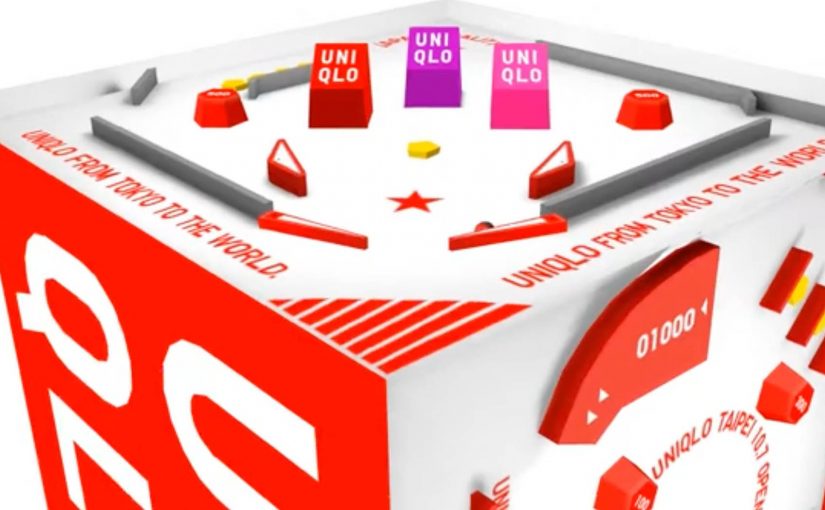
Here is another cool digital campaign from UNIQLO, this time they are promoting the launch of their new UK store via an online pinball machine (built in Papervision) that is socially connected.

You start with a single ball, but on connecting with Facebook you get a bonus 3 to help you climb the leader board for a share of thousands in prizes.

UNIQLO are well known for their digital campaigns and this once again hits the mark, providing a seriously simple pinball machine that feels so easy to master that you’ll be there, racking up some great brand engagement time over the campaign.

Why a simple game is a strong store-launch mechanic

A new store opening is a local moment. A game turns it into a repeated behavior. If the experience is light, fast, and replayable, it can generate more total attention than a one-off announcement.

Extractable takeaway: For store launches, a lightweight replay loop can compound attention over days, not just spike it once.

  • Instant entry. You can play immediately without committing time to learn.
  • Built-in replay loop. “One more try” is the whole point of pinball.
  • Competition creates stickiness. Leaderboards turn casual play into a goal.

Social connection as a value exchange

The Facebook connection is not framed as “follow us”. It is framed as a direct advantage in the game. Extra balls. Better odds of climbing the leaderboard. A clearer path to prizes. Here, the value exchange is simple: you trade a Facebook connection for immediate in-game advantage.

That is the important shift. Social is not an add-on. It is a gameplay benefit, which makes the opt-in feel earned rather than demanded.

The real question is whether your “social” step feels like friction, or like a fair trade that makes the experience better.

What this teaches about gamification done properly

  1. Keep the mechanic obvious. If people do not understand how to win, they leave.
  2. Reward the right action. Extra balls is a reward that directly improves the experience.
  3. Make progress visible. Leaderboards and scores give people a reason to return.
  4. Make prizes feel real. A “share of thousands” is a tangible incentive that fits the competitive loop.

In retail launch marketing, a simple replay loop can outperform a big announcement because it turns curiosity into time spent.

What to take from this if you run retail or digital campaigns

  1. Design for time spent, not just reach. A replayable game builds engagement minutes, not impressions.
  2. Use social as a functional advantage. Tie opt-ins to benefits users actually value.
  3. Let the format do the messaging. A campaign that is fun is a campaign people return to voluntarily.
  4. Keep the barrier to entry close to zero. The simpler the first 10 seconds, the better the retention.

A few fast answers before you act

What is UNIQLO “Lucky Machine”?

It is a socially connected online pinball game built to promote the launch of a new UNIQLO UK store, with leaderboards and prizes.

How does Facebook connection change the experience?

Connecting with Facebook gives players a bonus three balls, improving their chances to climb the leaderboard and compete for prizes.

Why is pinball a good format for engagement?

It is quick to start, easy to replay, and naturally encourages “one more try”, which increases time spent with the brand.

What is the main growth mechanic?

A simple value exchange. Social connection provides a direct gameplay advantage, which drives opt-ins without heavy persuasion.

What is the transferable lesson for campaign design?

If you want engagement time, choose a format that is inherently replayable, then attach social behaviors to real user benefits.