
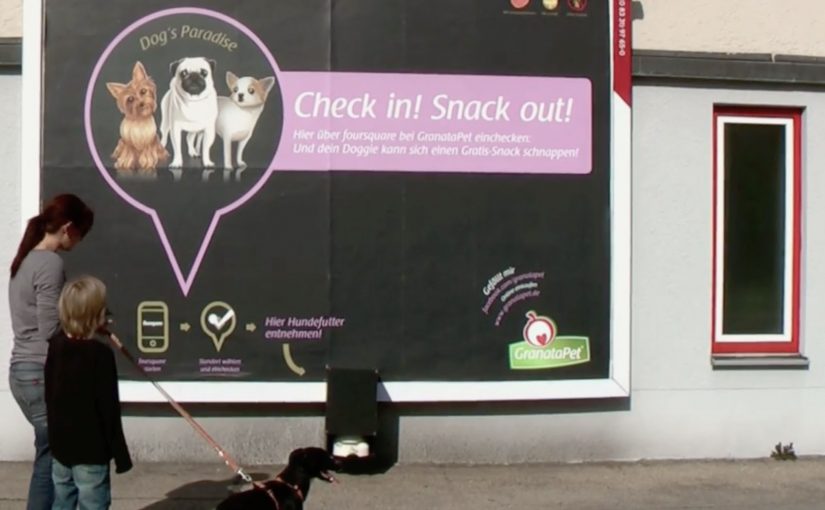
GranataPet: Check In, Snack Out

GranataPet is one of the innovative leaders of high premium pet food in Germany. Their agency, agenta, was given the challenge to create awareness for GranataPet dog food on a slim budget.

The idea targets dog owners at the exact moment they are most open to noticing pet-related messages. While walking their best friend. Socially activated installations are placed on key walking routes. Dogs catch the scent of treats, stop, and pull their owners toward a billboard that simply says “Check in. Snack out”.

A sampling demo that your dog starts for you

This is a classic trial mechanic with a smart trigger. Instead of asking humans to approach a promoter, the dog does the targeting. The owner follows the leash. Then the message becomes self-evident. Check in with Foursquare to activate a free bowl of dog food.

How the mechanism works

The billboard combines three parts. A location check-in prompt, a connected dispenser and bowl, and a social echo via the check-in behavior, meaning each check-in can create additional visibility beyond the street placement itself. When a user checks in at the billboard’s location, the system releases a portion of food into the bowl. The owner watches the dog’s reaction in real time, which functions as the product demo.

In pet food sampling, the highest-converting trial moments are the ones where the animal can deliver an immediate preference signal in front of the owner.

The real question is whether the brand can turn a routine walk into a low-friction proof moment that the owner trusts more than advertising copy. The stronger move here is to let the dog, not the promoter, make the case.

Why it lands

It is easy to trigger, well-timed, and emotionally loaded. The owner does not have to imagine whether the dog will like the food. They see it. That works because a visible reaction from the dog removes guesswork faster than any product claim can. The social layer then turns one local poster into distributed impressions, because check-ins can surface to friends depending on settings. The most important part is that the “proof” is not the copy on the billboard. It is the dog’s behavior.

Extractable takeaway: If your product decision depends on a third party’s preference, build a live demo where that third party delivers the verdict on the spot, and use a simple location trigger to scale it.

What the brand is really buying

This is awareness, trial, and measurable demand in one loop. The execution creates talk value, it generates trackable interactions per location, and it pushes owners toward retail purchase after a positive in-the-moment test. Trade coverage at the time also described increased local demand following the activation.

What pet food marketers can steal from this

  • Target the moment, not the demographic. Dog-walking routes beat broad reach when the category is specific.
  • Let behavior be the headline. A happy dog is more persuasive than any claim line.
  • Make the trigger simple. One action. One reward. No explanation tax.
  • Use the environment as your interface. The billboard is the call-to-action and the proof point.
  • Instrument the activation. Location check-ins can double as measurement, not just distribution.

A few fast answers before you act

What is “Check in, snack out” in one sentence?

An interactive billboard that dispenses free dog food when a nearby owner checks in using a location service.

Why does this outperform a normal sampling stand?

The dog initiates the interaction, and the product proves itself immediately through the dog’s reaction, which reduces hesitation for the owner.

What makes the social layer valuable here?

Check-ins can create secondary reach beyond the physical location, and they can be used to track which placements generate the most interactions.

What is the biggest operational risk?

Reliability. If the dispenser jams or the trigger fails, the experience collapses and the brand takes the blame.

How would you adapt this without Foursquare?

Keep the same structure. A location trigger plus instant physical reward. Use whatever mobile mechanism your audience already uses for quick opt-in and confirmation.
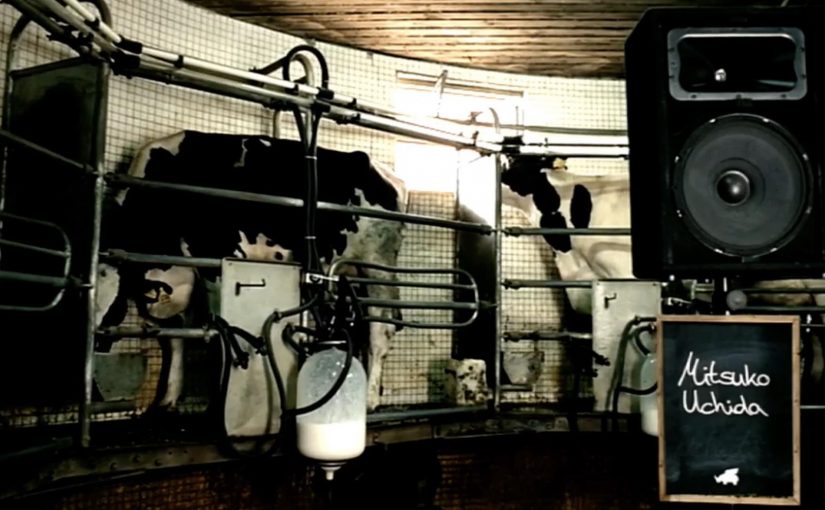
Dortmund Concert Milk: Taste the Season

Konzerthaus Dortmund has world-class acoustics and artists, but it still faces the familiar challenge. Most people do not automatically choose classical music. For the 2010/2011 season, Jung von Matt was asked to pull more of the “not naturally interested” public into the hall.

The solution makes the promise literal. Let people experience music with their sense of taste. The campaign leans on the often-cited idea that cows produce more milk when exposed to classical music, so selected works from the new season were played to cows. The milk was then sold in shops as Dortmund Concert Milk, offered in nine varieties, with each bottle carrying information about the season.

How “Konzertmilch” turns a program into a product

The mechanic is a clean chain. Take repertoire from the upcoming season. Route it through a surprising production setting. Package the output as a retail product that people can encounter in everyday shopping, with the concert hall story printed on the bottle. The milk becomes both a sampling metaphor and a distribution channel for the season narrative. That works because the product format carries the concert hall story into low-pressure moments where curiosity is easier than commitment.

In German cultural institutions, campaigns often have to earn attention from people who do not self-identify as classical-music audiences.

Why it lands

It collapses distance. “Great acoustics” is hard to imagine if you are not already a fan, but “taste the music” is instantly legible. The cow premise gives the idea a folklore-like stickiness, and the retail format makes the campaign feel less like advertising and more like something you discover.

Extractable takeaway: When your category benefit is experiential but hard to preview, build a proxy people can physically encounter in daily life. Then let packaging carry the story and the call-to-action.

What the activation is really optimizing for

This is designed to create first contact with non-attenders. The real question is how to make a concert hall feel low-friction before anyone commits to a ticket. This is smart audience-growth work because it uses everyday retail to make the first step feel casual rather than elite. Retail shelves provide scale, repetition, and social permission. Buying a bottle is a low-risk way to engage with a concert hall brand, and the printed season information turns that impulse into a next step.

What to steal for your own audience growth

  • Translate the promise into a sensory shortcut. If people cannot imagine the experience, give them a proxy they can touch, taste, or keep.
  • Ship the story as packaging. A bottle label can do the work of a brochure, but in a context where people actually read it.
  • Use “varieties” to signal curation. Multiple flavors create collectability and invite comparison, which increases repeat exposure.
  • Make the concept easy to retell. If the whole campaign fits into one sentence, it travels further than the media plan.

A few fast answers before you act

What is Dortmund Concert Milk in one sentence?

A retail activation where cows listen to selected works from Konzerthaus Dortmund’s season, and the resulting milk is sold as “Konzertmilch” in multiple varieties with season info on the bottle.

Why does this help a concert hall reach non-attenders?

Because it moves the brand out of the venue and into everyday life, using a low-commitment product encounter to spark curiosity about the season.

What is the key creative move?

Turning an intangible promise, “experience music”, into a concrete proxy people can literally consume, and then using that proxy to carry the program message.

What is the main risk when copying this approach?

If the novelty overwhelms the cultural offer, people remember the gimmick but not the program. The packaging and narrative must keep pointing back to the season.

Does the cow premise need to be scientifically proven for the idea to work?

No. The campaign works at the level of curiosity and retellability, but the bottle story still has to keep leading people back to the concert season rather than leaving them with only the stunt.

Liaison Dangereuse: Striptease Shopping

Valentine’s lingerie shopping, turned into a show

Liaison Dangereuse, a German lingerie brand, gave Serviceplan a creative challenge: increase lingerie sales around Valentine’s Day.

Seduction always works. So what about making the buying experience attractive and unique for men by giving them the opportunity of buying lingerie directly from the body of beautiful models, and pairing that with a memorable striptease? Thus a new way to sell online lingerie was created.

The mechanism that changes behavior

The idea reframes checkout as participation. Instead of browsing product grids, the customer “shops” from the model, which makes selection feel more like discovery than transaction, and reduces hesitation at the moment of choice.

In European ecommerce and performance marketing, the fastest lever is reducing hesitation by making the path to purchase feel emotionally easy and socially tellable.

The real question is whether you can turn your highest-friction step into a guided, retellable moment without breaking brand trust.

This kind of mechanic is worth copying only when it fits your brand voice and clear consent boundaries.

Why it lands with the intended buyer

This is built for a very specific Valentine’s reality: many male buyers want help choosing, and they want the moment to feel confident, not awkward. A guided, theatrical experience removes indecision and makes the purchase feel like part of the gift.

Extractable takeaway: When the buyer feels unsure about choice, redesign selection so confidence is the default and the mechanic becomes the story.

Earned media as a built-in distribution layer

Serviceplan not only generated free media coverage from major websites, newspapers and magazines in Germany, it also reported additional traffic of 155% to the Liaison Dangereuse website. Reported sales went up by 50% during the promotion.

Click here to watch the video on Ads of the World website.

Steal this conversion mechanic

  • Design for the buyer’s emotion. Remove embarrassment and decision anxiety. Add guided confidence.
  • Make the shopping path the story. If the mechanic is inherently retellable, distribution comes with it.
  • Focus the experience on the highest-friction moment. Choice, not payment, is often the real dropout point.
  • Measure what matters. Track uplift in qualified traffic, add-to-cart rate, and conversion, not just press mentions.

A few fast answers before you act

What is “Striptease Shopping” for Liaison Dangereuse?

It is a Valentine’s-focused ecommerce activation that lets shoppers buy lingerie through a model-led, striptease-style interface, turning product selection into a playful, guided experience.

Who is the experience designed for?

It targets gift-buyers who feel unsure about lingerie choices. The mechanic reduces awkwardness and indecision by making selection feel assisted rather than self-directed.

What is the behavioral mechanism that improves conversion?

It reframes checkout as participation. By turning browsing into a simple, story-like interaction, it reduces hesitation and makes the purchase feel emotionally easy.

Why did it generate strong earned media?

The buying mechanic is unusual and instantly demonstrable. That makes it easy to describe, easy to show, and inherently shareable across press and social channels.

What results were reported from the promotion?

Campaign summaries reported +155% website traffic and +50% sales during the promotion period.

What is the key risk to manage with “seduction” mechanics?

Brand fit and boundaries. If the experience feels exploitative or off-brand, the attention can backfire. The idea needs clear intent, consent, and tone discipline.