
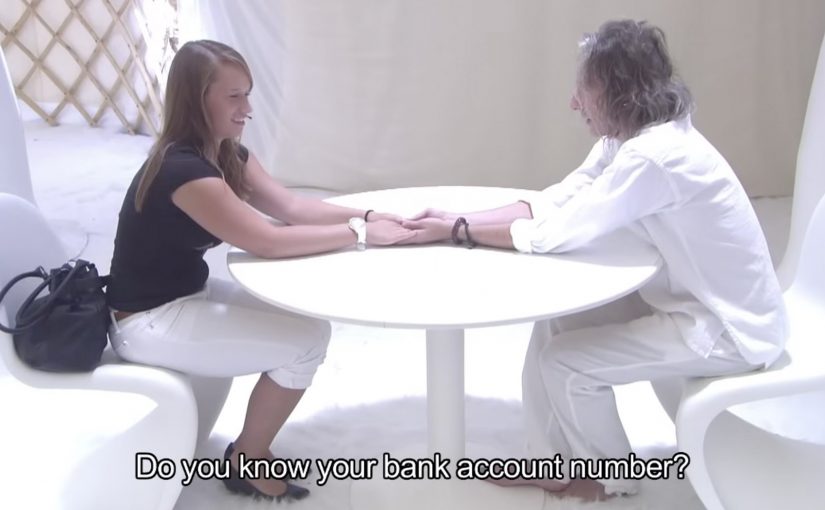
Febelfin: Amazing Mind Reader Reveals His Gift

Febelfin, the Belgian federation for the financial sector, launched a campaign urging people in Belgium to be vigilant about what they make available online. To drive the message home, they recruited Dave, an extremely gifted “clairvoyant” who appears to read strangers with uncanny accuracy.

Dave showcases his talent to a random sample of people. Just when they start to believe in his gift, the magic behind the magic is revealed.

The trick that makes the “mind reading” believable

The mechanism is a classic reveal structure. First, you watch a performer deliver personal details that feel impossible to know. Then you discover the method: the information is assembled from what people have already left exposed online, and fed to the performer in real time. The stunt lands because it starts as wonder and ends as discomfort.

In consumer cybersecurity awareness campaigns, showing how easily public traces can be stitched into a personal profile is often more persuasive than abstract warnings.

Why it lands

This works because it makes the risk feel immediate and personal. The audience is not asked to imagine a faceless threat. They watch real people realize that a stranger can infer and retrieve sensitive details from what is already searchable, shareable, and often forgotten.

Extractable takeaway: If you turn an invisible risk into a visible demonstration that feels “too accurate to be safe”, you shift behavior faster. People do not remember the warning line. They remember the moment they felt exposed.

The intent behind the stunt

The campaign is not really about a performer. It is about reframing online sharing as a security decision. The real question is how to make careless public sharing feel risky enough that people actually change their settings and habits.

By revealing the method, the story pivots from “psychic” to “preventable”, and the viewer is left with a clear implication: tighten what you publish, and you reduce what can be weaponized.

What privacy-awareness teams can borrow

  • Lead with a believable scenario: start in a world viewers accept, then escalate into the lesson.
  • Make the reveal educational: do not only shock. Show the method so people understand what to change.
  • Use real reactions as proof: authentic discomfort is more convincing than any statistic.
  • Keep the message singular: one risk, one demonstration, one behavior change.
  • End with control: the viewer should feel “I can prevent this” rather than “this is inevitable”.

A few fast answers before you act

What is Febelfin’s “Amazing Mind Reader” video?

It is a hidden-camera awareness film where a “clairvoyant” appears to know intimate details about strangers, then reveals that the information was gathered from what they have available online.

What is the campaign trying to teach?

That personal data leakage is often self-inflicted through oversharing, weak privacy settings, and public profiles. The “magic” is the internet.

Why use a mind reader premise?

Because it creates instant attention and a clean reveal. The viewer first experiences surprise, then realizes the risk is real and avoidable.

Is this about online banking only?

It is framed by the financial sector, but the lesson applies broadly: anything public or easily discoverable can be combined into a usable profile by bad actors.

What is the biggest risk in copying this format?

If the reveal feels manipulative or too invasive, the audience can reject the message. The best executions shock first, then immediately teach and restore a sense of control.
Red Stripe Musical Extravaganza

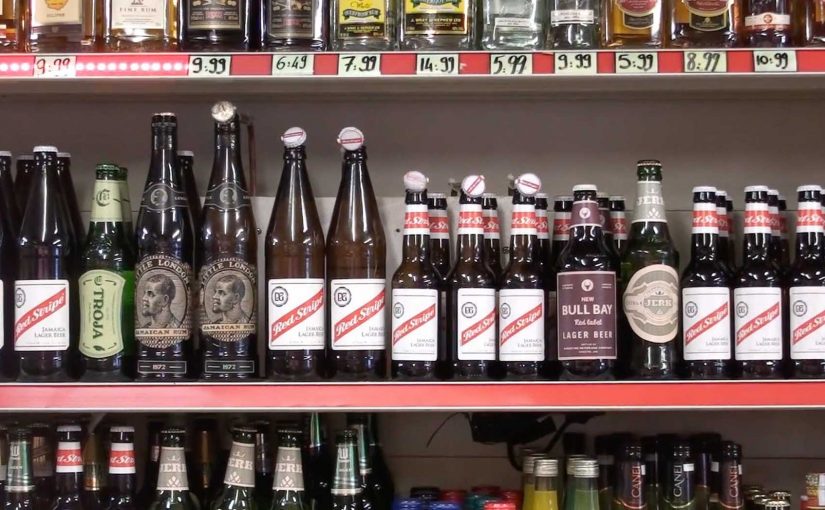
Red Stripe, a Jamaican lager brand, transforms an ordinary-looking East London corner shop into a singing, dancing musical extravaganza. Products across the shop turn into instruments that burst into a melody when a customer selects a Red Stripe. Noodle pots become maracas. Bottles turn into trumpets. Cans become xylophones.

To capture the surprise, 10 hidden cameras record customer reactions as the shop “comes alive.”

The real question is how you turn a routine purchase into a moment people want to retell and share.

This kind of retail theatre works best when the shopper triggers the show through a product choice, and the documentation is designed to scale the moment beyond the store.

The shop becomes the media

This is not a poster on a wall. It is the environment itself performing. The moment of selection triggers the show. The shelf becomes the stage.

That shift matters because it makes the brand moment inseparable from the act of buying. It is shopper marketing that feels like entertainment, not persuasion. Here, shopper marketing means designing the buying environment so the act of choosing the product creates the brand experience.

The trigger is the product choice

The smartest part is the mechanic. Nothing happens until the customer chooses the product. That makes the experience feel personalised, even though it is engineered. Because the trigger is the shopper’s own choice, the surprise reads as a reward, not a push.

It also makes the story instantly explainable. “When you pick up a Red Stripe, the shop turns into a band.”

If you can explain the trigger in one sentence and show real reactions, the activation comes with built-in distribution.

In retail and FMCG environments, the point-of-sale moment is where intent becomes action, and where a brand can earn attention without interrupting it.

Why hidden cameras make the idea travel

The in-store performance is powerful, but it is local. The video is what scales it. Real reactions signal authenticity, and the format becomes shareable proof that the stunt actually happens.

Extractable takeaway: If you want the idea to travel, design the filmed proof as part of the concept. Authentic reactions do the credibility work that polished edits cannot.

Steal the point-of-sale trigger

  • Trigger at the shelf. Make the point-of-sale moment the trigger, not the end of the journey.
  • Instrument the environment. Convert ordinary objects into a surprising behaviour, so the setting becomes memorable.
  • Film for scale. Capture genuine reactions, then let the video do the distribution work.

A few fast answers before you act

What happens in the Red Stripe Musical Extravaganza?

An East London corner shop turns into a musical performance. Shop items become instruments that play when a customer selects a Red Stripe.

What turns into instruments?

Noodle pots become maracas. Bottles become trumpets. Cans become xylophones.

How is it captured?

Ten hidden cameras record customer reactions.

What is the core mechanic that makes it work?

The product selection triggers the performance, so the “brand moment” happens at the exact point of purchase.

Heineken: The Real Master of Intuition

Just last week I wrote about the Heineken Star Player app, designed to let fans interact in real time with the nail-biting action of the UEFA Champions League.

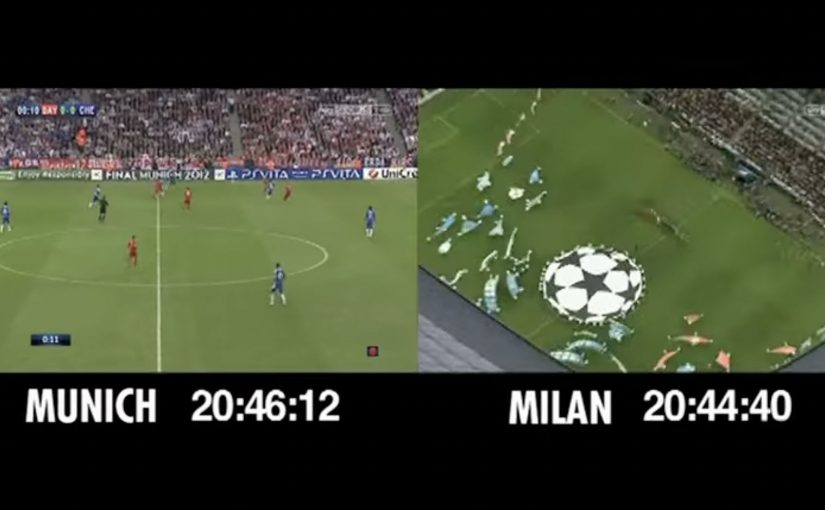
To promote the same Star Player app in Italy, Heineken decides to prank a famous sports bar in Milan, with Italian football legends Billy Costacurta and José Altafini providing live commentary on the UEFA Champions League final. What nobody in the pub knows is that Heineken has hidden cameras everywhere, and the match broadcast is delayed by two minutes, so people in the audience can upstage the legends by calling shots before they are even made.

A prank built on timing and social proof

The mechanism is simple and ruthless. Put credible legends in the room. Keep the crowd confident and loud. Then create a small information advantage by delaying the broadcast, so “intuition” looks like supernatural match-reading instead of a technical trick.

In European football marketing, second-screen ideas work best when they turn match tension into something people can perform together, not just watch.

Why it lands

This works because it weaponizes the most contagious thing in a sports bar: certainty. When one person confidently predicts a moment, everyone else starts scanning for the next prediction. The prank uses that energy to make the app’s promise, real-time interaction, feel like a natural extension of how fans already behave during big matches.

Extractable takeaway: If you want to demonstrate “real time” as a benefit, do not explain it. Create a live situation where the audience experiences the advantage socially, in front of other people, with instant feedback.

What the brand is really proving

This is not only entertainment. It is a credibility transfer. By that, I mean the authority of the commentators spills over onto the app experience and makes the real-time feature feel legitimate inside football culture.

The real question is whether Heineken can make real-time interactivity feel credible enough to belong in serious match culture.

By putting famous voices in the room, Heineken frames Star Player as something that belongs in serious match culture, while the hidden-camera format makes the proof shareable beyond the bar.

How to dramatize real-time advantage

  • Demonstrate the benefit under pressure. Big-match stakes make the mechanic feel meaningful.
  • Use a believable setting. A sports bar is already a “live commentary” environment.
  • Design for group contagion. The best moments are the ones other people in the room amplify.
  • Make the reveal the product story. The twist is the proof of what “real time” can do.

A few fast answers before you act

What is “The Real Master of Intuition”?

It is a Heineken hidden-camera prank in a Milan sports bar where a delayed match broadcast makes fans appear to predict plays before two football legends do, to promote the Star Player app.

Why delay the broadcast?

Because a small timing advantage is enough to create the illusion of extraordinary intuition, and it produces a strong, repeatable demonstration moment on camera.

What does this have to do with a second-screen app?

It dramatizes the idea of being “ahead of the action” and turns real-time interaction into a story people can feel, not just understand.

What makes the idea shareable?

Public embarrassment and surprise, plus a clear “how did that happen?” mystery that gets answered by the reveal.

What is the transferable lesson for marketers?

Create a live scenario where the audience experiences your product advantage socially, with immediate feedback, rather than relying on feature explanation.