
T-Mobile Netherlands: The Rematch

T-Mobile Netherlands: The Rematch

A tiny final that deserved a real crowd

The strongest brand stories make connectivity feel human: it is not about coverage maps, it is about helping people reconnect what mattered.

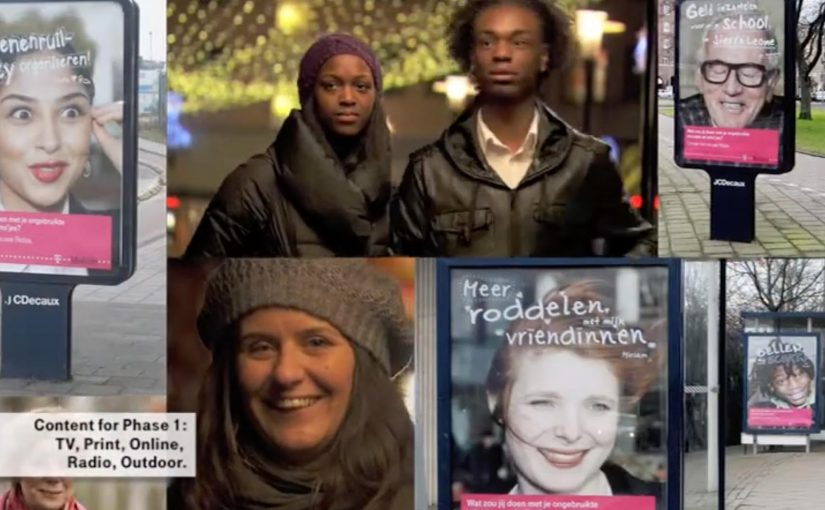
Martijn, a 39-year-old carpenter, attempted to bring back his football team from 1997 for a rematch of a 13-year-old championship final that was then witnessed by a grand crowd of three people.

This time, he wanted his entire village to be there to see him win. A dream enabled by T-Mobile Netherlands.

How the rematch premise worked

The mechanism was classic. Take an unfinished personal story, add a clear goal, then remove the practical barriers that made it impossible before.

Reuniting a team after 13 years is not just a scheduling challenge. It is a social one. Finding people, persuading them, coordinating them, and turning “we should” into “we did.” T-Mobile positioned itself as the enabler that made that coordination real.

By “coordination”, I mean the practical work of finding the right people, aligning dates, and making commitments stick.

That removal of friction is why the payoff feels earned: a real crowd becomes proof the reconnection happened.

In European consumer telcos, stories like this work when connectivity shows up as real-world coordination, not as a network claim.

Why the story lands emotionally

The psychological pull is simple: redemption.

Extractable takeaway: If you want emotion without melodrama, make recognition visible: reunions, witnesses, and shared moments people can point to.

The original match mattered deeply to the people who lived it, but it happened almost unnoticed. Three spectators is not a crowd. It is practically private. The rematch reframed the same sporting moment as something the whole village could witness, validate, and share.

It also taps into identity. A village team is not just sport. It is belonging. Bringing everyone back together turns an individual need into a community event.

The business intent behind enabling the dream

T-Mobile was not selling minutes or data here.

The real question is how a telco earns emotional ownership of reconnection without making itself the hero.

Here, “reconnection” means turning a desire to meet again into a plan people can actually execute.

This kind of brand film works best when the brand enables and stays out of the spotlight.

The intent was to associate the brand with making real-life reconnection possible. Helping people organize, mobilize, and show up. In a category where offers are easy to copy, emotional ownership is the differentiator.

If your category is copyable, the durable edge is removing friction around moments people already care about.

What to steal for your next brand film

  • Start with a concrete, human objective. A rematch with a real stake beats any abstract message.
  • Make the “before” painfully small. Three spectators sets up a powerful contrast for the payoff.
  • Let the brand enable, not star. The hero is the person. The brand removes friction.
  • Scale the moment socially. A private memory becomes a public event. That is where shareability comes from.

A few fast answers before you act

What is T-Mobile Netherlands’ The Rematch about?

A 39-year-old carpenter reunites his 1997 football team for a rematch of a 13-year-old championship final that only three people watched at the time.

What is the core mechanism of the idea?

Identify an unfinished personal story, then use the brand to remove coordination barriers so the dream can happen at scale.

Why does it resonate with viewers?

It is a redemption story with community payoff. The same moment gets the crowd and recognition it never had.

What business goal does this serve for a telco?

Owning the emotional territory of reconnection and coordination, rather than competing only on interchangeable plans and pricing.

What is the main transferable takeaway?

Make the brand the enabler of a human goal, and build the narrative around contrast: what it was then versus what it becomes now.
Live interactive billboard against agression

Live interactive billboard against agression

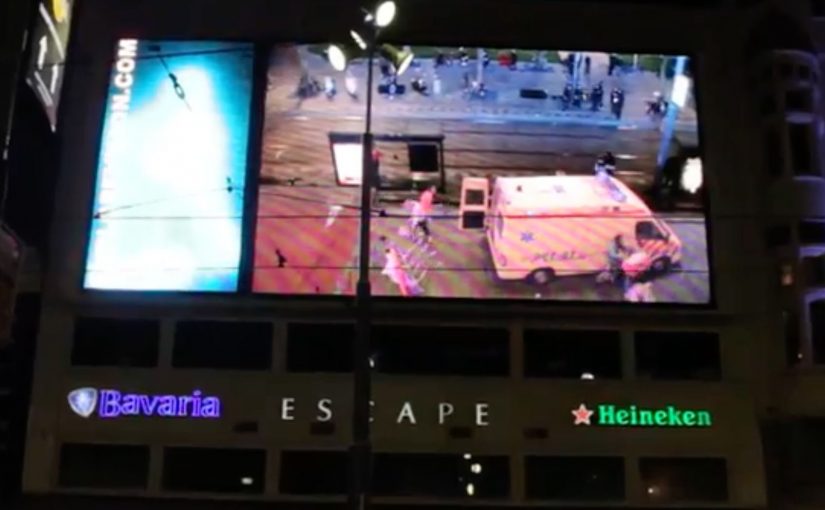
You walk past a giant outdoor screen in Amsterdam or Rotterdam and suddenly find yourself inside a street-violence scenario. Public service employees in the Netherlands face aggression and violence on the streets more and more often. Onlookers unfortunately do not intervene often enough when they encounter a situation like this. A live interactive billboard places people in a similar situation and confronts them with their inactivity.

Here, “live interactive” means recorded confrontation scenes are blended with a real-time street feed so passers-by appear inside the event.

What the billboard is designed to trigger

This is not entertainment. It is a public-awareness intervention. It puts the bystander role on display and forces a moment of self-recognition. If you do nothing, you see yourself doing nothing. The campaign intent is to turn passive awareness into a stronger sense of responsibility when aggression happens in public.

How the “live” effect is created

The experience blends previously recorded footage with a live street feed, so passers-by feel like the scenario is happening in their space, with their presence in the frame.

Why this works as a behaviour nudge

Because the live blend moves people from observer to participant, it turns an abstract social issue into a personal moment, and that is why the message sticks. In public-sector behaviour-change work, the hard part is not awareness alone but making bystanders feel immediate personal responsibility before the moment passes.

Extractable takeaway: When a campaign can place people inside the consequence of their inaction, reflection becomes harder to avoid and the desired behaviour feels more immediate.

The real question is how to make passive witnesses feel accountable before the moment passes.

For serious behaviour-change topics, participation works better than passive messaging when the mechanic stays clear and the context feels real.

What behaviour-change teams can borrow

  • Put the audience inside the situation. When people recognise themselves in the moment, the message stops being abstract.
  • Use context as the trigger. A street setting and a live feed make the behaviour question feel immediate, not theoretical.
  • Design for self-recognition, not spectacle. The point is reflection and responsibility, not entertainment value.
  • Keep the mechanic explainable in one line. If the concept cannot be repeated quickly, it will not travel beyond the location.

A few fast answers before you act

What is this interactive billboard trying to change?

It targets bystander inaction. It makes people aware of how often they do not intervene when witnessing aggression and violence against public service employees.

Why use “live” interaction instead of a normal poster?

Because the live element increases personal relevance. When people recognise themselves in the situation, the message becomes harder to dismiss as “someone else’s problem”.

What is the core mechanic in one line?

A staged violence scenario is combined with a live feed so passers-by see themselves present in a situation that calls for action.

When is this approach appropriate for brands or public bodies?

When the goal is behaviour change, not awareness alone, and when the topic is serious enough that participation creates reflection rather than trivialisation.

What has to be true for this format to work?

The blend between staged footage and live context has to be instantly legible. If people cannot understand the setup quickly, the reflection moment is lost.

KLM: Economy Comfort

KLM: Economy Comfort

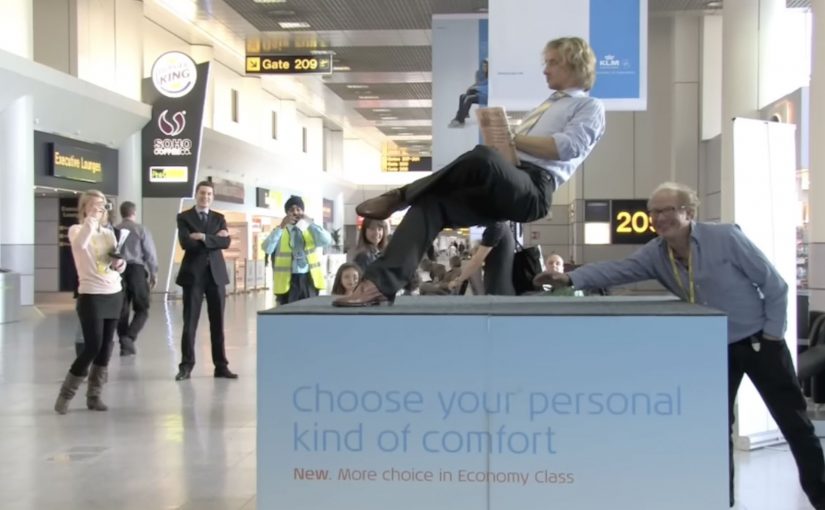
Dutch ad agency Rapp Amstelveen has magician Ramana appear in a European airport, performing his levitation trick to advertise KLM’s comfortable Economy Comfort seats.

A comfort claim made physical

The execution picks a familiar magic trope. Levitation. And places it in a high-friction environment where comfort actually matters. Airports. Waiting. Stress. The stunt is easy to understand even without copy, and the metaphor does the selling: this seat makes the journey feel lighter.

How the mechanism earns attention

Mechanically, it works because it is a live interruption, meaning a real-world moment people witness in person, that behaves like entertainment first and advertising second. People stop because something unusual is happening, then the brand message arrives as the explanation for the spectacle.

In travel and airline marketing, making an abstract benefit feel tangible is often more persuasive than repeating feature lists.

In European travel brands, context-led demonstrations often outperform abstract comfort claims.

Why it lands in an airport context

The location is the multiplier. In an airport, audiences are already thinking about space, fatigue, and the next few hours of their life. A “comfort” message is not a concept. It is an immediate desire. That makes the metaphor feel relevant rather than random.

Extractable takeaway: When the promise is comfort, place the proof where discomfort is already top of mind, so the message lands as a relief, not a claim.

What KLM is really buying with a stunt like this

Beyond awareness, the intent is memorability for a paid upgrade. Economy Comfort is the kind of product that can disappear into pricing tables. A public demonstration gives it a story. The real question is whether your upgrade has a story people will repeat after they leave the airport. And stories travel further than seat specs.

Steal this move for paid upgrades

  • Use a single, legible metaphor. If the audience can “get it” in one second, you win the next ten.
  • Stage it where the benefit is felt. Context turns a claim into a reminder of a real pain point.
  • Let entertainment open the door. Make the first moment about curiosity. Make the second moment about the brand.
  • Turn a feature into a story. Especially for upgrades and add-ons that otherwise live in fine print.

A few fast answers before you act

What is the core idea behind KLM Economy Comfort?

A live levitation stunt in an airport used as a physical metaphor for a more comfortable flight experience.

Why use a magician for a seat upgrade?

Because comfort is hard to “prove” in an ad. A simple spectacle makes the promise feel immediate and memorable.

What role does the airport setting play?

It is where people are already primed to care about comfort, waiting, and travel fatigue. The message meets them at peak relevance.

What is the transferable lesson?

When your benefit is abstract, demonstrate it with a single visual metaphor, in the environment where the benefit matters most.

How can you adapt this if you cannot do a live stunt?

Use a single visual metaphor you can demonstrate in the place where the benefit is felt, then let the brand message arrive as the explanation.