
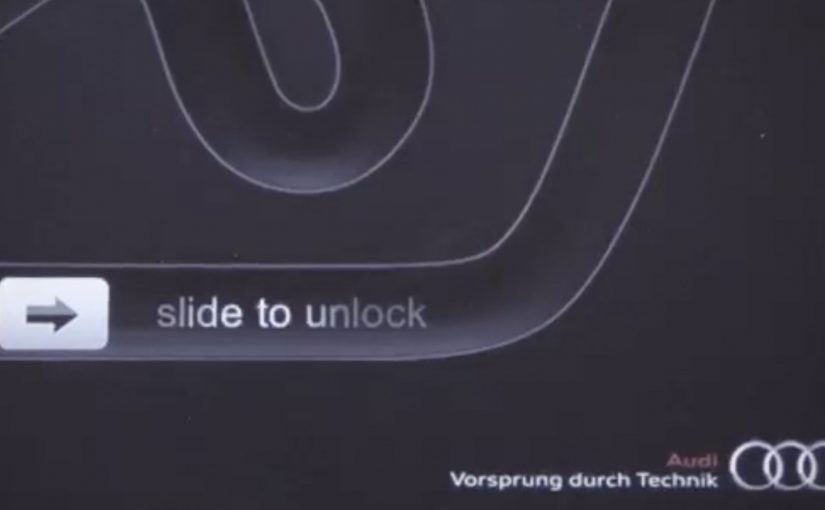
Audi “Slide to Unlock”
AlmapBBDO Brazil developed a distinctive iAd for the Brazilian Audi Magazine iPad app. Here, “iAd” refers to an interactive in-app ad unit built for iPad publications. The ad appeared in iPad publications and played with Apple’s familiar “Slide to Unlock” gesture to pull people into the experience.
Users instantly recognised the swipe interaction used to unlock Apple devices. After racing their finger around the track, they were rewarded with a free download of the first Audi Magazine issue from the App Store.
Amnesty International “Slide to Unlock the Truth”
Amnesty International ran an iAd in one of Sweden’s largest newspapers, DN, presenting readers with an image of a prison cell and a prisoner inside. The same “Slide to Unlock” gesture opened the cell and revealed a strong invitation to join Amnesty International as an activist.
Mechanic: borrow muscle memory, then repay it with value
Both executions use the same trick. They take an interaction people already know, then remap it to a brand action. In Audi’s case, the swipe becomes a playful mini-game. In Amnesty’s case, the swipe becomes a literal unlock that reveals a call to action.
In iPad-era rich media placements, the fastest engagement comes from interactions that feel native to the device instead of invented for the ad.
The real question is whether the gesture is already learned, so the first second goes to the message instead of the UI.
This approach is worth using when you can deliver a clear payoff within one gesture and one reveal.
Why it lands
The shared win is immediacy. There is no learning curve. The interface is already familiar, so attention goes straight to the message. Audi uses that familiarity to reduce friction on a content reward. Amnesty uses it to make the metaphor physical and emotionally legible.
Extractable takeaway: If you want interaction inside an ad to feel effortless, borrow a gesture people already trust, then make the outcome either instantly rewarding or instantly meaningful.
What to steal from gesture-first iAds
- Start with a native gesture. Familiar interaction reduces drop-off in the first seconds.
- Make the mapping obvious. Swipe-to-race and swipe-to-open both explain themselves.
- Reward immediately. Audi pays the user back with a free issue. Amnesty pays back with a clear reveal and a direct next step.
- Keep the loop short. One gesture, one transformation, one outcome.
- Let metaphor do the work. Amnesty’s “unlock” is not decoration. It is the message.
A few fast answers before you act
What is the core idea behind “Slide to Unlock” iAds?
They repurpose a familiar device gesture to trigger a brand action, reducing friction and making interaction feel instinctive.
Why does borrowing a system gesture increase engagement?
Because users already know what to do. That removes instruction time and makes the first interaction feel safe and predictable.
What is the key difference between the Audi and Amnesty uses of the gesture?
Audi uses it for playful interactivity and a content reward. Amnesty uses it as a literal metaphor that reveals a persuasive call to action.
What is the biggest risk when using familiar UI patterns in ads?
If the gesture mapping feels unclear or gimmicky, people feel tricked. The interaction must lead to a payoff that justifies the borrowed familiarity.
What should you measure if you run an interaction-led ad?
Interaction start rate, completion rate, time-to-first-payoff, post-interaction clicks, and whether the interaction improves recall of the message.
