First Look of iPhone 5 with Jimmy Kimmel

The iPhone 5 still has some weeks to go before its officially available. But this little detail did not stop talk show host Jimmy Kimmel from giving random people on the streets of America a chance to test the iPhone 5…which actually was just an iPhone 4S. šŸ˜†

Steve Jobs 1955 – 2011

On 06/10/2011 my day starts at 5:30am. Blurry eyed, I press the home button on my iPhone, and the first thing I see is a push notification from NDTV India: ā€œSteve Jobs, Apple’s visionary, dies at 56.ā€

The next few seconds feel like some invisible force knocks the air out of me. The Newton equivalent from the modern world is just gone in a blink of an eye. The world is not the same without him.

While all the social channels flood with people sharing the news, all I can do is post a few tribute pictures on Facebook. I want to write a few lines about it on Ramble, but I sit speechless throughout the day. In fact the days that follow feel similar, and I cannot find the words to pen down anything, that is until now.

Two tributes that feel right in this moment

Of the dozens of memorial photos and videos created to honor Steve Jobs, I keep coming back to the following as the most appropriate for the occasion.

1) AzR’s Apple-sampled tribute

A musician who calls himself AzR creates a video built from sounds sampled from Apple products and Steve’s 2005 Stanford commencement speech. Every instrument, including drums, is sampled from a Mac product, tuned by ear, and replayed in the context of the song.

2) 4,001 Post-it Notes in Munich

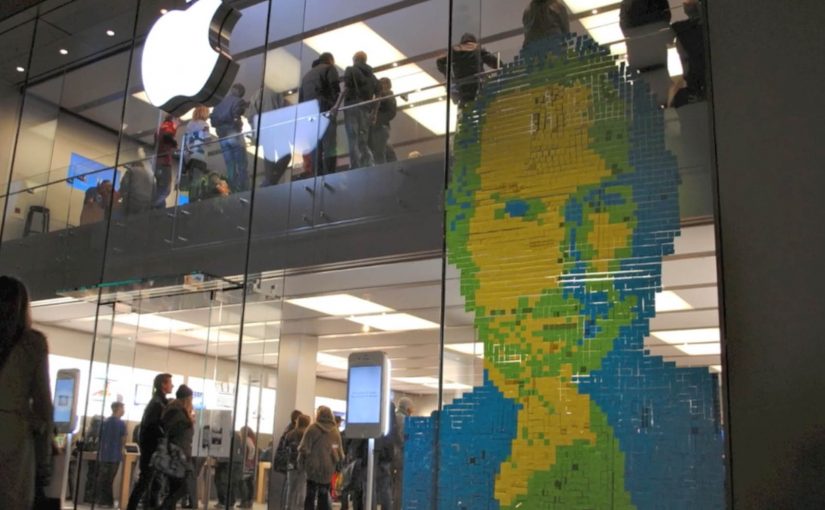
Fans in Germany find a wonderful way to express their respect. They create a portrait of Steve Jobs out of 4,001 Post-it Notes. The portrait adorns the front-facing glass walls of an Apple Store in Munich, Germany.

What stays with me

To sum up, I am glad to have lived in a period of world history that witnessed Steve Jobs change the world.
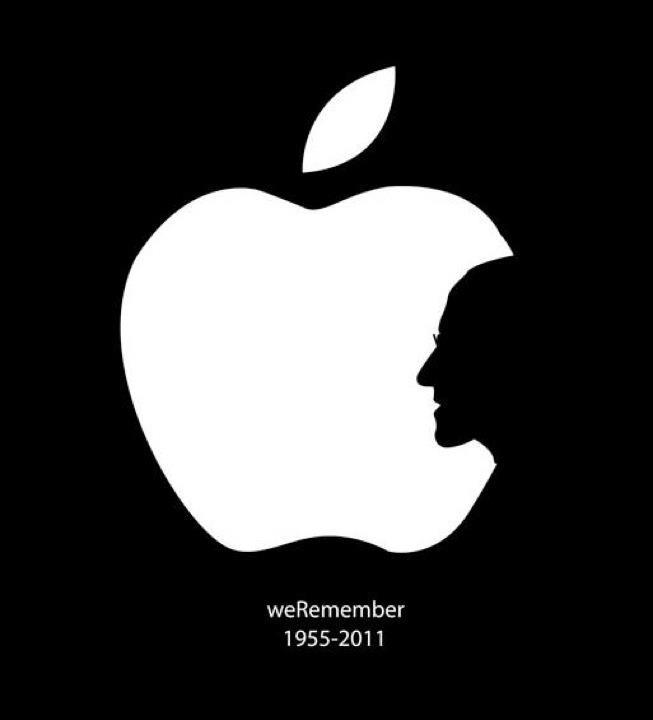
We remember Steve Jobs


A few fast answers before you act

Q: What is this post, in one sentence?
A personal note on the morning the news breaks, plus two tributes that capture why Steve Jobs matters.

Q: What are the two tributes highlighted here?
AzR’s Apple-sampled music video using the 2005 Stanford speech. A 4,001 Post-it Notes portrait on an Apple Store in Munich.

Q: Why does the Munich Post-it portrait stand out?
Because it is physical, collective, and public. It turns respect into a visible act that other people can walk past and feel.

Q: What is the simplest takeaway?
Some people do not just build products. They reshape culture and daily behavior. When they are gone, you feel the absence immediately.

Augmented Reality. Hyperlinking the real world

A French company called Capturio turns a t-shirt into a business card. You point your phone at what someone is wearing, and the ā€œlinkā€ is the fabric itself. No QR code required.

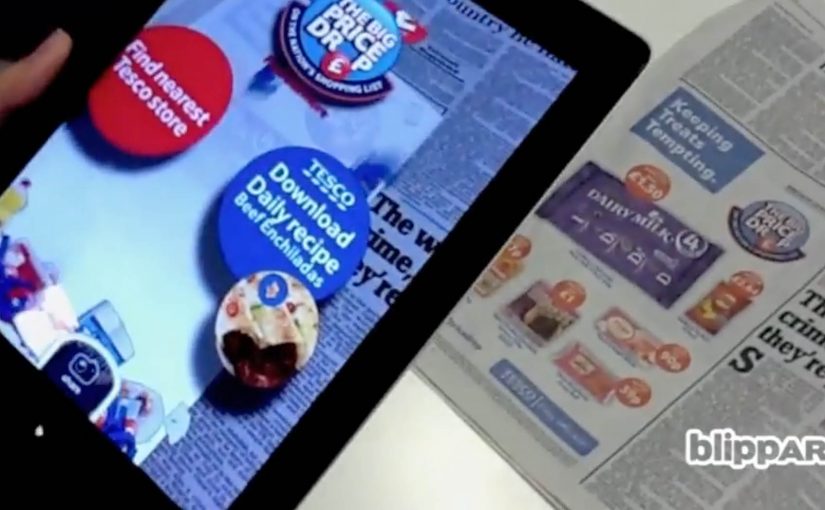
Right after that, Blippar in the UK takes the same idea to printed images. A newspaper page, poster, or pack becomes the trigger. The result is a 3D augmented reality overlay that appears on-screen the moment the image is recognised. Again, no QR code.

Is the end near for the QR code?

QR codes get put to good use in countless innovative projects. But the drift is clearly towards technology that produces similar results without visible codes.

Capturio. A business card you wear

Capturio’s concept is simple. The physical object becomes the identifier. A t-shirt behaves like a clickable surface in the real world.

Blippar. Turning print into a trigger

Blippar creates augmented reality effects from printed images without ā€œactivatingā€ anything via a QR code. The interaction is straightforward:

  1. Download a custom app, in this case the Blippar app.
  2. Scan a Blippar-enabled printed image, identifiable by a small Blippar logo, using an iPhone, iPad, or Android device.
  3. Start interacting with the augmented reality 3D overlay on the screen.

Telibrahma. The same pattern shows up in India

In India, Telibrahma uses the same approach to increase experiential engagement for brands via traditional media like newspapers and posters.

Why this matters. Hyperlinking the physical world

The bigger idea is not the novelty of 3D overlays. It is that physical surfaces become links. Clothing, posters, newspaper pages, packaging, storefronts. Anything that can be recognised can behave like a gateway to content, commerce, or interaction.


A few fast answers before you act

What is ā€œhyperlinking the real worldā€ in this post?
Using image recognition and AR so physical objects like shirts, posters, and print behave like clickable links without QR codes.

Which companies are the concrete examples?
Capturio (France), Blippar (UK), and Telibrahma (India).

How does Blippar work at a high level?
Download the app, scan a Blippar-enabled image (marked with a small Blippar logo), then interact with a 3D AR overlay.

What traditional media does this apply to?
Newspapers, posters, and other printed images.