Jimmy Kimmel: First Look at iPhone 5

Jimmy Kimmel: First Look at iPhone 5

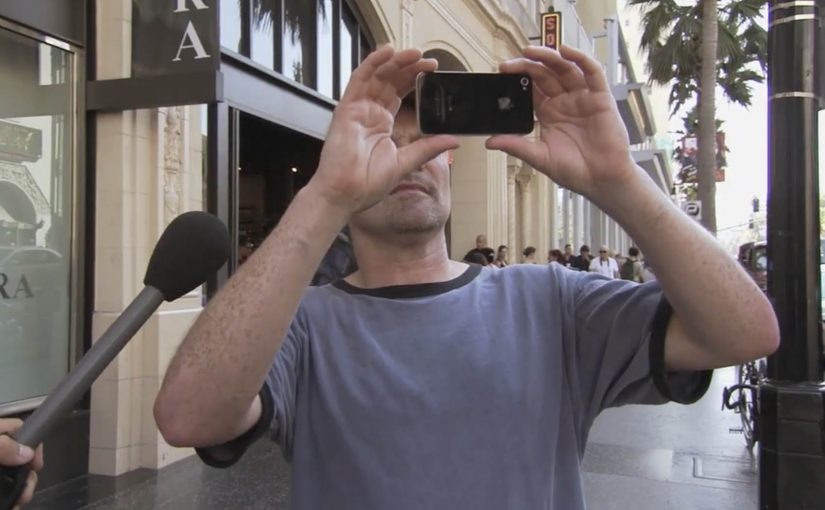
The iPhone 5 still has some weeks to go before it is officially available. That little detail did not stop talk show host Jimmy Kimmel from giving random people on the streets a chance to “test” the iPhone 5, which was actually just an iPhone 4S.

How the prank works

The mechanism is simple: present a familiar object as a new one, then ask for first impressions on the spot. The humor comes from watching people project “newness” onto something they are already holding, then confidently describe improvements that cannot be there because nothing changed.

In consumer tech launches, perceived novelty often shapes first impressions as much as real novelty does.

The real question is whether the launch story is shaping the feedback you think you are collecting.

Why it lands

The segment exposes expectation marketing in real time, meaning the expectation itself becomes part of the perceived product experience. It makes a point without preaching. It lets people’s own words demonstrate how branding, timing, and context can change what we think we are seeing.

Extractable takeaway: When audiences expect a breakthrough, they interpret ambiguous cues as improvements. Marketing and product teams should separate product experience from launch narrative when they need truth, because the narrative can become the experience.

It turns product hype into a social mirror. Viewers do not only laugh at the interviewees. They recognize the pattern, because everyone has “felt” an upgrade before they could name a feature.

It is edit-friendly proof. Quick street soundbites create a fast rhythm and a clear punchline. The format is built for sharing because each reaction is a self-contained beat.

Borrowable moves from the iPhone prank

  • Use a clean, repeatable setup. One premise, one question, many reactions. The simplicity is what creates volume and pace.
  • Build the contrast into the reveal. The punchline is strongest when viewers understand that the object never changed.
  • Let the audience diagnose the insight. Showing beats telling. The segment works because the viewer reaches the conclusion themselves.

A few fast answers before you act

What is the core joke of the segment?

People are asked to review a “new” iPhone, but they are actually holding an older model, and many still describe it as better.

What does this say about consumer perception?

That context and expectation can shape what people think they notice, especially when differences are subtle or undefined.

Is this a critique of Apple or of people?

It plays more like a critique of hype mechanics and social pressure in “first impression” moments than a critique of one brand.

Why is the street-interview format effective here?

It creates instant, unscripted soundbites, and the variety of reactions keeps the piece moving.

What is the practical lesson for marketers and product teams?

If you need truth, test products in neutral conditions. If you want buzz, understand that the story around a product can amplify perceived value, sometimes beyond what the product alone delivers.
Steve Jobs 1955 – 2011

Steve Jobs 1955 – 2011

On 06/10/2011 my day starts at 5:30am. Blurry eyed, I press the home button on my iPhone, and the first thing I see is a push notification from NDTV India: “Steve Jobs, Apple’s visionary, dies at 56.”

The next few seconds feel like some invisible force knocks the air out of me. The Newton equivalent from the modern world is just gone in a blink of an eye. By “Newton equivalent” I mean a once-in-a-generation inventor whose work changes how ordinary people live.

While all the social channels flood with people sharing the news, all I can do is post a few tribute pictures on Facebook. I want to write a few lines about it on Ramble, but I sit speechless throughout the day. In fact the days that follow feel similar, and I cannot find the words to pen down anything, that is until now.

The real question is what a tribute has to do to feel earned.

Two tributes that feel right in this moment

Of the dozens of memorial photos and videos created to honor Steve Jobs, I keep coming back to the following as the most appropriate for the occasion.

Mechanism-wise, both tributes rebuild a public feeling from familiar materials. One uses sounds and a voice people associate with Apple products. The other uses a simple office material to create something large, collective, and visible.

In global consumer-tech culture, where product design quietly rewires daily habits, tributes built from the culture itself tend to feel the most honest.

A tribute earns its place when it demonstrates craft and restraint, not when it tries to explain impact with adjectives.

1) AzR’s Apple-sampled tribute

A musician who calls himself AzR creates a video built from sounds sampled from Apple products and Steve’s 2005 Stanford commencement speech. Sampling here means recording short sounds from devices and using them as instruments in a new composition. Every instrument, including drums, is sampled from a Mac product, tuned by ear, and replayed in the context of the song.

2) 4,001 Post-it Notes in Munich

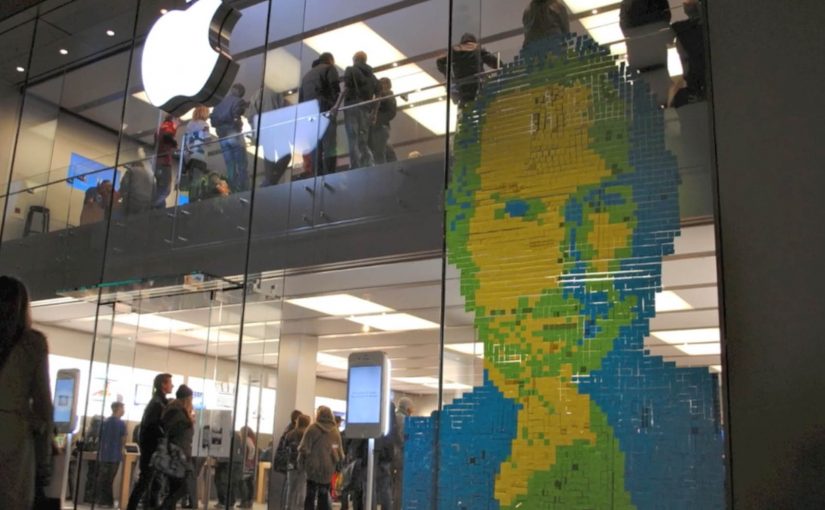
Fans in Germany find a wonderful way to express their respect. They create a portrait of Steve Jobs out of 4,001 Post-it Notes. The portrait adorns the front-facing glass walls of an Apple Store in Munich, Germany.

Why these tributes land

They do not ask you to agree that Steve Jobs mattered. They let you hear and see how his work lives inside everyday objects and shared spaces. That mechanism makes the respect feel physical rather than rhetorical.

Extractable takeaway: If you want a tribute to travel, build it from the same materials the person put into the world, then make it simple enough to share in one listen or one glance.

What stays with me

To sum up, I am glad to have lived in a period of world history that witnessed Steve Jobs change the world.

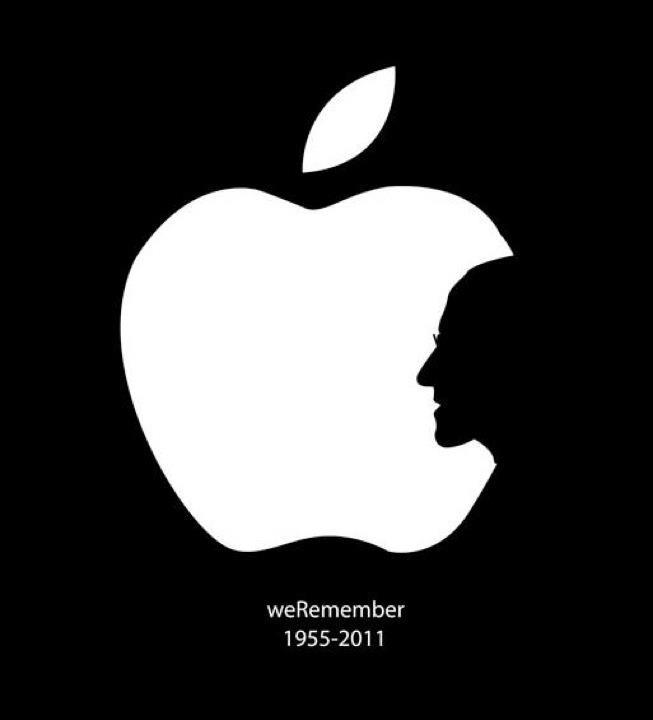
We remember Steve Jobs

How to make a tribute feel earned

  • Start with a material. Use a concrete artifact, a sound, a tool, a place, then build the tribute around it.
  • Make it shareable fast. If it does not land quickly, it will not travel.
  • Let people participate. The Munich wall works because many hands make one face.
  • Keep the words minimal. Craft carries more respect than adjectives.

A few fast answers before you act

What is this post about?

It is a personal note from the morning I saw the news, plus two tributes that capture why Steve Jobs mattered to people.

Which two tributes are highlighted?

AzR’s music video built from sounds sampled from Apple products and Steve Jobs’ 2005 Stanford commencement speech. A 4,001 Post-it Notes portrait on an Apple Store in Munich, Germany.

Why does the Apple-sampled video work?

It turns familiar device sounds and a familiar voice into a new piece of music. That craft makes the tribute feel earned rather than narrated.

Why does the Munich Post-it portrait stand out?

It is physical, collective, and public. It turns respect into a visible act that other people can walk past and feel.

What is the simplest takeaway?

Some people do not just build products. They reshape culture and daily behavior. When they are gone, you feel the absence immediately.

Augmented Reality: Hyperlinking the real world

Augmented Reality: Hyperlinking the real world

A French company called Capturio turns a t-shirt into a business card. You point your phone at what someone is wearing, and the “link” is the fabric itself. No QR code required.

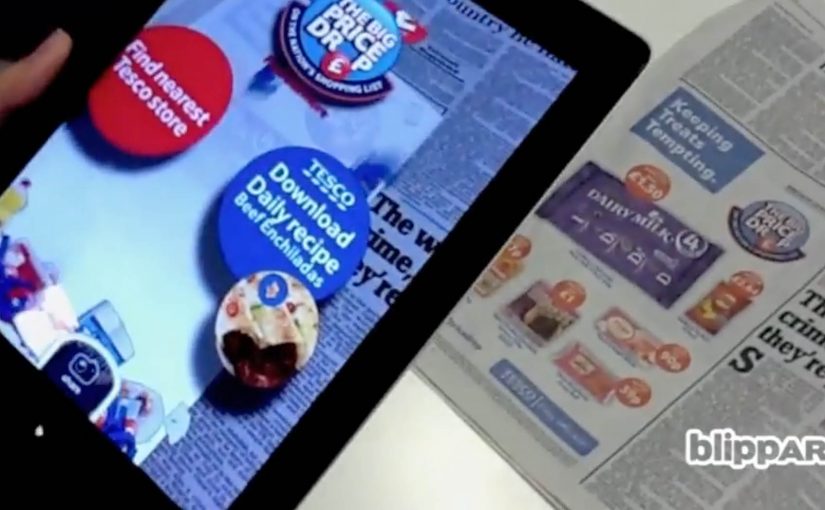
Right after that, Blippar in the UK takes the same idea to printed images. A newspaper page, poster, or pack becomes the trigger. The result is a 3D augmented reality overlay that appears on-screen the moment the image is recognised. Again, no QR code.

From visible codes to recognition triggers

QR codes get put to good use in countless innovative projects. But the drift is towards technology that produces similar results without visible codes. QR codes are not “dead”. Recognition-based triggers win whenever you can control the surface and want the interaction to feel seamless.

How “invisible links” work in practice

Capturio’s concept is simple. The physical object becomes the identifier. A t-shirt behaves like a clickable surface in the real world.

Blippar applies the same pattern to print. Image recognition here means matching what the camera sees to a known reference image so the system can anchor content to that surface.

The interaction is straightforward:

  1. Download a custom app, in this case the Blippar app.
  2. Scan a Blippar-enabled printed image, identifiable by a small Blippar logo, using an iPhone, iPad, or Android device.
  3. Start interacting with the augmented reality 3D overlay on the screen.

In India, Telibrahma uses the same approach to increase experiential engagement for brands via traditional media like newspapers and posters.

In consumer marketing and retail environments, this pattern turns owned surfaces into low-friction entry points for digital experiences.

Why recognition beats visible codes

A visible code is a visual tax. It signals “scan me”, but it also interrupts design and can feel bolted-on. When the surface itself becomes the trigger, the mechanism and the message align. The scan feels like discovery, not compliance. That mechanism is exactly why this pattern tends to spread once teams see it work in the wild.

Extractable takeaway: If you want people to scan, remove the decision point. Make the object itself the identifier, and make the reward immediate.

The bigger idea is not the novelty of 3D overlays. It is that physical surfaces become links. Clothing, posters, newspaper pages, packaging, storefronts. Anything that can be recognised can behave like a gateway to content, commerce, or interaction.

What this unlocks for brands

This is useful when you need a bridge from “attention” to “action” without adding friction. It can turn traditional media into a gateway for:

  • Content. Rich product stories, demos, or tutorials that do not fit on-pack or on-page.
  • Commerce. A route into product detail and purchase flows from packaging or print.
  • Interactivity. Lightweight games, utilities, or experiences that create repeat engagement.

What to steal for your next activation

  • Pick a surface you own. Packaging, print, or wearable assets work best when distribution is in your control.
  • Make the trigger legible. Even without a QR code, users need an affordance like a small mark, instruction, or demo.
  • Design the “first 5 seconds”. Recognition must lead to an immediate payoff, or people will not try twice.
  • Decide what success means. Share, sign-up, repeat use, or store visit. Do not ship without one primary metric.

A few fast answers before you act

What does “hyperlinking the real world” mean here?

It means using image recognition and augmented reality so physical objects like shirts, posters, and print behave like clickable links without QR codes.

Which companies are the concrete examples in this post?

Capturio (France), Blippar (UK), and Telibrahma (India).

How does Blippar work at a high level?

Download the app, scan a Blippar-enabled image marked with a small Blippar logo, then interact with a 3D AR overlay on-screen.

Is this actually “the end” of QR codes?

No. QR codes remain useful. But recognition-based triggers are often preferred when you want the surface to stay clean and the interaction to feel seamless.

What types of media does this apply to?

Newspapers, posters, packaging, and other printed or visual surfaces that can be reliably recognised by a camera.

What should you measure first if you try this?

Start with activation rate, meaning how many people who see the surface actually trigger the experience. Then track the next action, such as shares, sign-ups, or clicks into commerce.