
Voice Chocolate

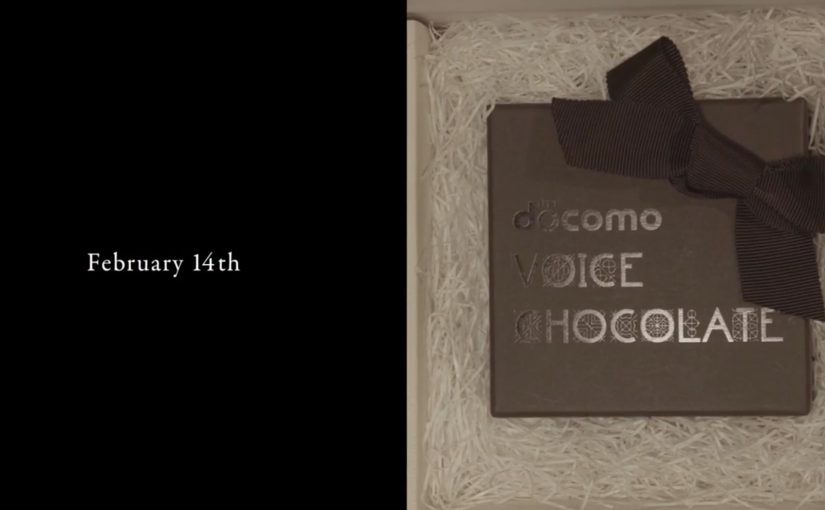
On Valentine’s Day, women in Japan record a voice message on their smartphone. That voice is transformed into a unique chocolate pattern, and a premium patisserie, Mont St. Clair, delivers the custom chocolates to the men they love. The recipient then uses a special app that recognises the AR markers in the chocolate, and the voice message plays back from the smartphone.

The campaign comes from Docomo (Japan’s largest mobile phone company) working with agency Hakuhodo. The business context is straightforward. Voice communication traffic falls sharply over the last 15 years, largely due to messaging apps. Docomo uses the ritual of Valentine gifting to make voice feel emotional and “worth using” again.

Why this works as mobile, packaging, and emotion in one system

This is not content about voice. It is voice turned into a physical artefact. The chocolate is both the gift and the interface. The phone becomes the capture tool. The app becomes the playback layer.

That combination matters because it closes the loop between human intent and digital capability. The message is not typed. It is spoken. It arrives as something tangible. Then it becomes audible again at the moment of receiving.

The pattern to steal

If you want to revive a behaviour that is losing ground, the structure here is repeatable:

  • Find a culturally accepted moment where the behaviour already makes sense, in this case Valentine gifting.
  • Convert the behaviour into a physical token people want to give and keep, not a disposable digital asset.
  • Use an interaction layer (AR, scan, app) that reveals the emotional payload at the right moment, for the recipient.

A few fast answers before you act

What is “Voice Chocolate”?

A Valentine concept where a recorded voice message is transformed into a chocolate pattern, delivered as a gift, then played back via an app that recognises AR markers in the chocolate.

Who is behind it?

Docomo in partnership with Hakuhodo, with chocolates delivered with help from Mont St. Clair.

What problem is it addressing?

Falling voice communication usage driven by messaging apps, by making voice feel meaningful again through gifting.

What is the core experience design move?

Turn a voice message into a physical interface, then use a scan-to-reveal mechanic so the voice returns at the moment of receiving.

Gatebox: The Virtual Home Robot

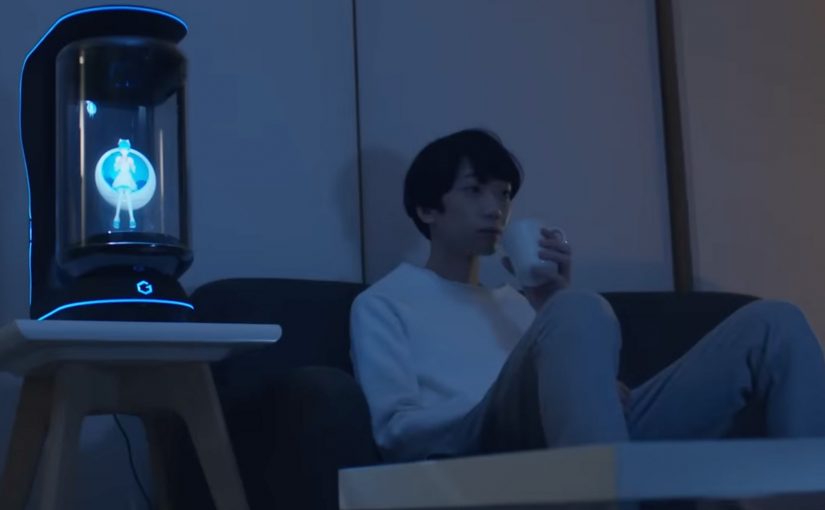
You come home after work and someone is waiting for you. Not a speaker. Not a disembodied voice. A character in a glass tube that looks up, recognizes you, and says “welcome back.” She can wake you up in the morning, remind you what you need to do today, and act as a simple control layer for your smart home.

That is the proposition behind Gatebox. It positions itself as a virtual home robot, built around a fully interactive holographic character called Azuma Hikari. The pitch is not only automation. It is companionship plus utility. Face recognition. Voice recognition. Daily routines. Home control. A “presence” that turns a smart home from commands into a relationship.

What makes Gatebox different from Alexa, Siri, and Cortana

Gatebox competes on a different axis than mainstream voice assistants.

Voice assistants typically behave like tools. You ask. They answer. You command. They execute.

Gatebox leans into a different model:

  • Character-first interface. A persistent persona you interact with, not just a voice endpoint.
  • Ambient companionship. It is designed to greet you, nudge you, and keep you company, not only respond on demand.
  • Smart home control as a baseline. Home automation is part of the offer, not the story.

The result is a product that feels less like a speaker and more like a “someone” in the room.

Why the “holographic companion” framing matters

A lot of smart home innovation focuses on features. Gatebox focuses on behavior.

It is designed around everyday moments:

  • waking you up
  • reminding you what to remember
  • welcoming you home
  • keeping a simple loop of interaction alive across the day

That is not just novelty. It is a design bet that people want technology to feel relational, not transactional.

What the product is, in practical terms

At its most basic, Gatebox:

  • controls smart home equipment
  • recognizes your face and your voice
  • runs lightweight daily-life interactions through the Azuma Hikari character

It is currently available for pre-order for Japanese-speaking customers in Japan and the USA, at around $2,600 per unit. For more details, visit gatebox.ai.

The bigger signal for interface design

Gatebox is also a clean case study in where interfaces can go next.

Instead of:

  • screens everywhere
  • apps for everything
  • menus and settings

It bets on:

  • a single persistent companion interface
  • a character that anchors interaction
  • a device that makes “home AI” feel present, not hidden in the cloud

That is an important shift for anyone building consumer interaction models. The interface is not the UI. The interface is the relationship.


A few fast answers before you act

Q: What is Gatebox in one sentence?
A virtual home robot that combines smart home control with a holographic companion character, designed for everyday interaction.

Q: Who is Azuma Hikari?
Gatebox’s first character. A fully interactive holographic girl that acts as the interface for utility and companionship.

Q: What can it do at a basic level?
Control smart home equipment, recognize face and voice, run daily routines like wake-up, reminders, and greetings.

Q: Why compare it to Alexa, Siri, and Cortana?
Because it is positioned as more than a voice assistant. It is a character-first, companion-style interface.

Q: What is the commercial status?
Available for pre-order for Japanese-speaking customers in Japan and the USA, at around $2,600 per unit.

The Giga Selfie

People all over the world are obsessed with taking selfies. So the Australian government launched the “Giga Selfie campaign” to help tourists take bigger and better selfies that included the environments around them.

The campaign targeted Japanese tourists, who reportedly made up Australia’s sixth largest market for tourists (over 320,000 visitors). To take a Giga Selfie, tourists needed to look out for the designated selfie spots and capture a shot to send back home.