KLM Connecting Seats

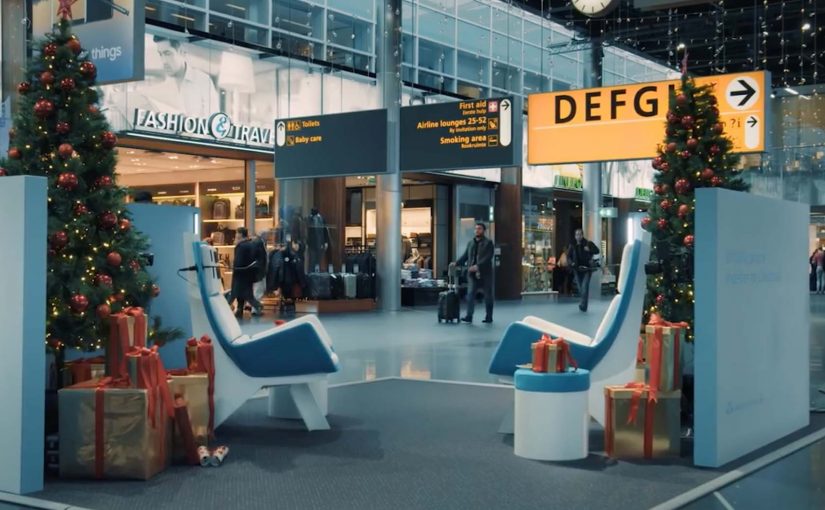
Airports are crowded with people from different backgrounds. This Christmas, KLM brings them together with Connecting Seats. Two seats that translate every language in real time, so people with different cultures, world views, and languages can understand each other.

The experience design move

KLM does not try to tell a holiday message. It creates a small, human interaction in a high-friction environment. You sit down. You speak normally. The barrier between strangers is reduced by the seat itself.

Why this works as a Christmas idea

Christmas campaigns often rely on film and sentiment. This one uses participation. It makes connection visible. It gives the brand a role that feels practical rather than promotional.

The pattern to steal

If you want to create brand meaning in public spaces, this is a strong structure:

  • Pick a real-world tension people already feel (crowded, anonymous, culturally mixed spaces).
  • Introduce a simple intervention that changes behaviour in the moment.
  • Let the interaction carry the message, not a slogan.

A few fast answers before you act

What are KLM Connecting Seats?

Two seats designed to translate language in real time, so strangers can understand each other.

Where does this idea make sense operationally?

In airports and other transient spaces where people from different backgrounds sit near each other but rarely interact.

What is the core brand outcome?

A memorable, lived proof of “bringing people together,” delivered through an experience rather than a claim.

KLM’s Bonding Buffet

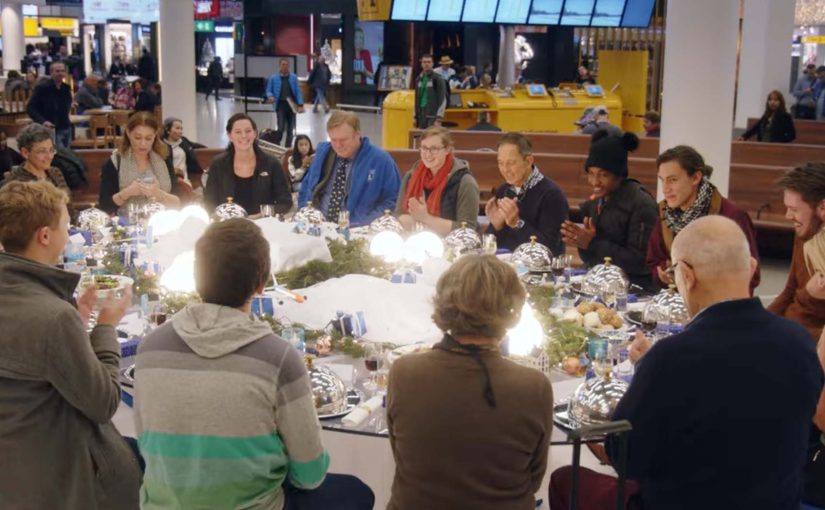
Airports can be lonely places, but Christmas is all about being together. So KLM sets up the Bonding Buffet at Amsterdam Airport Schiphol. A table with a full Christmas dinner sits 4.5 metres above the ground, clearly out of reach. The only way to bring it down is to cooperate.

The mechanic is beautifully simple. Travelers sit on the stools around the table. Each occupied seat lowers the table a little. When every seat is taken, the table is fully lowered and dinner can start.

As a result, people from over 20 different countries bond with each other, and the table injects some much-needed Christmas spirit into a busy airport.

Why this activation works so well

KLM does not “tell” people to connect. It forces a shared outcome that can only be achieved together. The campaign turns a common airport truth. Waiting alone. Into a social moment with a clear reward.

There are three tight design choices that make it land:

  • A visible constraint. The meal is there, but unreachable.
  • A cooperative mechanic. Everyone has a role. One seat at a time.
  • A shared payoff. The dinner only happens when the group commits.

The brand story is embedded in the experience

This is brand storytelling through behavior, not messaging. KLM positions itself as the airline that understands what travel feels like. Disconnected. Transitional. Sometimes lonely. Then it engineers a moment that flips the emotional state from isolation to togetherness.

The experience is also culturally portable. You do not need language to understand it. Sit down. Help lower the table. Eat together.

What to steal from this if you build live experiences

The transferable lesson is not “build a giant table.” The lesson is how to design bonding:

  • Make the goal obvious.
  • Make the mechanic collaborative, not competitive.
  • Make the payoff immediate and human.
  • Make it impossible to complete alone.

When those conditions are true, the social outcome becomes the content.


A few fast answers before you act

Q: What is KLM’s Bonding Buffet?
A Christmas activation at an airport where a dinner table starts 4.5 metres high and only lowers when travelers sit together on all seats.

Q: How does the table come down?
Each person who sits on a stool lowers it a bit. When every seat is taken, the table fully lowers and dinner begins.

Q: Where does it take place?
At Amsterdam Airport Schiphol.

Q: What is the human outcome KLM is designing for?
Strangers bonding. Turning lonely transfer time into a shared Christmas moment.

Q: Why is this a strong brand move?
Because KLM expresses its brand through an engineered experience that changes traveler behavior, not through slogans.

KLM Messenger: Travel Updates in Chat

Facebook wants to transform their Messenger platform into an all-encompassing utility, where people will be able to conduct virtually any interaction, from buying products to paying bills to various other customer service related queries and tasks.

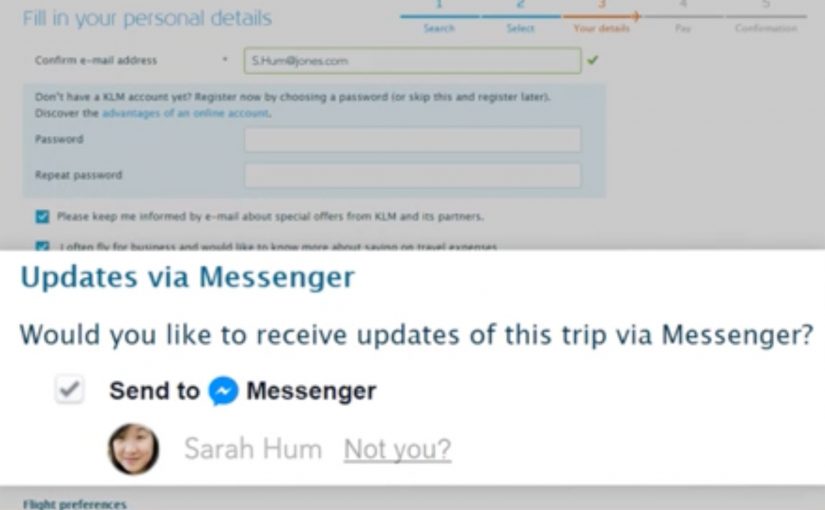
So together with KLM they have launched a new Messenger service. Travellers who book their flight on klm.com can now choose to receive booking confirmation, check-in notification, boarding pass and flight status updates all via Facebook Messenger.

For further questions they can also contact KLM directly through the Messenger, 24/7.

Why this is a meaningful shift in airline service

This takes airline communication out of the inbox and into a channel people already use all day. The value is not novelty. The value is reduced friction. Fewer app logins, fewer email searches, fewer “where is my boarding pass” moments.

  • Proactive updates. Confirmation, check-in prompts, and status changes arrive automatically.
  • One thread per trip. The travel journey stays readable in a single conversation.
  • Service in context. Questions can be asked and answered where the information already lives.

Messenger as a utility layer

If Messenger becomes a place where you can transact, track, and solve problems, then brands that show up with real utility earn repeat usage. In this case, KLM turns Messenger into a travel companion, not a marketing channel.

The more predictable the updates, the more likely customers are to opt in, and the more valuable the channel becomes for both sides.

In service-heavy journeys like travel, messaging becomes valuable when it carries the essential trip artifacts and keeps help in the same thread.

What to take from this if you run CX or MarTech

  1. Meet customers where they already are. Messaging reduces the cognitive load of managing travel.
  2. Design for opt-in value. People accept notifications when they are clearly helpful and timely.
  3. Keep the thread “service-first”. Utility collapses if the channel gets flooded with promotion.
  4. Support matters. Proactive notifications plus 24/7 human help (or well-designed escalation) is what makes it credible.

A few fast answers before you act

What did KLM launch on Facebook Messenger?

A Messenger service that delivers booking confirmation, check-in notifications, boarding passes, and flight status updates for travellers who book on klm.com, with the option to contact KLM through Messenger 24/7.

Why use Messenger for travel updates?

Because it reduces friction. Customers receive timely information in a channel they already use, without searching email or opening an airline app repeatedly.

Is this a chatbot initiative or customer service?

At its core it is customer service and trip management delivered through messaging. The key value is proactive updates plus the ability to ask questions in the same thread.

What is the main CX benefit?

One continuous conversation that contains the essential trip artifacts. Confirmation, reminders, boarding pass, and live updates in a single place.

What is the transferable lesson for other brands?

If you can deliver high-frequency, high-value updates through a messaging channel with clear opt-in, you can increase satisfaction by making the journey easier to manage.