
Sony: Headphone Music Festival AR posters

Sony: Headphone Music Festival AR posters

People in Tokyo who wear headphones, or simply want to try new ones, were treated to an augmented reality music festival from Sony Japan. Four popular local rock groups were turned into original AR performances, then “played” through band tour posters placed in busy locations. Sony-branded headphone trial stations were set up nearby so anyone could join in.

The loop is clean. Spot the poster. Scan it. Get a performance that feels like it is happening in your surroundings. Then step over and compare that moment on Sony headphones.

What makes this feel like a festival, not a tech demo

The execution is essentially a pop-up concert system distributed across the city. The posters act as stages. The phone acts as the ticket. The headphone stand acts as the product trial. That chain of touchpoints is why the experience reads as “festival” rather than “app feature.”

The mechanism: posters as portals

Instead of forcing people into a microsite or a branded app maze, Sony uses a familiar object. The tour poster. The poster becomes the launch surface for AR content. That matters because it removes the biggest friction in mobile AR. The “what do I point my camera at” question.

In supporting materials, the technology is described as Sony’s SmartAR and a smartphone app that recognises the posters and overlays 3D performance content into the live camera view. The mechanics stay invisible to the audience. They just see the band appear.

In dense urban retail markets, AR works best when it turns everyday street media into an immediate try-before-you-buy demo.

The real question is whether your AR trigger reduces friction enough that product trial becomes the next obvious step.

Why it lands for headphone marketing

Headphones are hard to sell with words. Most people cannot translate driver specs into feeling. This activation sells through a direct comparison. You hear a performance, then you hear it again through the product the brand wants you to try.

Extractable takeaway: A retail AR activation lands when the trigger is already in public view, the payoff is instant, and the path from wow-moment to product trial is one physical step away.

It also frames Sony as the host of the music moment, not just the logo next to it. That is a stronger association than “better sound.” It is “better access to the thing you love.”

The business intent behind the street setup

The intent is not just awareness. It is footfall and trial. The AR content pulls people in, but the trial stations convert curiosity into a product experience. If you can get someone to listen for 30 seconds, you can start building preference.

Steal this for poster-triggered AR trials

  • Anchor AR to a physical trigger people already understand. Posters, packaging, signage, tickets.
  • Make the payoff immediate. The first five seconds decide whether AR feels magical or annoying.
  • Keep the bridge to trial short. If you sell hardware, put the demo within sightline of the trigger.
  • Use content that earns replays. Music clips, reveals, limited drops, rotating “sets” work better than static overlays.
  • Design for scanning in real conditions. Glare, crowds, bad signal, rushed users. Make recognition forgiving.

A few fast answers before you act

What is the Sony “Headphone Music Festival” idea?

It is a street-based AR activation where tour posters trigger AR music performances on a phone. Sony pairs that content with nearby headphone trial stations so people can immediately test the product while they are engaged.

Why use posters instead of geofencing or QR codes?

Posters provide a clear camera target and an obvious reason to scan. They also carry cultural meaning. A tour poster already signals music and discovery, so the AR layer feels natural.

What makes AR effective for selling headphones?

It creates a controlled listening moment in an uncontrolled environment. The activation gives you a reason to put headphones on right now and compare the experience immediately.

What is the biggest pitfall in poster-triggered AR campaigns?

Recognition friction. If the scan fails or the experience takes too long to load, people abandon it. The trigger must be reliable and the content must appear quickly.

How do you measure success for this kind of activation?

Track scans per poster location, completion rates for the AR experience, and trial-station interactions. If possible, connect trial interactions to store visits or product interest signals.
Heineken Star Player

Heineken Star Player

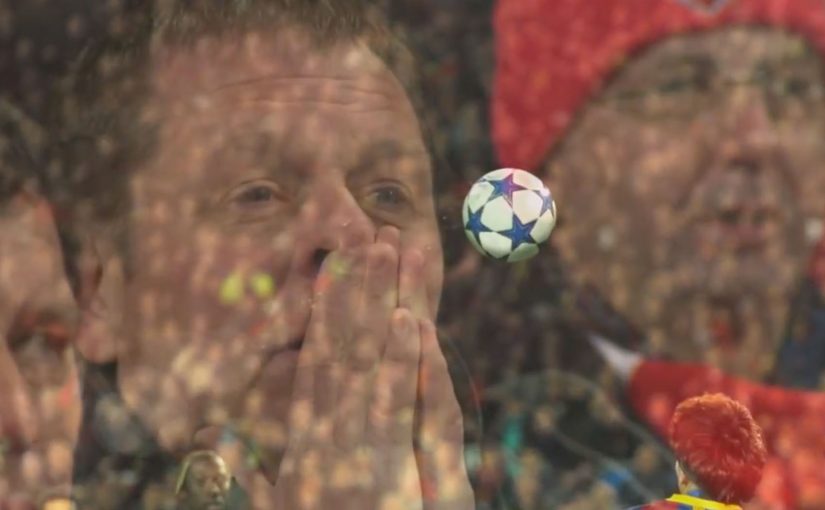
The UEFA Champions League attracts massive global audiences, and a large share of fans watch matches at home. Heineken’s release references over 150 million TV viewers watching live UCL coverage per match week in 220+ territories. Heineken and AKQA used that context to build Heineken StarPlayer, a dual-screen app designed to let fans interact in real time with the nail-biting action.

With StarPlayer, fans play along live on desktop and mobile by anticipating what will happen in key match moments, in real time. The promise is simple. Turn passive viewing into a competitive layer of predictions, banter and shared tension.

What StarPlayer actually adds to the match

The mechanic is built around micro-moments. Here, “micro-moments” means the short, repeatable windows where a single prediction fits without pulling you away from play. Corners, free kicks, penalties, shots, and short time windows where a fan can commit to a forecast. If you are right, you gain points. If you are wrong, you lose ground. The point is not the points. The point is sustained attention and social comparison. Because each forecast is time-boxed and resolved by the next play, the loop creates tension and keeps fans scanning for the next peak moment.

In sports sponsorship, the hard part is not reach. It is converting 90 minutes of attention into 90 minutes of participation.

In global sports sponsorships, the scarce resource is not exposure, it is credible participation during the live window.

The real question is whether you can turn the second-screen reflex into a ritual that heightens the match instead of competing with it.

Why the dual-screen idea fits the way fans really watch

StarPlayer leans into two truths. First, a lot of fans watch at home rather than in stadiums. Second, many are already using a second device during the match, either to check stats, message friends, or follow commentary. StarPlayer turns that second-screen habit into a structured game loop. It also respects viewer control. You can engage in bursts, choose the moments you want to play, and keep your focus on the match while the phone or laptop becomes your companion layer.

Extractable takeaway: If your audience already second-screens, convert that habit into one-tap decisions tied to predictable peaks, so the companion layer adds tension without stealing attention from the main screen.

What the brand is really buying

Heineken positions StarPlayer as “made to entertain” applied to sport viewing. The business intent is to make the sponsorship feel like an experience, not just a logo. If the brand becomes part of the ritual, it earns recall that is tied to real match emotions, not ad breaks. This kind of activation is worth doing only when it becomes part of the viewing ritual, not an interruption layered on top.

The work later earns major industry recognition. Heineken Star Player is listed as a Cyber Gold Lion (Mobile) at Cannes Lions, credited to AKQA London.

Steal the second-screen prediction loop

  • Design around predictable peaks. Build interactions for moments people already lean forward for.
  • Keep the loop lightweight. A decision in seconds beats anything that competes with the main screen.
  • Make it social by default. Rivalry, banter and comparison are the fuel. Solo play is the backup.
  • Optimise for “stickiness”, not clicks. The win condition is returning to the second screen again and again during the match.

A few fast answers before you act

What is a “dual-screen” experience in sports marketing?

A dual-screen experience is when the main content stays on TV, while a phone or laptop adds a companion layer. The second screen can enable play, prediction, stats, chat, or rewards without interrupting the match.

Why do prediction mechanics work especially well in live sport?

Because sport is already a sequence of uncertain outcomes. Predictions let fans externalise their gut feel, then get instant feedback, which creates tension and repeat engagement.

What is the simplest version of Star Player a brand could copy?

Pick 5 to 10 repeatable match moments. Create one-tap predictions with a short countdown. Score it. Add a friend leaderboard. Keep everything playable in under five seconds.

How do you avoid the second screen distracting from the match?

Design for bursts. Keep interactions tied to natural pauses or peak moments. Use quick taps, not typing. The TV remains the hero.

What metrics matter for a second-screen activation?

Time-in-experience per match, repeat participation across matches, and social play rate. For brand outcomes, track recall and sponsorship attribution uplift, not just installs.

CuteCircuit x Ballantine’s: tshirtOS

CuteCircuit x Ballantine’s: tshirtOS

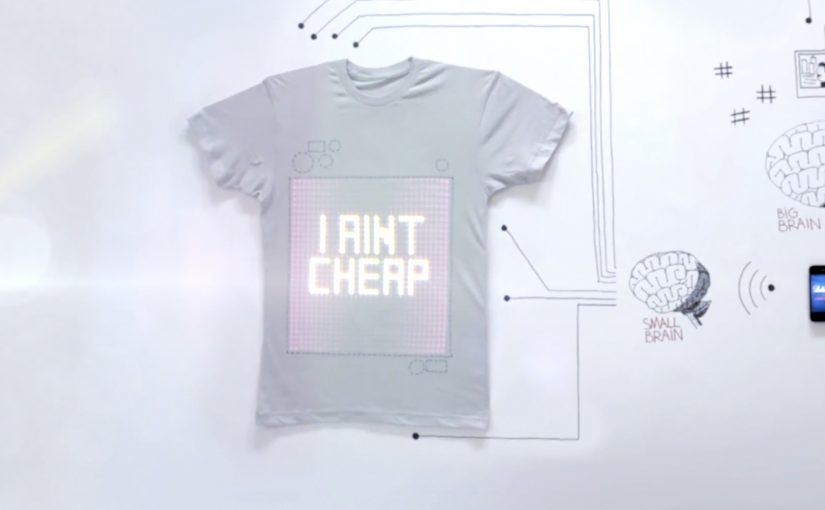
A grey T-shirt looks ordinary until it lights up and starts broadcasting whatever you choose. Text. Images. A status. A moving graphic. Your chest becomes a screen.

London fashion house CuteCircuit, in collaboration with whisky brand Ballantine’s, introduces tshirtOS, described as a wearable, shareable, programmable T-shirt built for digital creativity.

Here is a short making-of film, described as having received over 500,000 views.

What tshirtOS actually is

At the center is a 32 by 32 grid of 1,024 LEDs on the front of the shirt, controlled via an app on your phone. The concept is expanded with built-in components including a micro-camera, a microphone, an accelerometer, and speakers. The result is a garment that can display and capture content, then push it outward as a wearable broadcast. Here, that means the shirt itself becomes the display surface and the phone becomes the control layer.

In global consumer culture, where mobile is the primary tool for self-expression, programmable wearables turn identity signals into a personal channel that travels with the wearer.

Why it lands

Most “future of fashion” ideas die because they look like tech demos instead of culture. tshirtOS works as a story because it keeps a familiar object, the plain tee, then adds one new superpower that everyone understands immediately. You can show something. Right now. In public. Because the output appears on a familiar object people already understand, the technology reads as communication before it reads as hardware. That instant legibility makes the idea feel less like a gadget and more like a new medium.

Extractable takeaway: If you are launching a new interface, anchor it in a familiar form factor, then make the first benefit obvious in one glance so the audience explains it for you.

What the brands are really betting on

The ambition is bigger than a one-off prototype. It is a new creative canvas that sits between fashion, social content, and live communication. Ballantine’s gets cultural adjacency to creativity and experimentation, while CuteCircuit extends its interactive fashion narrative into something that looks commercially repeatable.

The real question is whether a programmable garment can move from prototype theater into a repeatable medium people instantly understand and want to use.

The second film, “T-shirt of the future,” puts tshirtOS into a night-out storyline. It is described as having already generated over 1.3 million views.

What to steal from tshirtOS

  • Prototype the medium, not the message. When the platform is new, the product itself is the headline.
  • Design for instant comprehension. If it cannot be understood in a second, it will not spread.
  • Show it in culture, not a lab. A night out beats a spec sheet for explaining why it matters.
  • Make it programmable. Viewer control creates infinite variations without infinite production.

A few fast answers before you act

What is tshirtOS in one line?

A programmable T-shirt concept that uses a 32 by 32 LED grid and a mobile app to display and share digital content in real time.

What hardware is described as being inside the shirt?

A 1,024 LED grid plus components including a micro-camera, microphone, accelerometer, and speakers.

Why does a programmable shirt matter for brands?

It turns the wearer into a moving, controllable surface for expression, which can connect live moments to digital content without relying on external screens.

What is the main adoption barrier?

Practicality and cost. Washability, comfort, battery life, and price all determine whether it becomes a product or stays a prototype.

What is the strongest creative use case?

Live, personal expression in social settings, where instant visual output is part of the experience and the wearer wants to change what is displayed on the fly.