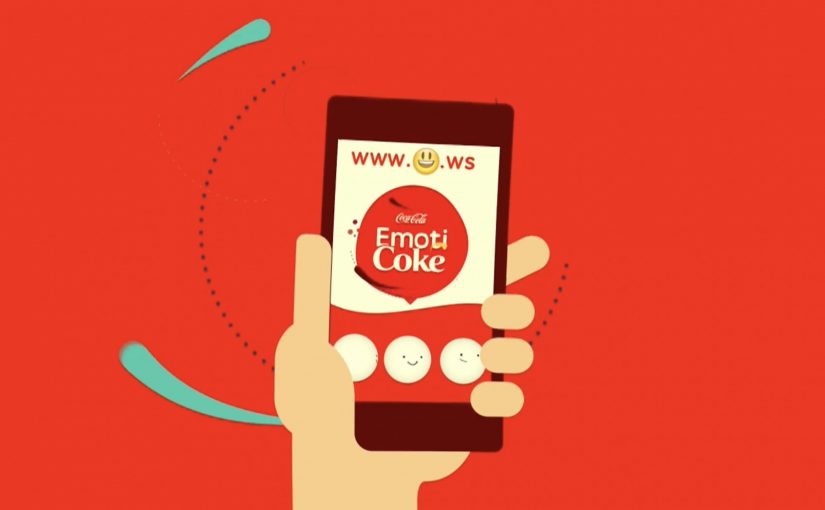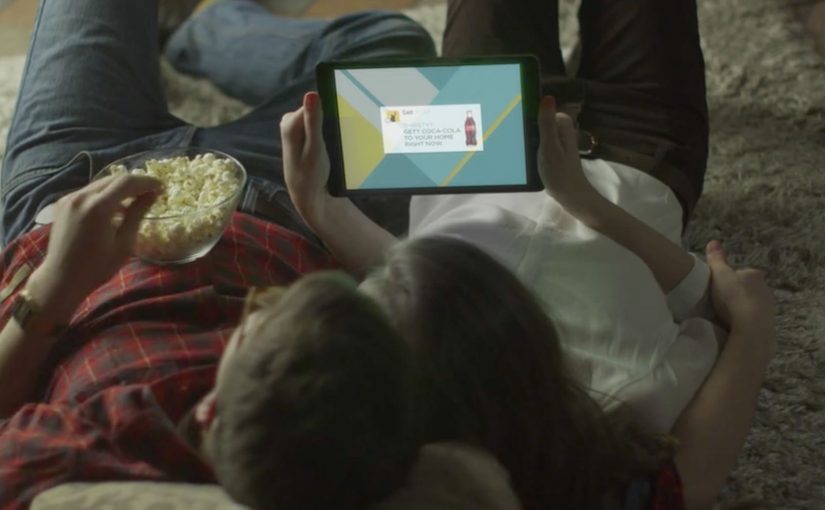
You are watching a Coca-Cola TV spot in Israel. Your phone lights up. A “Gett Coca-Cola” prompt appears. You tap once. Five minutes later, a special Coca-Cola package shows up at your door: a branded cooler, two Coke bottles, and a bottle opener.
From TV spot to one-tap delivery
Turn a TV ad into a one-tap order, and make “second screen” mean immediate delivery, not just engagement. Here, “second screen” means the phone acting as the immediate action surface while the TV spot supplies the trigger.
What is actually happening on the second screen
The TV spot carries an audio trigger that a smartphone can recognize. The moment the ad plays, phones with the Gett app installed receive a push notification. The viewer swipes or taps, and the order is placed in one click.
In practice, this behaves like Shazam for commerce. Except the payoff is not identification. It is fulfillment.
Why the Gett partnership is the real unlock
The ad is only half the experience. The other half is logistics.
To make the “five minutes later” promise credible, Coca-Cola partners with Gett, a local taxi app, and during the promotion Gett dispatches thousands of vehicles packed with branded coolers across Israel, ready to deliver on demand.
In FMCG and retail campaigns, the strategic value is not the novelty of a second screen, but the ability to compress media, commerce, and fulfillment into one immediate behavior.
The real question is whether the brand can remove enough friction that attention turns into action before intent cools.
Why this feels like a reinvention of TV, not a gimmick
This is not a gimmick. It is a tighter piece of commercial design because the creative, transaction, and fulfillment layers are built to work as one system.
Extractable takeaway: When a campaign links attention, transaction, and delivery inside one continuous action, the medium stops acting like awareness-only media and starts behaving like a service.
It collapses the funnel
There is no gap between awareness and action. The moment of attention is the moment of purchase.
It turns “sampling” into a media format
The campaign is a TV impression plus product trial, delivered instantly.
It makes the second screen earn its place
Second screen ideas often stop at polls and hashtags. Here, the phone is not a companion. It is the checkout button.
The deeper point
This is what “buyable advertising” looks like when it is engineered end to end. By “buyable advertising,” this means media that lets a viewer move from exposure to transaction without leaving the moment.
The business intent is simple: remove the lag between media spend and product trial by turning broadcast attention into immediate, measurable fulfillment.
Media triggers action. Action triggers logistics. Logistics completes the brand promise while attention is still warm.
What to steal from this buyable-media model
- Collapse the funnel deliberately: If you can connect attention to action in one gesture, the “ad” becomes the first step of the purchase flow.
- Make the trigger earn its existence: Second screen only matters when it changes the outcome, not when it adds commentary.
- Engineer fulfillment as part of the creative: The logistics promise is the product. Treat it like core campaign craft, not an ops afterthought.
- Turn sampling into a format: Delivering the kit is the media unit. That is why this reads as more than a shoppable banner.
- Protect trust explicitly: Any “listening” mechanic needs clear permissioning and transparency, or the whole experience flips from magic to creepy.
A few fast answers before you act
What does the TV ad do that is different?
It uses an audio trigger so phones can recognize the ad and prompt a “Gett Coca-Cola” order on the second screen.
Do viewers need anything installed for this to work?
Yes. The flow depends on the Gett app, since the notification and one-tap order happens inside Gett.
How does it deliver so fast?
Gett uses its taxi network as a delivery fleet, with cars preloaded with the cooler kits during the promotion.
Why is this more powerful than a “second screen” hashtag?
Because the second screen is not commentary. It is conversion plus fulfillment.
What is the main risk brands must manage?
User trust. Any experience that “listens” for triggers must be transparent and permissioned, or it will feel creepy, even if the mechanics work.