EVOC: The Indestructible Billboard

EVOC: The Indestructible Billboard

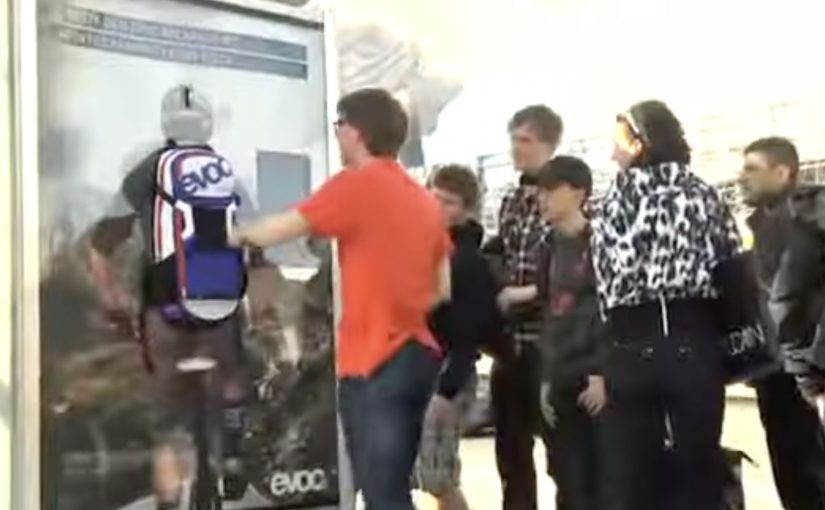
A backpack is mounted into a bus stop billboard. People step up, throw their hardest punch, and a display instantly shows the force of the hit and how much of it the backpack absorbs.

EVOC wanted to highlight its LITESHIELD protective technology, positioned as shock absorption with everyday wearing comfort. Publicis Munich created a billboard that lets passers-by physically test the backpack’s impact absorption. The unit also ties into Facebook, described as photographing participants and posting the image so they can tag and share their attempt.

The hardest recorded punch is reported as 11.30 kN. Definition-tightening: kN, kilonewton, is a unit of force, so the number is the proof-point for how much impact the demo measured, not a vague “strong” claim.

A product demo disguised as street entertainment

The mechanism is simple. Turn the product into the interface. The billboard does not claim protection, it measures an impact in public and shows both the hit and the absorbed portion in real time.

In performance-driven consumer categories, an outdoor experience that converts a spec into a felt moment can create belief faster than any explanation panel ever will.

Why the Facebook loop matters

The punch is the hook, but the share is the multiplier. By capturing the moment and attaching a score, the activation creates a lightweight competition mechanic, then hands people a reason to post that is about them, not about the brand.

Extractable takeaway: Proof travels when the moment is both measurable and share-ready, so design the interaction and the publishing loop as one system.

Reported results from coverage include around 97 hits per hour and a 220% increase in Facebook fan activity during the campaign window. Those figures are part of the story because they show what happens when the product truth is both playable and publishable.

What EVOC is really buying

This is credibility and recall. If you let someone try to break your protective promise in public and the product holds, the brand earns a kind of trust that polished messaging struggles to achieve.

The real question is whether your proof moment is verifiable at a glance, or whether it reads like a gimmick.

Proof-led stunts are worth doing only when the measurement is instantly legible and the audience feels it cannot be faked.

Proof-led activation moves worth copying

  • Instrument the claim. If you say “absorbs impact,” measure impact and show the absorbed portion.
  • Make the demo social by default. Photo plus score is a repeatable share trigger.
  • Keep the interaction one-step. No instructions wall. One obvious action, one immediate payoff.
  • Design for bystanders. Watching someone else punch is part of the persuasion.

A few fast answers before you act

What is EVOC’s “Indestructible Billboard”?

An interactive bus stop billboard in Berlin that lets people punch an EVOC backpack, then displays the measured force and the absorbed portion as a live product demonstration.

What does LITESHIELD refer to?

EVOC’s protective backpack technology, positioned around impact absorption and back protection while still being wearable for sport use.

Why add Facebook to an outdoor activation?

Because it turns a one-off street moment into shareable content. A photo plus a score gives participants a reason to post and compare attempts.

What does “11.30 kN” mean in plain language?

It is a reported peak force reading from the activation. kN is a unit of force, so the number is meant to quantify the strongest recorded hit.

What is the biggest risk with “proof” stunts like this?

If the measurement is unclear or feels fake, trust collapses. The display must be instantly readable and the interaction must feel authentic.
Steve Jobs 1955 – 2011

Steve Jobs 1955 – 2011

On 06/10/2011 my day starts at 5:30am. Blurry eyed, I press the home button on my iPhone, and the first thing I see is a push notification from NDTV India: “Steve Jobs, Apple’s visionary, dies at 56.”

The next few seconds feel like some invisible force knocks the air out of me. The Newton equivalent from the modern world is just gone in a blink of an eye. By “Newton equivalent” I mean a once-in-a-generation inventor whose work changes how ordinary people live.

While all the social channels flood with people sharing the news, all I can do is post a few tribute pictures on Facebook. I want to write a few lines about it on Ramble, but I sit speechless throughout the day. In fact the days that follow feel similar, and I cannot find the words to pen down anything, that is until now.

The real question is what a tribute has to do to feel earned.

Two tributes that feel right in this moment

Of the dozens of memorial photos and videos created to honor Steve Jobs, I keep coming back to the following as the most appropriate for the occasion.

Mechanism-wise, both tributes rebuild a public feeling from familiar materials. One uses sounds and a voice people associate with Apple products. The other uses a simple office material to create something large, collective, and visible.

In global consumer-tech culture, where product design quietly rewires daily habits, tributes built from the culture itself tend to feel the most honest.

A tribute earns its place when it demonstrates craft and restraint, not when it tries to explain impact with adjectives.

1) AzR’s Apple-sampled tribute

A musician who calls himself AzR creates a video built from sounds sampled from Apple products and Steve’s 2005 Stanford commencement speech. Sampling here means recording short sounds from devices and using them as instruments in a new composition. Every instrument, including drums, is sampled from a Mac product, tuned by ear, and replayed in the context of the song.

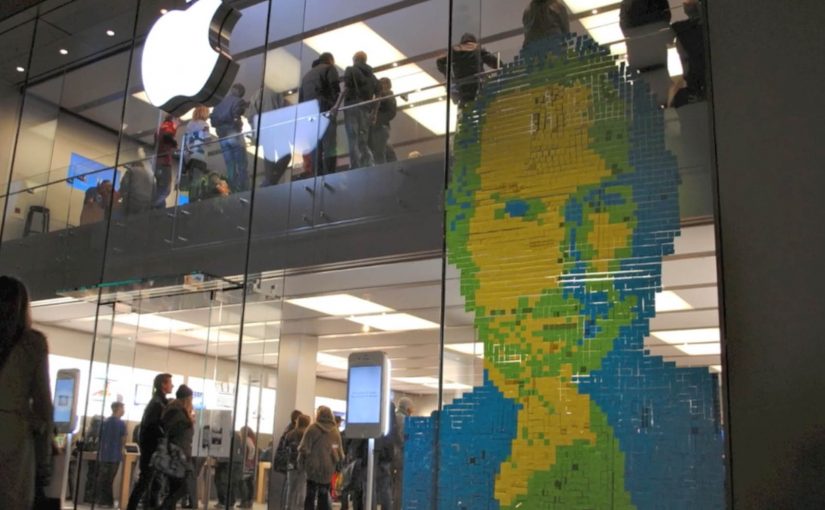
2) 4,001 Post-it Notes in Munich

Fans in Germany find a wonderful way to express their respect. They create a portrait of Steve Jobs out of 4,001 Post-it Notes. The portrait adorns the front-facing glass walls of an Apple Store in Munich, Germany.

Why these tributes land

They do not ask you to agree that Steve Jobs mattered. They let you hear and see how his work lives inside everyday objects and shared spaces. That mechanism makes the respect feel physical rather than rhetorical.

Extractable takeaway: If you want a tribute to travel, build it from the same materials the person put into the world, then make it simple enough to share in one listen or one glance.

What stays with me

To sum up, I am glad to have lived in a period of world history that witnessed Steve Jobs change the world.

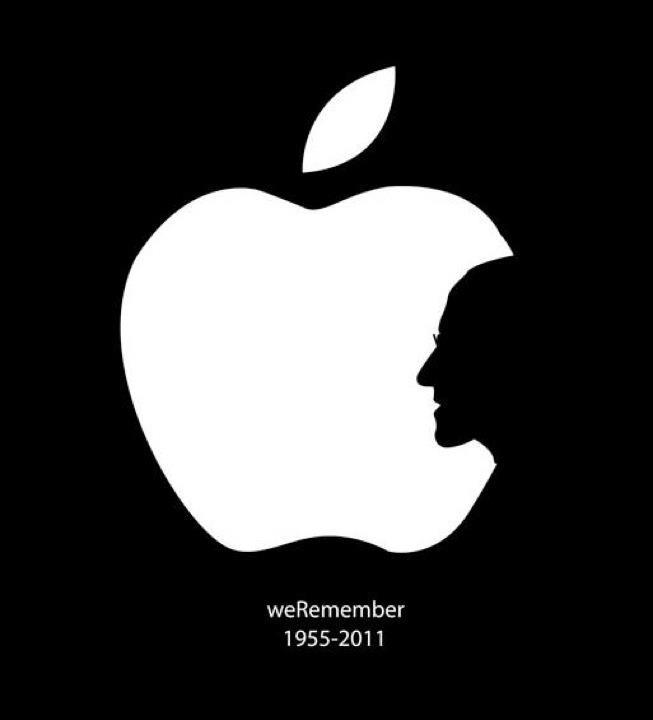
We remember Steve Jobs

How to make a tribute feel earned

  • Start with a material. Use a concrete artifact, a sound, a tool, a place, then build the tribute around it.
  • Make it shareable fast. If it does not land quickly, it will not travel.
  • Let people participate. The Munich wall works because many hands make one face.
  • Keep the words minimal. Craft carries more respect than adjectives.

A few fast answers before you act

What is this post about?

It is a personal note from the morning I saw the news, plus two tributes that capture why Steve Jobs mattered to people.

Which two tributes are highlighted?

AzR’s music video built from sounds sampled from Apple products and Steve Jobs’ 2005 Stanford commencement speech. A 4,001 Post-it Notes portrait on an Apple Store in Munich, Germany.

Why does the Apple-sampled video work?

It turns familiar device sounds and a familiar voice into a new piece of music. That craft makes the tribute feel earned rather than narrated.

Why does the Munich Post-it portrait stand out?

It is physical, collective, and public. It turns respect into a visible act that other people can walk past and feel.

What is the simplest takeaway?

Some people do not just build products. They reshape culture and daily behavior. When they are gone, you feel the absence immediately.

GranataPet: Check In, Snack Out

GranataPet: Check In, Snack Out

GranataPet is one of the innovative leaders of high premium pet food in Germany. Their agency, agenta, was given the challenge to create awareness for GranataPet dog food on a slim budget.

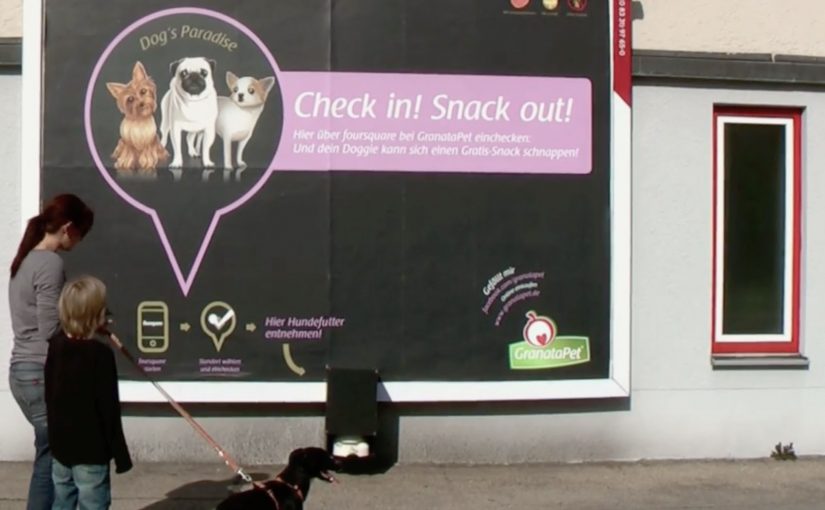
The idea targets dog owners at the exact moment they are most open to noticing pet-related messages. While walking their best friend. Socially activated installations are placed on key walking routes. Dogs catch the scent of treats, stop, and pull their owners toward a billboard that simply says “Check in. Snack out”.

A sampling demo that your dog starts for you

This is a classic trial mechanic with a smart trigger. Instead of asking humans to approach a promoter, the dog does the targeting. The owner follows the leash. Then the message becomes self-evident. Check in with Foursquare to activate a free bowl of dog food.

How the mechanism works

The billboard combines three parts. A location check-in prompt, a connected dispenser and bowl, and a social echo via the check-in behavior, meaning each check-in can create additional visibility beyond the street placement itself. When a user checks in at the billboard’s location, the system releases a portion of food into the bowl. The owner watches the dog’s reaction in real time, which functions as the product demo.

In pet food sampling, the highest-converting trial moments are the ones where the animal can deliver an immediate preference signal in front of the owner.

The real question is whether the brand can turn a routine walk into a low-friction proof moment that the owner trusts more than advertising copy. The stronger move here is to let the dog, not the promoter, make the case.

Why it lands

It is easy to trigger, well-timed, and emotionally loaded. The owner does not have to imagine whether the dog will like the food. They see it. That works because a visible reaction from the dog removes guesswork faster than any product claim can. The social layer then turns one local poster into distributed impressions, because check-ins can surface to friends depending on settings. The most important part is that the “proof” is not the copy on the billboard. It is the dog’s behavior.

Extractable takeaway: If your product decision depends on a third party’s preference, build a live demo where that third party delivers the verdict on the spot, and use a simple location trigger to scale it.

What the brand is really buying

This is awareness, trial, and measurable demand in one loop. The execution creates talk value, it generates trackable interactions per location, and it pushes owners toward retail purchase after a positive in-the-moment test. Trade coverage at the time also described increased local demand following the activation.

What pet food marketers can steal from this

  • Target the moment, not the demographic. Dog-walking routes beat broad reach when the category is specific.
  • Let behavior be the headline. A happy dog is more persuasive than any claim line.
  • Make the trigger simple. One action. One reward. No explanation tax.
  • Use the environment as your interface. The billboard is the call-to-action and the proof point.
  • Instrument the activation. Location check-ins can double as measurement, not just distribution.

A few fast answers before you act

What is “Check in, snack out” in one sentence?

An interactive billboard that dispenses free dog food when a nearby owner checks in using a location service.

Why does this outperform a normal sampling stand?

The dog initiates the interaction, and the product proves itself immediately through the dog’s reaction, which reduces hesitation for the owner.

What makes the social layer valuable here?

Check-ins can create secondary reach beyond the physical location, and they can be used to track which placements generate the most interactions.

What is the biggest operational risk?

Reliability. If the dispenser jams or the trigger fails, the experience collapses and the brand takes the blame.

How would you adapt this without Foursquare?

Keep the same structure. A location trigger plus instant physical reward. Use whatever mobile mechanism your audience already uses for quick opt-in and confirmation.