
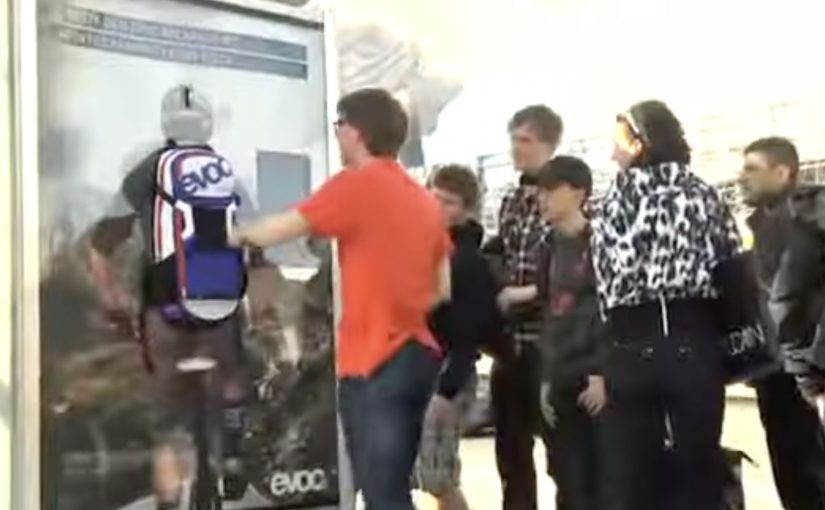
EVOC: The Indestructible Billboard

A backpack is mounted into a bus stop billboard. People step up, throw their hardest punch, and a display instantly shows the force of the hit and how much of it the backpack absorbs.

EVOC wanted to highlight its LITESHIELD protective technology, positioned as shock absorption with everyday wearing comfort. Publicis Munich created a billboard that lets passers-by physically test the backpack’s impact absorption. The unit also ties into Facebook, described as photographing participants and posting the image so they can tag and share their attempt.

The hardest recorded punch is reported as 11.30 kN. Definition-tightening: kN, kilonewton, is a unit of force, so the number is the proof-point for how much impact the demo measured, not a vague “strong” claim.

A product demo disguised as street entertainment

The mechanism is simple. Turn the product into the interface. The billboard does not claim protection, it measures an impact in public and shows both the hit and the absorbed portion in real time.

In performance-driven consumer categories, an outdoor experience that converts a spec into a felt moment can create belief faster than any explanation panel ever will.

Why the Facebook loop matters

The punch is the hook, but the share is the multiplier. By capturing the moment and attaching a score, the activation creates a lightweight competition mechanic, then hands people a reason to post that is about them, not about the brand.

Extractable takeaway: Proof travels when the moment is both measurable and share-ready, so design the interaction and the publishing loop as one system.

Reported results from coverage include around 97 hits per hour and a 220% increase in Facebook fan activity during the campaign window. Those figures are part of the story because they show what happens when the product truth is both playable and publishable.

What EVOC is really buying

This is credibility and recall. If you let someone try to break your protective promise in public and the product holds, the brand earns a kind of trust that polished messaging struggles to achieve.

The real question is whether your proof moment is verifiable at a glance, or whether it reads like a gimmick.

Proof-led stunts are worth doing only when the measurement is instantly legible and the audience feels it cannot be faked.

Proof-led activation moves worth copying

  • Instrument the claim. If you say “absorbs impact,” measure impact and show the absorbed portion.
  • Make the demo social by default. Photo plus score is a repeatable share trigger.
  • Keep the interaction one-step. No instructions wall. One obvious action, one immediate payoff.
  • Design for bystanders. Watching someone else punch is part of the persuasion.

A few fast answers before you act

What is EVOC’s “Indestructible Billboard”?

An interactive bus stop billboard in Berlin that lets people punch an EVOC backpack, then displays the measured force and the absorbed portion as a live product demonstration.

What does LITESHIELD refer to?

EVOC’s protective backpack technology, positioned around impact absorption and back protection while still being wearable for sport use.

Why add Facebook to an outdoor activation?

Because it turns a one-off street moment into shareable content. A photo plus a score gives participants a reason to post and compare attempts.

What does “11.30 kN” mean in plain language?

It is a reported peak force reading from the activation. kN is a unit of force, so the number is meant to quantify the strongest recorded hit.

What is the biggest risk with “proof” stunts like this?

If the measurement is unclear or feels fake, trust collapses. The display must be instantly readable and the interaction must feel authentic.
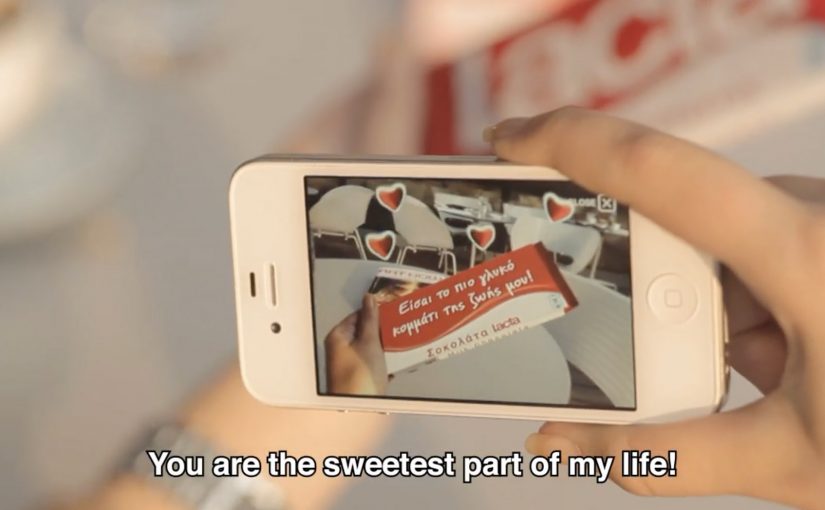
Lacta: Love Messages on Real Bars

OgilvyOne Athens created another innovative campaign for Lacta Chocolate. This time, people write their own love messages and see them appear on real Lacta bars through an augmented reality mobile app.

The twist is that the message is not “published” online first. It is revealed on the physical product when the receiver scans the wrapper with the app, which turns a simple bar of chocolate into a personalized moment.

Click here to view some of the past Lacta Chocolate campaigns that are equally innovative.

How the AR message reveal works

The mechanism is a clean three-step loop. The sender composes a message in the app and chooses who it is for. The receiver is prompted to use the app too, then scans a Lacta bar to reveal the hidden message in augmented reality. Because the reveal depends on scanning the product, the experience is designed to connect emotion and purchase in the same gesture.

In FMCG gifting categories where love and ritual drive preference, adding a personal reveal layer can create differentiation without changing the core product.

Why it lands

It modernizes a familiar behavior, writing something personal on a gift, without losing the physicality of giving chocolate. The message feels private and earned because it only appears when the recipient holds a real bar in their hands and chooses to reveal it. That makes the brand’s role feel like an enabler of intimacy, not an interruption. That works because the product scan turns anticipation into part of the gift, which makes the interaction feel more meaningful than a standard message.

Extractable takeaway: If you want personalization to drive both attention and sales, tie the reveal to a physical trigger. Make the digital layer unlockable only through the product, so the magic moment and the transaction reinforce each other.

What Lacta is really optimizing for

The real question is how to make personalization pull product demand instead of floating as a nice digital extra.

This is built to turn gifting into repeatable behavior. One person sends a message, another person downloads the app, then the product becomes the key that unlocks the experience. That creates a loop that can scale through relationships rather than through media weight alone.

The strongest strategic choice here is keeping the chocolate bar as the gate to the experience, not just the branded wrapper around it.

What to steal for your own packaging-led digital work

  • Use the pack as the trigger. If the wrapper is the marker, the product stays central.
  • Make the reveal the reward. The moment of discovery is what people remember and retell.
  • Keep the steps simple. Create, send, scan. Anything more complex reduces participation.
  • Design for reciprocity. The best gifting mechanics invite the receiver to respond, not just consume.

A few fast answers before you act

What is the core idea of this Lacta campaign?

An AR mobile app that lets people write a love message that only appears when the recipient scans a real Lacta chocolate bar.

Why does tying the reveal to the physical bar matter?

It keeps the product as the gateway to the experience, so personalization supports purchase rather than replacing it.

What is the main emotional benefit versus a normal digital message?

The message feels more intimate because it is hidden and revealed in a physical moment, not broadcast in a feed.

Why not publish the message online first and then link to the product?

Because that would make the product secondary. Here, the chocolate bar is the access point, so the physical gift remains central to the experience.

What is the biggest execution risk with AR-on-pack ideas?

Friction. If install, scanning, or recognition is unreliable, the magic becomes disappointment. The reveal has to work fast and consistently.

Vodafone: 5 Million Pixel Hunt

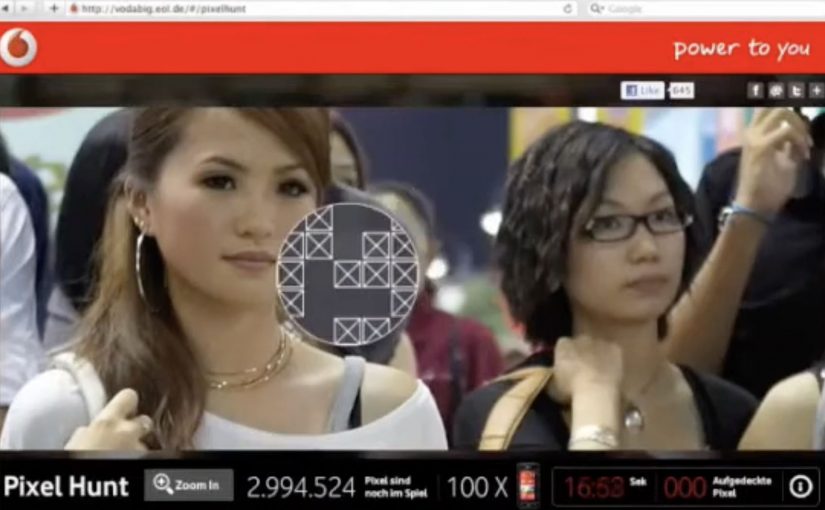
To promote the Vodafone LG Optimus Windows 7 phone with a 5-megapixel camera, Jung von Matt/Alster built a deceptively simple challenge: find the “winning” pixels inside a picture made of five million clickable pixels.

The premise is literal. One giant image is broken into a massive pixel field. A small set of those pixels are winners, and each winning pixel unlocks a prize, a new LG Optimus Windows 7 phone.

In handset launches, interactive “single mechanic” experiences can outperform heavier builds because the payoff is immediate and the learning curve is close to zero. By “single mechanic,” I mean one repeatable action loop that anyone can understand instantly.

A camera spec turned into a game mechanic

Most 5MP messaging ends up as lifestyle photography claims. This flips it into a rule: five million pixels. Go hunt them. That move makes the spec tangible, even if you never take a photo. Because the spec becomes a rule you can act on, the message lands without explanation and invites immediate participation.

It also reframes the product story from “better camera” to “better challenge.” The camera claim becomes the architecture of the experience.

In mass-market handset launches, the simplest interactive loops win because they reward attention in seconds, not minutes.

Why the pixel hunt pulls people in

A “pixel hunt” is a giant clickable image where only a small set of pixels are winners, and three forces do the work:

Extractable takeaway: When a spec can be turned into a single, repeatable micro-action with an obvious reward, participation scales faster than feature-heavy experiences.

  • Micro-actions: every click feels like progress, even when nothing happens.
  • Lottery logic: anyone can win, which keeps effort rational in small bursts.
  • Social proof: the more people play, the more the hunt feels “worth trying.”

The real question is whether your mechanic is so obvious that people can start without instructions and still feel progress within the first few clicks.

This is the kind of engagement design that scales without extra features. It is not a platform. It is a loop you can explain in one sentence.

Reported outcomes, and the real takeaway

The campaign is reported to have driven hundreds of thousands of visitors and to have had the full pixel field “clicked out” within weeks. Whether or not you track the exact numbers, the lesson holds: a single, repeatable micro-action can create massive aggregate participation when the reward is clear and the friction is low.

For spec-led launches, I would rather ship one obvious loop like this than a sprawling feature set that needs onboarding.

What to borrow from the pixel-hunt mechanic

  • Translate a spec into an experience rule, not a headline.
  • Use one action that is impossible to misunderstand, here it is “click to search.”
  • Make progress feel constant, even when outcomes are rare.
  • Keep the story retellable, “there were prizes hidden in five million pixels.”

A few fast answers before you act

What is a “pixel hunt” campaign?

An interactive image where users click through a dense pixel field to uncover hidden winning spots that unlock prizes.

Why does tying the hunt to “five million pixels” matter?

It turns a product attribute into the core mechanic. The spec becomes something you do, not something you are told.

What makes this kind of engagement scale?

Low friction plus high repeatability. People can participate in seconds, stop, and return without needing to relearn anything.

What is the biggest risk with this mechanic?

Fatigue. If the reward feels too remote, people churn. The prize framing and perceived odds must stay motivating.

How do you measure success beyond page views?

Unique participants, average clicks per session, return rate, and the conversion from participation into newsletter opt-ins, store visits, or qualified leads, depending on your objective.