
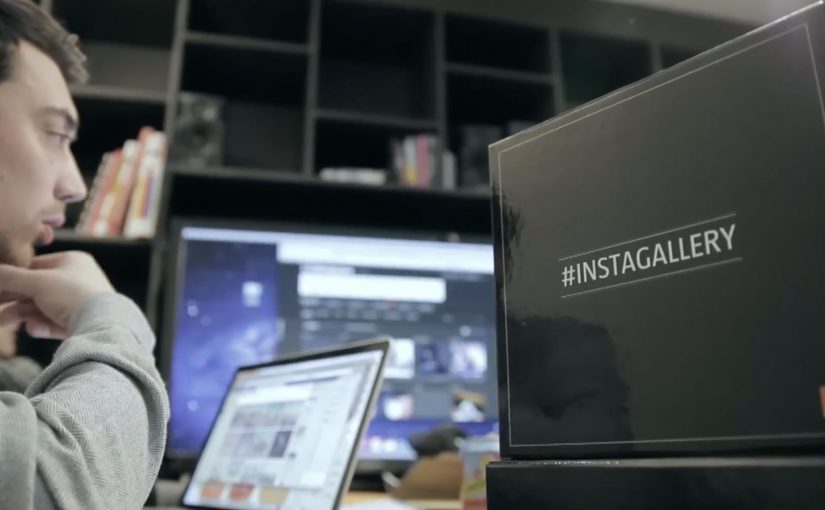
Orange: Instagallery

An Instagrammer posts a photo and suddenly sees it displayed as “art” in a gallery setting, complete with strangers commenting on it in real time. That is the hook behind Orange France’s Instagallery. A campaign built to make network speed feel like instant cultural presence.

A gallery built from other people’s feeds

To promote a new high-speed network, Orange works with Cake Paris to target influential Instagram users by pulling their photos into a staged photo exhibition in Los Angeles. The exhibition becomes a physical set for a second move. Capturing the reactions.

The mechanism: personal proof sent back to the source

Orange films people walking through the gallery and making awkward, unfiltered comments on the displayed photos. Those short films are then sent directly to the original Instagrammers, who share the clips with followers. The sharing loop creates buzz for Orange France without buying classic reach in the same way a traditional launch campaign would.

In European telecom marketing, speed messaging becomes more believable when it is demonstrated as immediacy inside a social platform people already use daily.

Why this lands

It works because it is personal before it is promotional. The influencer is not asked to “post an ad”. They receive a surprising artifact starring their own content, with a built-in narrative their audience wants to watch. The physical gallery in Los Angeles adds a scale cue, and the awkward commentary makes the clip feel real rather than polished brand content.

Extractable takeaway: If you need influencers to spread the message, give them a shareable object that is already about them, and let the brand benefit ride inside the story instead of sitting on top of it.

What Orange is really buying

The real question is how to make a technical speed claim travel through social sharing without feeling like a telecom ad.

This is less an Instagram stunt and more a distribution design. By distribution design, this means structuring the idea so the creator’s reason to share also becomes the brand’s route to reach. Orange turns “network speed” into a reason for participation, then uses personalization to lower friction. The brand benefit is present, but it is not the main character. The creator is.

What to borrow from Instagallery

  • Start with the creator’s ego, not your slogan. Make the shareable asset feel like a reward for them.
  • Move digital into a physical set. A real-world installation creates legitimacy and better footage.
  • Build a loop, not a one-off post. Content goes from user, to brand, back to user, then out to audience.
  • Make the reveal fast. The audience should understand “why this exists” in the first seconds.

A few fast answers before you act

What is Orange’s Instagallery?

It’s a campaign that turns selected Instagram photos into a staged gallery exhibition, then sends creators short reaction films they can share to drive buzz for Orange France.

Why build a gallery in Los Angeles for a French telecom brand?

A distant, recognisable cultural setting amplifies perceived scale and surprise. It makes the creator’s photo feel like it “travels” instantly and matters beyond their feed.

How does the influencer loop work here?

Creators post normally, the brand repackages their content into an event and a film, and the creator then shares the film because it features them, not because they were handed a script.

What are the main risks with this pattern?

Rights and permissions for using user photos, avoiding a “creepy” feeling, and ensuring the brand role stays clear enough that the message does not get lost behind the stunt.

How can a non-telecom brand adapt this?

Create a “real-world upgrade” of customer-created content, capture authentic reactions, and return a ready-to-share edit to the creator so distribution feels like self-expression.
Camp Nectar: Real Fruit Boxes

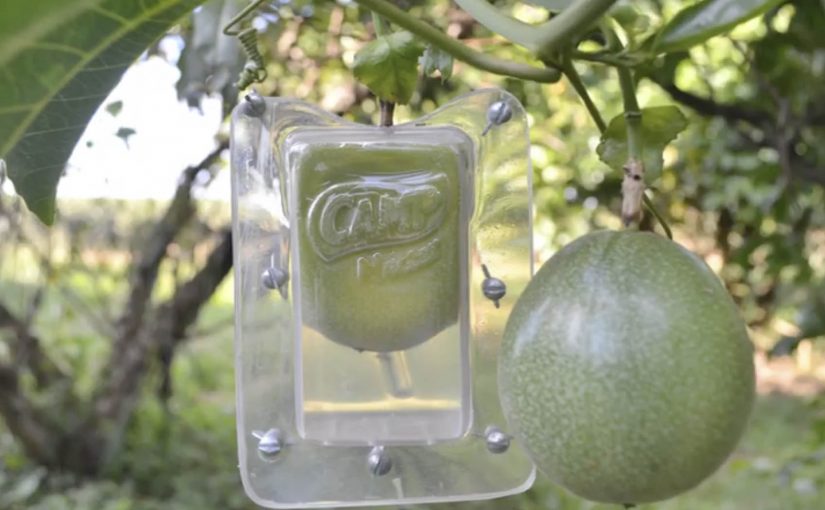
A piece of fruit is hanging from a tree. But it is not round. It is shaped like a juice pack, complete with the unmistakable carton silhouette.

Brazilian agency ageisobar was asked to prove that Camp Nectar juices were all natural. So they created molds in the shape of the brand’s packaging and attached them to fruit as it grew on farms. As the fruit developed and ripened, it took on the exact shape of the juice box, turning “made from real fruit” into something you can see without reading a claim.

The mold-on-tree mechanic

The mechanism is product proof, not persuasion. By product proof, the campaign uses the fruit itself as evidence instead of asking the audience to trust a written claim. Instead of showing ingredients or production steps, the campaign engineers a physical outcome that can only happen if real fruit is involved. The fruit becomes the packaging, and the packaging becomes the argument.

In packaged food and beverage marketing, “natural” claims are often distrusted, so literal demonstrations that collapse the gap between product and source earn attention faster than explanations.

Why the visual is hard to forget

The idea lands because it is a contradiction you can resolve instantly. You see something impossible, then you understand the trick, and the understanding reinforces the claim. It is also inherently shareable because the proof fits in a single frame. A fruit that looks like the pack.

Extractable takeaway: If your claim is routinely doubted, design a one-image demonstration that makes the claim self-evident, then let distribution follow the proof rather than the copy.

What the brand is really doing

Camp Nectar is not just saying “we’re natural”. It is trying to reset the credibility bar in a category full of vague promises. The stronger strategy is to make the claim visible, not louder. The execution borrows the authority of nature itself. Growth, time, and farming become the brand’s endorsement.

The real question is not whether the brand can say “real fruit”, but whether it can make that claim feel self-evident at a glance.

What food and beverage brands can take from this

  • Prove, do not promise. Engineer a physical or behavioral outcome that functions as evidence.
  • Compress the story into one frame. If the proof reads in a second, it travels further.
  • Let the medium match the message. A farm-grown artifact is more persuasive than a studio-made graphic.
  • Keep the claim implicit. When the proof is strong, the audience supplies the conclusion for you.

A few fast answers before you act

What is “Real Fruit Boxes”?

A demonstration campaign where real fruit is grown inside juice-box-shaped molds so it ripens into the shape of Camp Nectar’s packaging.

Why does this work better than ingredient messaging?

Because it is evidence-first. The audience sees a physical result that implies real fruit without needing technical explanation.

What is the core creative principle?

Make the proof visual, literal, and instantaneous. One glance should communicate the point.

What is the main execution risk?

If the proof looks fabricated or overly staged, trust collapses. The craft has to feel like a real-world process, not a prop.

When should brands use “literal proof” ideas?

When the category is saturated with claims and skepticism is high, and you can create a demonstration that is simple, safe, and repeatable.

The One Ronnie: My BlackBerry Isn’t Working

Ronnie Corbett turns 80 in December 2010, and the BBC marks it with an all-star sketch show built around a simple idea: take the old “shop misunderstanding” format and swap the props for modern tech brands.

A classic shop sketch, updated for the BlackBerry era

The setup is instantly familiar if you grew up on British sketch comedy. A customer walks into a shop with a straightforward complaint. The assistant tries to help. Language gets in the way, and the conversation collapses into escalating misunderstanding.

Here, the misunderstanding is brand vocabulary. “BlackBerry” sounds like fruit. “Apple” could be a device or something you eat. “Orange” lands as both a fruit and a UK telecom brand. The sketch plays the confusion straight, like a modern homage to the kind of wordplay that made The Two Ronnies famous.

The mechanic: support jargon collides with everyday language

What makes it work is how the dialogue keeps switching frames. Corbett speaks in tech-support phrases. The shopkeeper responds as if it’s a greengrocer problem. Each “helpful” instruction becomes more absurd because both sides believe they are being perfectly clear.

In mass-market consumer technology, product naming and support language often drift away from how normal people naturally describe problems.

The laugh: watching certainty unravel

The comedy is not “tech is hard”. It is “tech words are slippery”. The sketch lands because it reflects a real feeling from the BlackBerry moment, the phase when a device is mainstream but the language around it still feels specialist. Lots of people own the device, but few feel fluent in the language around it.

Extractable takeaway: If your product lives in mainstream culture, treat naming, onboarding, and help content as part of the product. When everyday meanings collide with brand meanings, users do not just get confused. They get confidently confused, which is harder to recover from.

The intent: a birthday special that doubles as cultural commentary

This is not an ad. But it is a sharp snapshot of the era. BlackBerry is big enough to be a shared reference point. Apple is mainstream enough to be the punchline without explanation. That is exactly when a technology brand crosses from “product” into “culture”. Words are part of the product experience, not just the support layer around it. The real question is whether your product still makes sense once it is explained in ordinary language.

What to steal if you build digital products

  • Audit your vocabulary: if your support scripts sound like a different language than your users speak, you are creating avoidable friction.
  • Name things the way people describe them: features, settings, and errors should map to user intent, not internal architecture.
  • Test for double meanings: brand names and feature names should survive casual conversation without constant clarification.
  • Design for “first explanation wins”: early misunderstandings set the mental model. Fixing them later costs more.

A few fast answers before you act

What is this sketch actually parodying?

It’s a modern take on the British “shop misunderstanding” sketch format, using tech brand names and support language as the source of confusion.

Why does BlackBerry work as a joke prop here?

Because the name has an everyday meaning (fruit) and a product meaning (phone). The sketch exploits how quickly conversations derail when people assume different meanings.

What’s the product lesson behind the comedy?

Words are part of UX. Naming, labels, and help content shape whether users can describe problems accurately and follow instructions confidently.

How do you reduce this kind of confusion in real products?

Use plain-language labels, test terminology with non-experts, and rewrite help steps to match how users describe issues, not how engineers describe systems.

Is this still relevant once the device changes?

Yes. The device is a period reference. The underlying problem, jargon colliding with everyday language, repeats with every new platform and feature wave.