
Ford: Max Motor Dreams Cot

Ford: Max Motor Dreams Cot

It is the middle of the night. A baby will not settle. So a parent reaches for the only reliable hack. Strap in, start the engine, and drive until the motion and hum finally do their work.

Ford Spain’s Max Motor Dreams takes that behaviour and recreates it at home. The cot uses a smartphone app to record the characteristics of a specific journey, then reproduces them back in the crib. Gentle rocking to mimic the car’s movement. A soft engine rumble for background noise. A flowing glow to imitate street lighting passing by outside a window.

In family-focused European automotive brand marketing, the most believable innovation stories take a known behaviour and remove the pain from it without changing the outcome.

Max Motor Dreams is presented as a one-off pilot for now, built as a proof-of-concept rather than a mass product. Ford says that after receiving enquiries, it is considering what full-scale production could look like.

A car-ride simulating cot is a crib concept that captures the motion, sound, and ambient light patterns of driving, then replays them so parents can trigger the same soothing effect without leaving the house.

Why this lands with exhausted parents

The value is not novelty. It is relief. The idea does not ask parents to learn a new sleep philosophy. It simply automates a routine they already know works, then gives them their night back.

Extractable takeaway: If your “innovation” replaces a workaround people already trust, belief comes from preserving the outcome and removing the friction.

What makes the mechanism feel credible

The concept is grounded in a specific recording and replay loop, not a generic “white noise” gadget. Recording an actual route, then replaying that exact motion and sound profile, makes the experience feel personal and less like a toy.

What Ford is really signalling

This is not a sales brochure for a model line. It is a brand move that positions Ford as a company that applies mobility thinking to everyday life problems, and does it with a prototype you can understand in one sentence. That is a smart brand move even if the cot never ships.

The real question is whether you can make a complex capability feel like a bedtime story in one demo.

How to translate mobility tech into a human story

  • Start with a behaviour everyone recognises. Night drives for baby sleep are a universal parent anecdote.
  • Make the loop demonstrable. Record. Replay. Repeat. Simple beats build belief.
  • Show the “one-off” honestly. A pilot can still be powerful if it proves intent and capability.
  • Let the product idea carry the message. When the concept is clear, you do not need heavy copy.

A few fast answers before you act

What is Ford’s Max Motor Dreams?

It is an app-controlled cot concept from Ford Spain that recreates the soothing effects of a night-time car ride by replaying recorded motion, sound, and ambient lighting.

How does the cot know what to reproduce?

Parents use a smartphone app to record a specific journey, then the cot uses that data to reproduce the movement, engine-like sound, and streetlight-style glow.

Is Max Motor Dreams a real product you can buy?

Ford presents it as a one-off pilot concept. It is described as not being in full production, though Ford says it is considering options after enquiries.

Why does this work as a brand story for an automaker?

It reframes automotive expertise as problem-solving beyond the car. The idea borrows the credibility of mobility engineering and applies it to a relatable home problem.

What is the main risk with concepts like this?

If the mechanism looks like a gimmick or cannot be explained quickly, people dismiss it as PR. The concept has to feel technically plausible and emotionally necessary.
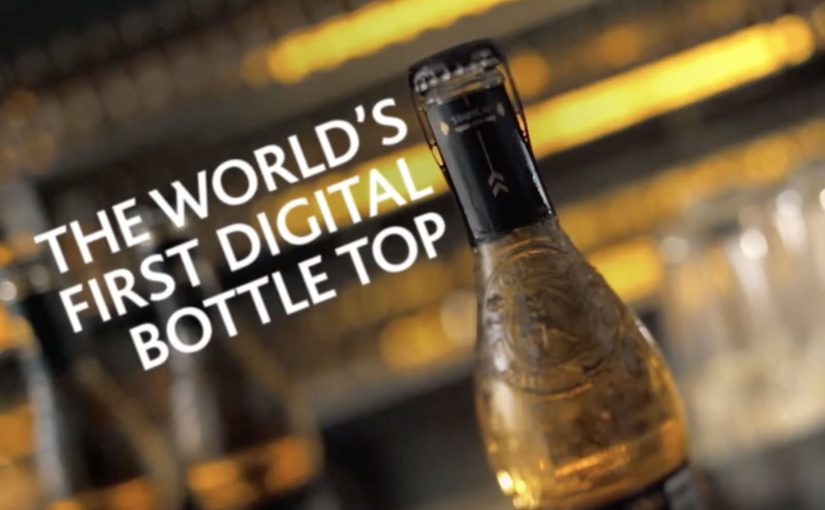
Strongbow Gold: StartCap Bottle Top

Strongbow Gold: StartCap Bottle Top

Strongbow Gold is testing what is being billed as the world’s first digitally enabled bottle top. Trigger it, and the bottle top activates a surprise designed to make the night feel more refreshing, more unexpected and more exciting.

For its first public appearance, the Strongbow Gold team rigged an entire bar in central Budapest with RFID readers, antennas and wires. Then during the night, StartCap triggered a string of memorable activations.

A bottle that behaves like a remote control

The core mechanism is packaging as a trigger. An RFID element in the cap signals nearby readers when the bottle is opened, and that signal kicks off a pre-set sequence in the environment, lights, music, props, anything the system is wired to control.

In European FMCG brand launches, connected packaging is a direct way to turn a product claim into a lived experience because the consumer action, opening the bottle, becomes the start button for the story.

Why this lands in a bar context

Bars already run on anticipation. People are there for the next moment. StartCap simply makes that “next moment” programmable, and ties it to the brand in a way that feels earned rather than announced. Because the trigger is the same action guests already perform, the surprise reads as part of the night, not a branded interruption.

Extractable takeaway: In any shared venue, tie a visible “room moment” to a natural product action and the crowd will supply the reaction and conversation without extra prompts.

What the brand is really proving

This is less about a new cap and more about a new role for the brand. Strongbow Gold positions itself as the catalyst for a better night out, not just a drink choice. Connected packaging is only worth doing when the payoff is unmistakable in the room. The technology is the proof device that makes that positioning tangible.

The real question is whether you can choreograph a repeatable “room moment” without making the tech the headline.

Connected-packaging stealables for your next idea

Connected packaging here means the package contains an identifier or sensor that can trigger a response in a nearby system, turning a normal use action into an experience cue.

  • Make the trigger unavoidable. Opening, pouring, unwrapping. The action must be natural.
  • Design for surprise, not complexity. One clean signal, one clear payoff, then scale the choreography.
  • Use the environment as media. If the space reacts, you earn attention without buying more screens.
  • Keep it safe and reliable. In live venues, failure is public. Redundancy matters.

A few fast answers before you act

What is StartCap in one sentence?

A digitally connected bottle top that uses RFID to trigger events in the surrounding environment when the bottle is opened.

Why is packaging-triggered tech so effective?

Because it links the brand to a physical action the consumer already performs. The experience starts at the product, not at an ad.

What is the biggest risk with “connected bar” activations?

Operational fragility. If sensors misread, activations lag, or the venue is too noisy to notice outcomes, the magic disappears.

Does this need a smartphone app to work?

Not necessarily. This model can be environment-driven. The venue infrastructure can detect the trigger and run the experience without asking the guest to install anything.

What should be measured to judge success?

Participation rate, repeat triggers per guest, dwell and sentiment in the venue, plus any post-event lift in brand consideration and trial.

IKEA Beröra

IKEA Beröra

To launch the iPad version of the IKEA catalogue in Norway, ad agency SMFB created a brand new IKEA product called “Beröra”.

“Beröra” is a sewing kit with a special conductive thread that you sew into the index finger of your favourite gloves. Once the operation is done, the gloves work on a touch screen.

The idea in one clean sentence: Beröra turns any winter glove into a touchscreen glove, so the IKEA catalogue app fits the reality of how people live and move.

A launch mechanic that feels like a product, not a campaign

The smart move is that the “ad” looks and behaves like an IKEA item. A needle, instructions, and conductive thread. Simple enough to DIY (do it yourself), tangible enough to talk about, and useful enough to keep around after the novelty fades.

Extractable takeaway: When a digital launch depends on in-the-moment behavior, ship a small physical fix that removes the biggest usage friction so trial becomes effortless.

Conductive thread matters because most touch screens register conductive contact. So the kit essentially makes a glove fingertip “readable” to the device without forcing people to buy specialised tech gloves. By solving the glove-on touchscreen problem up front, the kit makes the first app interaction frictionless, which is what turns curiosity into downloads.

In cold-climate retail markets, the fastest way to accelerate digital adoption is to remove the tiny physical frictions that stop people trying it in the moment.

The real question is whether your launch removes the first real-world barrier to trial, or just asks people to work around it.

Solve the barrier first, then market the now-easier behavior.

Results and recognition

The promotion generated a lot of interest. As reported at the time, 12,000 kits went in roughly two weeks, and the IKEA Norway iPad catalogue app broke download records.

The work later picked up awards-circuit recognition, including a One Show merit award, and gold at the Festival of Media in Montreux in the Best Launch Campaign category.

What to steal for your next app launch

  • Turn the barrier into the giveaway. Do not “explain” the friction. Remove it with something people can hold.
  • Make the object shareable offline. A physical product travels through homes, offices, and friend groups faster than a banner ever will.
  • Keep the installation simple. If the user needs a tutorial longer than a minute, the drop-off kills word of mouth.
  • Let the product demonstrate the promise. When the benefit is self-evident, belief comes for free.

A few fast answers before you act

What is Beröra, in plain terms?

Beröra is a DIY conductive-thread sewing kit created for IKEA Norway. You sew the thread into a glove fingertip so it works on touchscreen devices, supporting the launch of IKEA’s iPad catalogue.

Why does a physical kit help launch a digital catalogue?

Because it removes a real-world usage barrier. If people cannot comfortably use a phone or tablet in winter conditions, they will not build the habit. The kit makes the app feel practical, not theoretical.

What makes this a strong “earned media” idea?

It creates a story that is easy to repeat. IKEA made a product that solves a modern annoyance, and it is tied directly to the app being promoted. That combination tends to travel well as earned media, meaning unpaid coverage and sharing.

What is the key mechanism that drives engagement here?

Utility creates trial. Trial creates talk. Talk creates downloads. The kit is the trigger that makes the catalogue experience easier, then social sharing does the distribution work.

What should you measure if you do something similar?

Track speed of redemption, install lift during the distribution window, and repeat usage of the app. If you have it, add branded search lift and share-of-voice during the launch period.