
Coca-Cola: Give a Coke, Be Santa

A vending machine that asked you to choose who you are

The strongest holiday ideas turn seasonal sentiment into a simple action people can take in public. Coca-Cola’s holiday vending machine is a clean example of that move.

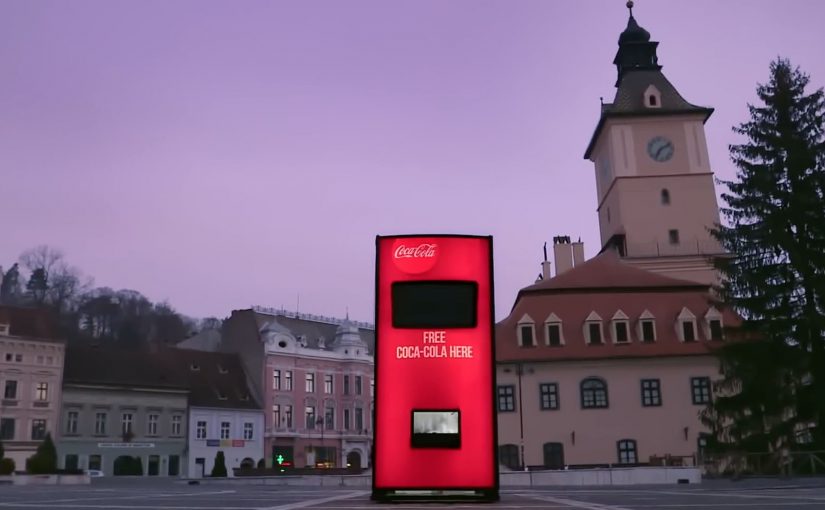
Coca-Cola wanted to bring out the Santa in everyone. So for the 2013 holiday season, they created a special vending machine that prompted users to either get a free Coke or give a free Coke.

The two-button mechanic that made sharing the story

If the user chose a free Coke, the machine quickly dispensed the drink for the user to enjoy.

However, if the user decided to share, then the machine did something a little more special. Watch the video below to find out.

In high-traffic FMCG retail settings, a binary choice lets a brand value show up as behavior in seconds.

Why “give” feels better than “get” in December

The psychology here is straightforward. A free product is nice, but it is forgettable. A choice that reflects identity is sticky.

Extractable takeaway: If you want a value like generosity to travel, put it into a visible choice where the “better self” option is easy to pick and easy to witness.

By putting “give” and “get” side by side, the machine turns a small decision into a moment of self-image and social proof, meaning other people can see the choice and validate it. During the holidays, people want to see themselves as generous, and they want to be seen that way by others.

The business intent behind bringing out the Santa

The intent is not simply distribution.

The real question is whether your brand promise can be expressed as a choice people are proud to make in public.

This is a stronger holiday move than a message-only campaign because it makes the value legible and repeatable at the point of interaction.

Coca-Cola uses the vending machine to translate a brand promise into behavior. The brand is associated with warmth and sharing because the consumer enacts it, not because the brand claims it.

How to reuse this give-or-get choice design

  • Turn values into a choice. Make the brand idea something people can do, not just hear.
  • Reward the “better” behavior. If sharing is the story, make sharing the more memorable path.
  • Keep the interaction instantly legible. Two clear options beat complex instructions in public spaces.
  • Design for a public moment. When others can witness the decision, the story travels faster.

A few fast answers before you act

What did Coca-Cola build for the 2013 holiday season?

A special vending machine that offered users a choice: take a free Coke or give a free Coke.

What was the core mechanism?

A simple two-option prompt. Choosing “get” dispensed a Coke immediately. Choosing “give” triggered a more special outcome.

Why does the “give” option matter so much?

Because it turns a freebie into an identity moment. People remember what they chose, and others can witness it.

What business goal did this support?

Making Coca-Cola’s holiday positioning feel real by linking the brand to a visible act of sharing, not just a message about sharing.

What is the main takeaway for brands?

If you want to own a value like generosity, design an interaction where people can demonstrate that value in the moment.

WestJet: Christmas Miracle

A Christmas moment built for the worst part of travel

Airports during the holiday season are generally filled with tired, disgruntled people facing delays, lost luggage, and a long list of small mishaps. WestJet uses that exact setting to deliver a Christmas miracle at the point where people least expect anything good to happen. The baggage belt.

With the help of a virtual Santa Claus, the airline asks unsuspecting passengers waiting to board flights to Calgary from Toronto and Hamilton International Airports what is on their Christmas wishlists.

Then more than 150 WestJet employees play Santa’s elves, gathering personalized presents and delivering them to the Calgary airport before the passengers land. At baggage claim, the carousel brings the surprise to life and the travelers receive their holiday miracle.

The mechanic that turns “nice idea” into a real surprise

The work is not the Santa screen. The work is the fulfillment race. Capture wishes at the departure gate, buy the gifts immediately, clear logistics fast enough to beat a flight, and make the reveal happen at a single shared moment where everyone is already looking in the same direction.

That last detail matters. Baggage claim is a forced wait with a fixed focal point. When the surprise arrives there, the reaction is collective, contagious, and easy to film without feeling staged.

In service brands, the fastest way to earn trust is to transform a routine pain point into a visibly human act of care.

Why it lands

It respects the viewer’s skepticism. People are used to holiday messages. They are not used to holiday logistics that actually deliver. The story also stays legible even if you miss the setup. You see gifts on a baggage belt, you see genuine reactions, and you instantly understand the promise being made about the brand. The real question is not whether a holiday message can feel warm, but whether the brand can operationalize that warmth in a way people instantly believe.

Extractable takeaway: If you want surprise-and-delight to travel, design the reveal around a shared focal point, then make the fulfillment real enough that people would talk about it even without a camera.

Not their first airport Christmas

This is not WestJet’s first attempt at spreading airport Christmas cheer. The year before, the airline created a Christmas-themed flash mob, complete with dancing elves, right in the middle of an airport.

A final note to close the year

And with that, a very Merry Christmas and a Happy New Year. Here is a lovely remake of “Little Drummer Boy” by Pentatonix to bring this last Ramble of the year to a close.

What service brands should steal from WestJet’s reveal

  • Pick a moment everyone already shares. The best reveal locations are places where attention naturally converges.
  • Make the operational proof the message. The buying, wrapping, and delivery speed is the real differentiator.
  • Engineer one clean narrative arc. Ask. Fulfill. Reveal. React. Do not clutter it with subplots.
  • Let the audience do the advocacy. When people feel genuinely seen, they narrate it for you.

A few fast answers before you act

What is WestJet’s “Christmas Miracle” execution?

Passengers share their Christmas wishlists with a virtual Santa at the departure airport, then those gifts appear for them at baggage claim after landing, turning a routine airport wait into a shared surprise moment.

Why does baggage claim work as the reveal location?

It is a forced wait with a single focal point. Everyone is already watching the same place, so the surprise becomes collective and instantly memorable.

What is the core mechanic behind the campaign?

Real-time fulfillment. Capturing wishes is easy. Buying, wrapping, transporting, and staging gifts before the flight lands is the proof that makes the story credible.

What makes this more shareable than a typical holiday ad?

The reactions read as unmistakably real, and the narrative is simple enough to retell in one sentence without explanation.

What is the main lesson for other brands?

Transform a predictable pain point into a visible act of care, then design the reveal so it happens in a shared moment people naturally witness together.

Improv Everywhere: Too Old to Sit on Santa

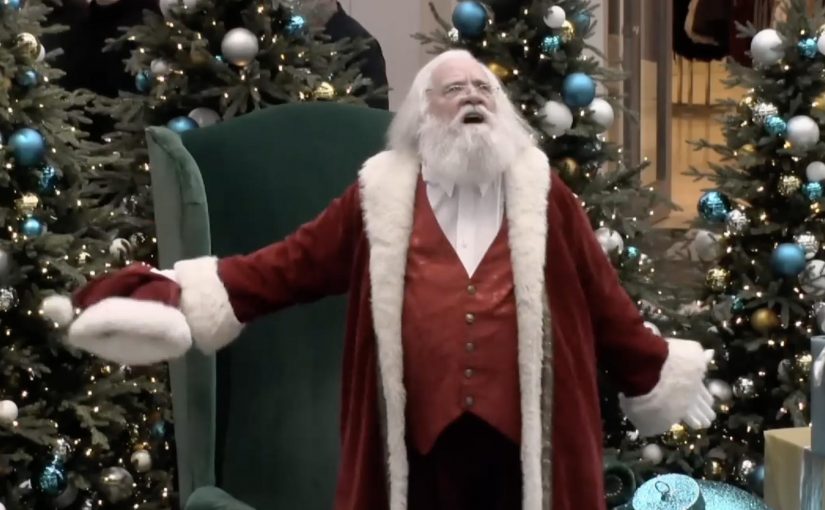
Flash mob specialists Improv Everywhere created this video in a New Jersey mall, where they abruptly transformed the space into a stage for a short musical about Santa.

How the stunt is constructed

The mechanism is classic Improv Everywhere: a normal public setting, a sudden coordinated performance, and a premise that is instantly understandable to bystanders. The “too old to sit on Santa” hook makes the scene both seasonal and slightly awkward, which is exactly what gives it energy. Because the premise is instantly understandable, bystanders decide in seconds whether to watch, film, or share, which is why this format travels.

In public-space entertainment formats, the fastest route to shareability is a concept people can describe in one sentence and recognize in one frame.

The real question is whether a premise people can recognize in one frame can earn genuine reactions fast enough to carry the story.

Prioritize instant legibility and real bystander proof over production polish.

Why it lands

It works because it flips a predictable holiday ritual into musical theatre, so the audience understands the setup immediately and the reactions become the payoff.

Extractable takeaway: Viral public performances work when they remix a familiar ritual and then let real bystander reactions carry the authenticity. The premise must be instantly legible. The payoff must be emotional, not just clever.

It hijacks a familiar ritual. Mall Santas are predictable. Turning that ritual into musical theatre flips the expected script without needing any explanation.

It uses social friction as the joke. The humor comes from watching adults navigate a child-coded tradition, and then watching the crowd get pulled into the performance anyway. Here, “social friction” means the brief discomfort created when adult behavior collides with a kid-coded context.

It turns spectators into proof. The audience reactions are the credibility layer. You believe it because you see people genuinely surprised, laughing, and filming.

Borrowable moves from Too Old to Sit on Santa

  • Choose a setting with built-in footfall and expectation. The more predictable the normal scene, the stronger the contrast when it flips.
  • Write a one-line premise. If the concept cannot be explained in a sentence, it will not travel as a clip.
  • Stage for the camera, but keep it real. The best moments are still the unscripted reactions from people who did not know what was coming.
  • Keep the runtime tight. Short musical beats and quick escalation make the piece rewatchable.

A few fast answers before you act

What is Improv Everywhere known for?

Organized public “missions” that turn everyday spaces into staged moments. The work is designed to surprise bystanders and create shareable video.

Why does a mall work so well for a flash mob musical?

Malls have constant foot traffic, predictable routines, and lots of people already primed to watch. That makes the reveal and crowd reaction stronger.

What is the core hook of this specific piece?

A Santa-themed musical built around whether adults are “too old” to sit on Santa, which creates humor through awkwardness and nostalgia.

What is the difference between a flash mob and a staged commercial?

A flash mob relies on real-time disruption and authentic bystander response. The environment and audience reactions become part of the content.

What is the transferable lesson for brands?

If you want shareability, start from a familiar ritual, flip it with a simple premise, and let genuine reactions provide the proof and warmth.