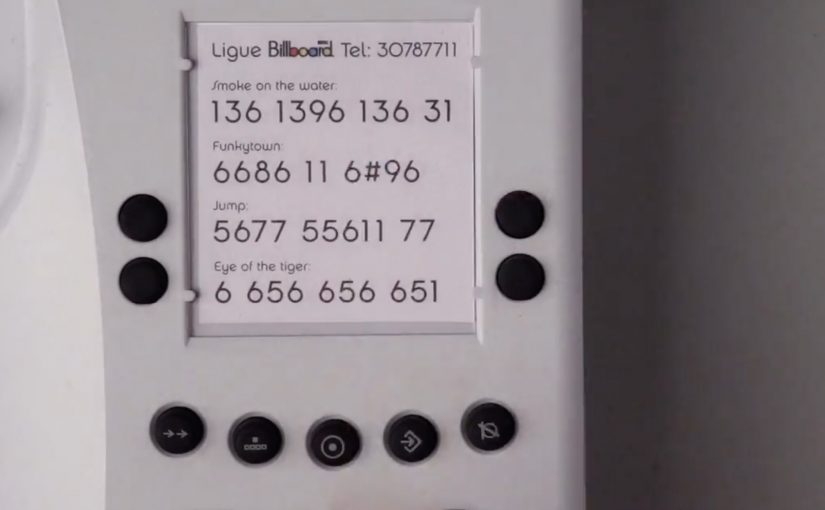
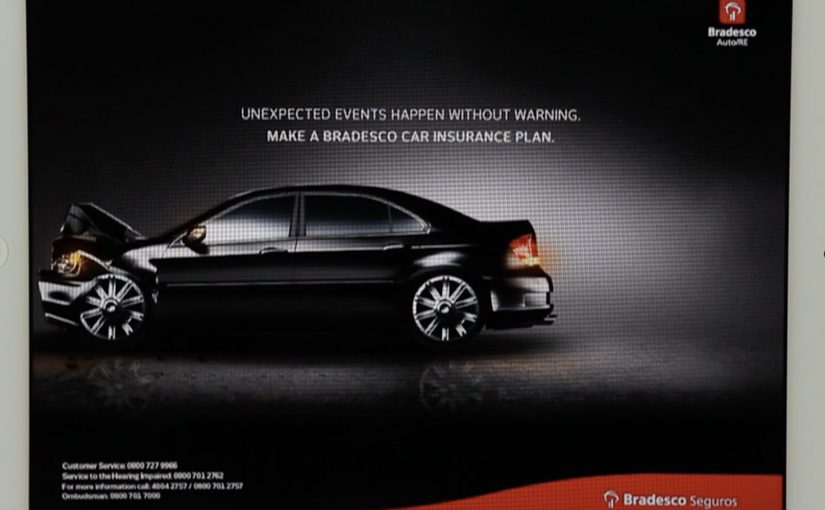
You pick up a travel guide, walk to the barcode reader, and scan it to check the price. Instead of only showing numbers, the scanner delivers a British Airways message that nudges you toward destinations beyond the UK.
The placement is the whole strategy. British Airways runs this in the travel section of a bookstore, right when people are already thinking about leaving town. If someone is browsing Rome, New York, or Buenos Aires, the brand can show up in a way that feels like a useful prompt rather than a random interruption.
The mechanic is simple. The barcode scan is the trigger, and the barcode reader becomes the display. British Airways uses that moment to broaden perception of its route network, aimed at Brazilians who may only associate BA with the UK.
In travel marketing, the planning moment is the highest-intent moment, and well-timed messages can feel like help rather than advertising.
Why the bookstore aisle is the right “media channel”
Travel guides are a proxy for intent. People do not usually buy a destination book by accident. So a bookstore travel aisle acts like a real-world keyword search, with the added benefit that the customer is already in decision mode.
What makes the barcode reader feel credible
The message arrives from the same device people trust for pricing and checkout. That matters because it borrows the authority of a functional tool. The ad does not ask for a click or a download. It simply uses an existing action and adds a relevant layer.
Extractable takeaway: Put your message inside a trusted utility that already supports the customer’s task, so the “ad” inherits credibility instead of fighting for it.
What the campaign is really trying to change
The real question is whether you can change route perception by showing up inside the tools people already use to plan.
This kind of placement beats broad-reach travel ads because it earns attention at the moment of intent.
This is not a fare promotion first. It is a mental map update. By “mental map update” I mean shifting which destinations people associate with the brand before they default to “UK airline.” The brand wants travellers to store British Airways as “global option,” not “UK airline.” The work is credited to AGE Isobar São Paulo and was later shortlisted in the Direct Lions under Ambient Media, small scale.
What to steal for your own context-first activation
By “context-first activation” I mean a placement where the environment and the user’s current task create relevance before the copy does.
- Target the moment of intent. Find the real-world behaviour that signals “I am planning.”
- Use the tools already in the environment. Functional devices carry trust and reduce friction.
- Make the message additive. Add information that fits the action, do not derail it.
- Design for instant comprehension. If it needs explanation, it will be ignored.
A few fast answers before you act
What is the British Airways Barcode Reader activation?
It is a contextual bookstore execution where scanning travel books on a barcode reader triggers British Airways messaging about flying to destinations beyond the UK.
Why does it work better than a generic travel ad?
Because it appears at the exact moment people are considering travel. The placement creates relevance before the copy even starts.
What is the core behaviour the campaign hijacks?
Price checking. The scan is already happening, so the brand adds a message to an existing action rather than asking for a new one.
What business problem is this solving?
Route perception. It aims to expand awareness that British Airways serves many destinations, not only the UK, in a market where that belief is limited.
What is the main risk with this kind of tactic?
If the message feels intrusive or slows down the checkout flow, it turns from helpful to annoying. The execution has to stay lightweight and quick.