
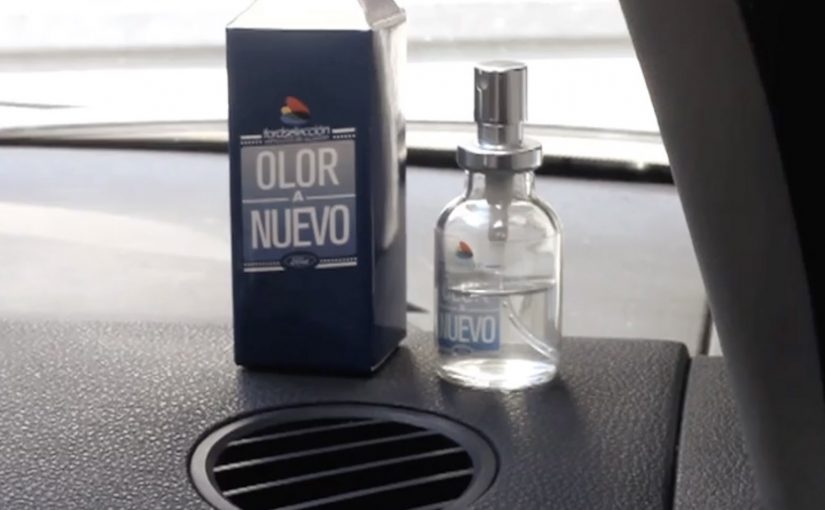
Ford Selección: Olor a Nuevo

Ford Selección is the brand of used cars from Ford in Spain. Bassat Ogilvy Madrid, the agency responsible for marketing the cars, was given the task of bringing the excitement of a new car to the old ones.

So the team set out to bring the “smell of a new car” to those who chose to buy a used one. Once the smell was identified, it was taken and bottled into fragrance samplers called “Olor a Nuevo”, which means “Smell of New”. With this fragrance, a line of used cars that smelled like new ones was created and advertised through print and outdoor.

A used-car pitch that starts with the nose

The execution picks one sensory cue that people associate with “brand new” and makes it portable. New-car smell is a shorthand for untouched materials and first ownership, and the campaign turns that shorthand into a deliverable asset.

How Olor a Nuevo works as a sales tool

The mechanism is productized reassurance: turn trust into a tangible sampler people can smell before they buy. Identify the desired scent, package it as a sampler, and attach it to the Ford Selección promise so “used” feels less like compromise and more like a smart choice with one missing detail restored.

In automotive retail, sensory cues often carry trust faster than spec sheets, because they signal condition, care, and novelty before the buyer starts rational comparison.

Why the idea lands

It targets the real tradeoff people feel. Many buyers can accept a few kilometers on the odometer, but they still want the emotional moment of “this is mine and it feels fresh”. A scent sampler creates that moment early, and makes the purchase feel closer to a first unboxing than a second-hand transaction.

Extractable takeaway: When your product is “almost new”, identify the one emotional cue buyers miss most, and restore it in a way that can be sampled quickly and remembered later.

What this says about brand experience

Olor a Nuevo is not a gimmick layered on top of the cars. It is a way of translating a promise into something you can experience in seconds, which makes the message stick long after the ad is gone.

The real question is how you make a used car feel freshly claimed before the buyer starts comparing mileage and price.

What to steal from Olor a Nuevo

  • Choose one high-signal cue. One sensory proof can outperform a long list of guarantees.
  • Make the proof portable. A sampler travels. It can be shared, compared, and remembered.
  • Turn compromise into a reframed benefit. If buyers accept “used”, give them “fresh” back.
  • Keep the comms simple. Name the benefit in plain language and let the experience do the persuasion.

A few fast answers before you act

What is Olor a Nuevo?

It is a fragrance sampler created for Ford Selección that recreates the “smell of new”, so used cars can deliver part of the emotional experience of buying new.

Why is “new-car smell” a useful marketing lever?

Because it is a fast, emotional proxy for novelty and condition. It signals “fresh” before the buyer evaluates details, which can reduce hesitation.

When does sensory marketing work best?

When a product has a strong, shared sensory association that buyers already recognize, and when that association supports a real purchase anxiety such as trust, hygiene, or freshness.

What should brands avoid with this pattern?

Overcomplicating the experience. If sampling requires explanation, or if the sensory cue does not connect to the actual buying tension, it becomes a stunt instead of a sales tool.

Can this pattern work outside automotive?

Yes, when buyers miss one high-signal cue that makes a product feel fresh, trusted, or premium. The cue must connect to a real buying tension, not just add novelty.
Volkswagen: Talking Newspaper Ad

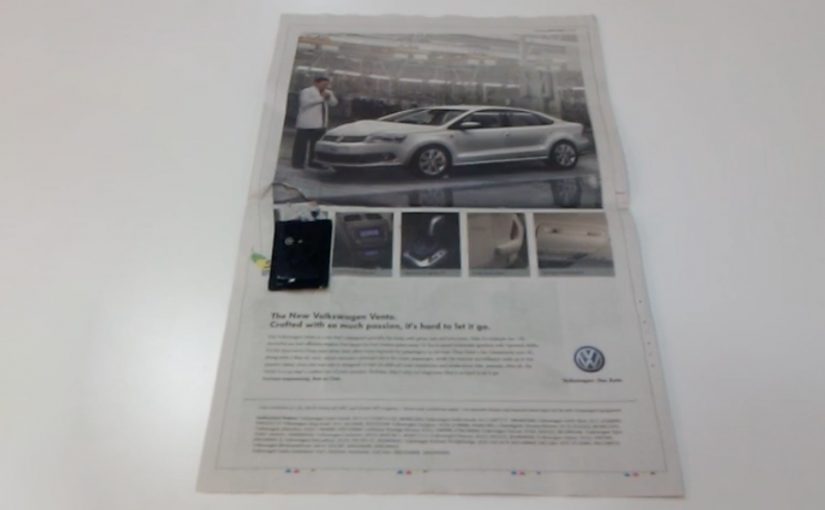
In India, Volkswagen has created a “talking” press ad that makes a newspaper behave like a greeting card. Reports described it as one of the most talked about topics of the day on Facebook and Twitter, because the ad does something print is not supposed to do. It speaks.

If you bought the Times of India edition carrying the special wrap, you would have seen a clutter-breaking execution with a built-in audio module. When you open the newspaper, a light-sensitive sensor acts like a switch and the message starts playing. Fold the paper and the audio shuts off.

The activation is widely reported as part of Volkswagen’s launch push for the Vento, executed at massive scale in India’s daily press.

Print that behaves like a device

The genius here is not the audio file. It is the interface. Open equals on. Close equals off. That single rule makes the experience feel magical, because it requires no instructions and no “tech literacy”. The paper itself becomes the power button.

It also creates a physical moment of surprise in an environment that is normally predictable. You expect ink. You do not expect a voice.

In mass-circulation newspaper markets, turning a silent medium into a sensory one is a reliable way to earn attention, as long as the mechanic is instant and self-explanatory.

Why this spread so fast

The format does the distribution work. People do not share “a new car ad”. They share “my newspaper started talking”. That is the difference between a message and a story.

Extractable takeaway: If the mechanic can be demonstrated in a repeatable loop, the audience becomes your distribution by showing it to other people.

It also turns the reader into a demonstrator. Once you discover it, you want to show someone else by repeating the action. Open. Close. Open again. That loop is built for office desks, breakfast tables, and social feeds.

What Volkswagen is really buying

The business intent is to make “arrival” unmissable. A new model launch needs attention in a crowded category, and this format forces a moment of engagement even if someone is only half-reading the paper.

The real question is whether your format makes the story self-propagate before you pay for reach.

This pattern works when the surprise is tightly coupled to the product story you want retold, not just the novelty of the mechanic.

It also signals “German engineering” through the medium itself. The ad does not just claim innovation. It performs it.

What to steal from a talking newspaper

  • Build a one-rule mechanic. A one-rule mechanic is a single on and off trigger people can explain and repeat in one sentence.
  • Make discovery physical. The more “showable” the action, the faster it spreads.
  • Let the medium carry the proof. If you are selling engineering, make the communication feel engineered.
  • Design for repeat demonstration. A loopable experience gets re-played and re-shared.

A few fast answers before you act

How does a “talking newspaper” ad work?

A small audio module is attached to the printed wrap or page. A light-sensitive sensor detects when the paper is opened and triggers playback. Closing or folding the paper stops the audio.

Why is this more effective than a normal print ad?

Because it forces a moment of attention through surprise, and it creates a story people repeat. The format itself becomes the message.

What kind of campaign is this best suited for?

Launch moments, announcements, and “new arrival” messaging, where the job is to break through clutter and get people talking immediately.

What is the biggest risk with sensory print executions?

Annoyance. If the audio is too loud, too long, or hard to stop, the novelty flips into irritation. The on and off behavior must feel fully under the reader’s control.

What should you measure if you run something like this?

Earned mentions, correct retelling of the mechanic, and immediate brand linkage to the intended message. If people talk about the talking paper but forget the brand, you paid for novelty, not impact.

Kaiak: The Online Banner You Could Smell

A banner that refuses to stay “just digital”

Everyone loves cool ad executions, but some are clearly advertising for advertising people. This one shows up at exactly the right time. Award-show season.

The work comes out of Brazil for Kaiak, Natura’s men’s fragrance. Kaiak has been reformulated, and the brief is simple but brutal. How do you sell a new scent online when the one thing people want to do is smell it?

Click the banner. Get the scent.

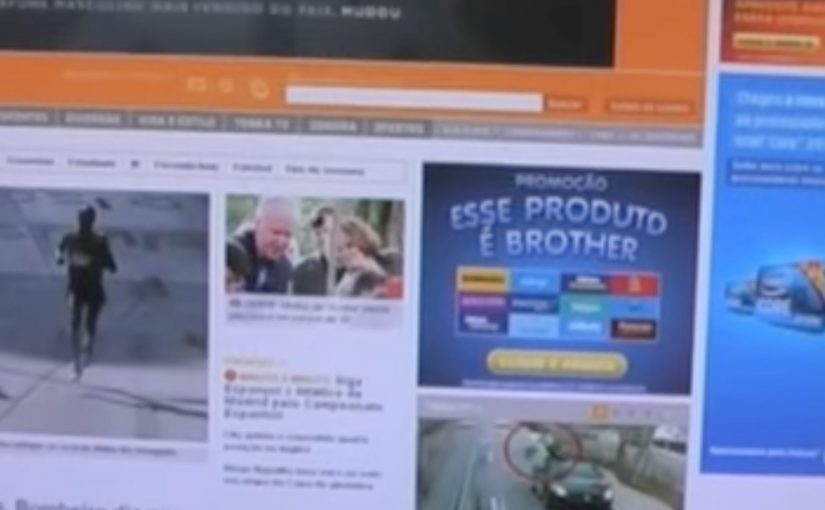
ID/TBWA solves it by building the missing sense into the media placement itself. Custom hardware is attached to computers in lan houses (cyber cafés) across Brazil. A special banner appears on the browser start page and reads, “The best selling men’s fragrance in the country just changed. Want to try it? Click this banner. It’s scented.”

When someone clicks, a scented strip physically emerges from the attached device. The digital impression turns into a real sample in the moment where “try” normally breaks down online.

In Brazilian urban markets where lan houses function as high-traffic digital hubs, turning a cyber café PC into a sampling machine creates mass trial without needing retail testers.

Why it lands: the medium becomes the product experience

The reason it works is not novelty alone. It removes the biggest barrier in fragrance e-commerce. Confidence. The real question is how you create purchase confidence for a sensory product when the screen cannot deliver the sensation. By turning the click into immediate sampling, the campaign makes the claim verifiable in the moment of intent, which is why it converts curiosity into trial. For sensory categories, the best digital work engineers a real trial moment, even if that means adding physical infrastructure. The click is not a promise. It is the delivery mechanism.

Extractable takeaway: If a product’s value depends on a sense the screen cannot deliver, redesign the media so “try” happens at the click, not after it.

The business intent: accelerate trial for a reformulated bestseller

This is a trial engine dressed as a banner. The goal is to reduce hesitation around change, create fresh talk value around “it’s different now”, and push people toward purchase with a sensory proof point that normal digital formats cannot provide.

How to make digital do something physical

  • Identify the missing sense. If the product relies on touch, smell, or taste, do not pretend pixels can replace it.
  • Build a credible “try now” moment. Sampling only works when the action and the reward are tightly coupled.
  • Choose distribution points with dwell time. Cyber cafés, waiting rooms, and shared devices can behave like miniature retail networks.
  • Keep the instruction brutally simple. The banner copy does not explain the tech. It explains the outcome.

A few fast answers before you act

What is the “scented banner” for Kaiak?

An online banner placed on cyber café computers that dispenses a physical scented strip when the viewer clicks, enabled by custom hardware attached to the PC.

Why build hardware for a banner campaign?

Because fragrance requires sampling. The hardware turns a digital click into immediate product trial, removing the biggest barrier to buying scent online.

What is the core mechanism?

“Try now” is built into the media unit. The banner instruction is simple, and the click triggers a physical delivery moment that proves the claim.

What does this teach about selling “sensory” products digitally?

If touch, smell, or taste drives purchase confidence, you need a credible bridge to real-world experience, not just better copy or imagery.

What is the most transferable takeaway?

Identify the missing sense, then engineer a sampling moment where action and reward are tightly coupled and instantly legible.