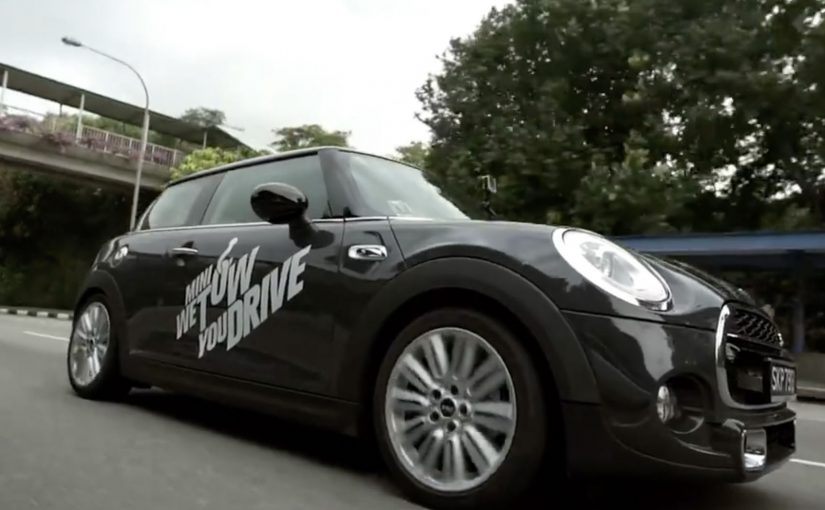
Driving a MINI is addictive. Which is why drivers who test drive are more likely to buy one. So to get prospective customers to test drive, MINI decides to help drivers stranded by their own cars.
MINI partners with a tow service company and responds to breakdown calls in real time throughout Singapore. The campaign not only takes the test drive out of the showroom and onto the streets. It also turns an annoying situation into a pleasant surprise.
A test drive that arrives exactly when you need a lift
The mechanism is the point: instead of asking people to come to MINI, MINI shows up when a driver has an immediate mobility problem. The tow moment becomes the conversion moment, because the customer is already thinking about reliability, comfort, and what it feels like to be back in motion.
In urban automotive acquisition, the strongest test drives happen when the product solves a real, present problem, not when it is scheduled as a chore.
Why this is more than a stunt
This idea works because the brand is doing something useful first. The “surprise” is not a discount. It is relief. That usefulness makes the experience feel earned, and it also makes the story more shareable. Brands should earn attention by delivering utility before they ask for consideration. The real question is whether your operations can make the promise true in real time, not whether your creative can make it look clever.
Extractable takeaway: When your acquisition moment solves an urgent problem, the product benefit lands as lived proof, and the customer tells the story for you.
A similar play from Brazil
A Brazilian Chevrolet dealership in 2012 reportedly ran a very similar “breakdown to test drive” promotion in Brazil with the Chevrolet Cobalt.
What to steal from tow-to-test-drive
- Move the product moment into real life. A test drive is more persuasive when it is embedded in a situation that matters.
- Use real-time operations as marketing. The experience is the message when the service delivery is visible.
- Turn frustration into gratitude. Solving a pain point creates a stronger memory than any feature list.
- Design for talk value without forcing it. Talk value is the retellable detail someone repeats to friends. If the help is genuine, sharing happens naturally.
A few fast answers before you act
What is “We Tow You Drive” in one line?
A test drive activation where MINI partners with a tow service and turns real breakdown moments into an unexpected opportunity to drive a MINI.
Why is roadside assistance a smart acquisition moment?
Because the customer has immediate need. They are receptive to a solution and they feel the product benefit in the exact moment mobility is restored.
What is the main risk in copying this idea?
Operational failure. If response times are slow or the handoff feels messy, the “rescue” story flips into frustration.
How do you keep this from feeling opportunistic?
Lead with help, not pitch. The driver should feel rescued first, and only then invited to try the car, with an easy opt-out.
What is the most transferable lesson?
Stop treating test drives as appointments. Put the product into a real situation where it solves a real problem, and let the experience do the persuasion.