
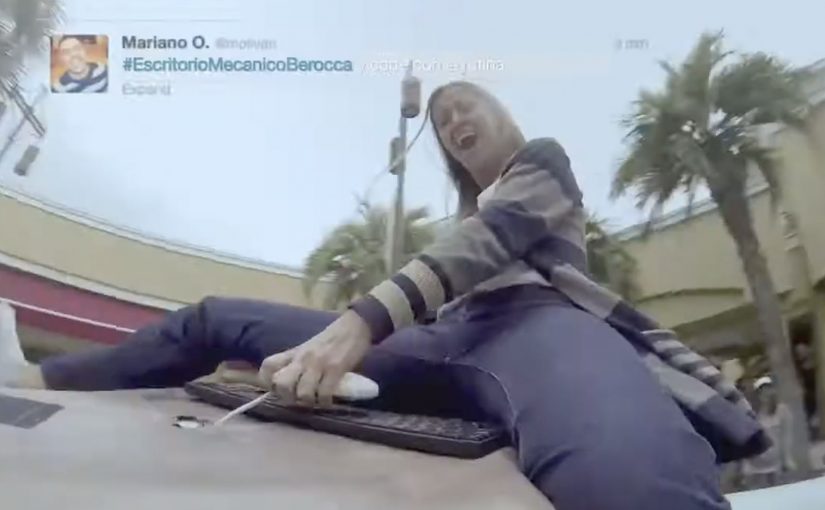
Berocca: Mechanical Desk

A survey by TNS Gallup in Argentina reported that 5 out of every 10 Argentinians suffer from stress, and that many expressed a need for a 5 to 10 minute break during the working day. Berocca, vitamin tablets manufactured by Bayer, turns that tension into a public challenge.

They set up a “Mechanical Desk” and dare passersby to send a tweet within 24 seconds of sitting on it. It sounds easy. Until you try.

A desk designed to sabotage your “quick break”

The mechanic is a simple constraint. Sit down. Compose. Hit send. Do it in 24 seconds. The desk itself makes the act of tweeting unexpectedly difficult, forcing your attention away from autopilot and into the moment.

In workplace energy and wellbeing marketing, turning “I need a break” into a short, physical interruption can make the message feel earned rather than preached.

Why this lands

This works because it dramatizes a truth people already recognise. When you are stressed, even a small task can feel harder than it should. The Mechanical Desk turns that feeling into a playful, watchable experience, and the tweet timer creates instant stakes without needing a long explanation.

Extractable takeaway: If your product promises focus or renewal, create a micro-challenge that makes everyday friction visible, then let your brand sit as the “reset” people reach for after the disruption.

What the brand is really doing

Berocca is positioning itself as the ally of the mid-day reboot, the short moment when people want to reset their energy and focus during the workday. Not a medical claim. A cultural cue. The activation turns “stress break” into something public and shareable, with Twitter functioning as both proof of participation and a distribution layer.

The real question is how to make an invisible feeling like workday stress visible enough for people to notice, attempt, and share.

The stronger move here is to stage the problem in public, not explain it in copy.

What to steal from this stress-break activation

  • Use a tight constraint. A clear time limit makes the idea instantly legible.
  • Make it observable. If bystanders can see the struggle, the experience becomes content.
  • Keep the action familiar. Tweeting is normal. The environment is what changes.
  • Let the brand be the release. Build the story so the brand naturally maps to “reset.”

A few fast answers before you act

What is the Berocca Mechanical Desk?

It is a public activation where people sit at a specially designed desk and attempt to send a tweet within 24 seconds.

Why a 24-second tweet challenge?

A short timer creates urgency and makes a “quick break” feel like a game, which increases participation and watchability.

What is the campaign trying to communicate?

That stress is common during the workday, and that small breaks matter. The stunt turns that need into a tangible moment people can experience and share.

What role does Twitter play?

Twitter is both the challenge output and the distribution mechanic. The act of tweeting becomes proof, and the post can travel beyond the physical installation.

What’s the main risk with this kind of activation?

If the challenge is too frustrating or unclear, people drop out. The difficulty has to feel playful, not punishing.
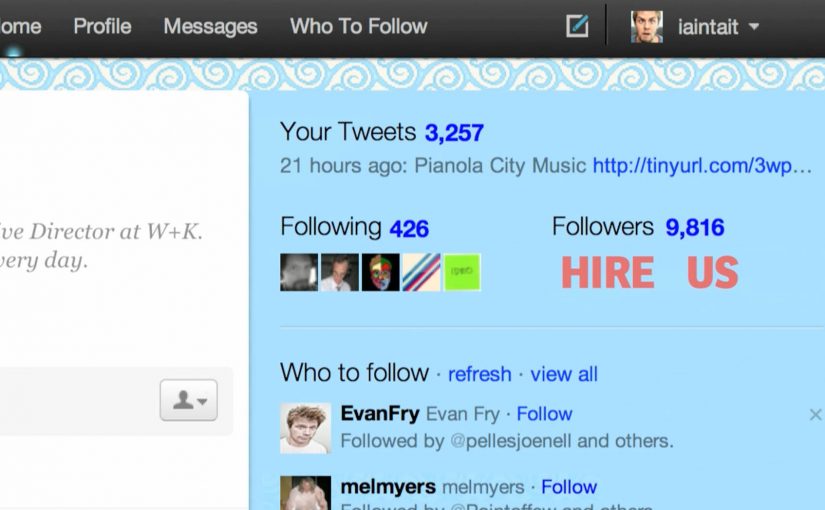
Hire Us: Twitter Follow Stunt Lands a Job

Dutch creative team Bas van de Poel and Daan van Dam set up five separate Twitter accounts and started following various Dutch Creative Directors on Twitter. Their message was simple: HIRE US.

Even though the idea is very similar to the Jeep Twitter Puzzle campaign, the execution is different and innovative. It gets them noticed and finally a job with Boondoggle in Amsterdam.

Why five accounts is the point, not the gimmick

The mechanism is engineered repetition. By “engineered repetition,” I mean deliberately creating multiple small signals that form an obvious pattern in the target’s notifications. One account can be ignored. Five accounts create a pattern. When multiple new followers arrive with the same blunt message, it triggers curiosity and a small sense of social pressure. Someone is doing something intentional, and it is hard not to look.

It is also highly targeted. They do not broadcast “hire us” into the void. They place it directly in the attention stream of the people who can change their outcome.

In creative hiring markets, attention is scarce, so using a platform’s native behaviours to deliver an instantly legible message is often the fastest way to get noticed.

Why it lands: interruption plus clarity

This works because it is instantly legible. No clever puzzle to decode. No long portfolio pitch. The call to action is the entire creative idea. That clarity is what makes it feel confident. And because it happens inside Twitter’s native behaviours, following, notifications, profile clicks, it does not require extra friction. The recipient can react in seconds.

Extractable takeaway: When you need attention from specific decision-makers, create a small pattern using the platform’s native behaviours that communicates the ask in one glance and makes the next step easy.

The intent: turn hiring into a creative brief

The business intent is obvious. Get hired. But the deeper intent is to reframe the hiring process. Instead of asking for a meeting, they create a live demonstration of how they think. Targeted, lightweight, and culturally fluent in the medium.

The real question is how you create an impossible-to-ignore signal for the right people without turning the medium into spam.

Done with tight targeting and restraint, this approach is a legitimate creative proof point. Done broadly or repeatedly, it backfires as noise.

Borrow this for your own career marketing

  • Be specific about who you want. Target decision-makers, not “everyone”.
  • Design an interruption that fits the platform. Use native behaviours, not extra hoops.
  • Make the message instantly legible. One idea. One line. No explanation required.
  • Turn the ask into proof. Show your creativity in the method, not in a PDF pitch.
  • Keep it respectful and reversible. Clever is good. Spammy is not.

A few fast answers before you act

What did Bas van de Poel and Daan van Dam actually do?

They created five Twitter accounts and followed Dutch Creative Directors with a single message: “HIRE US”.

Why did using multiple accounts matter?

It created a noticeable pattern and a stronger interruption than a single follow, prompting curiosity and profile clicks.

How is this different from the Jeep Twitter Puzzle?

It is similar in spirit, but the execution is simpler and more direct. A single clear call to action rather than a puzzle mechanic.

What made it effective as self-promotion?

High targeting, low friction, and a message that communicates confidence in one second.

What is the main takeaway for personal branding?

If you want attention from decision-makers, design a small, platform-native experience that demonstrates how you think and makes the next step easy.