
Domino’s: Pizza Holdouts

When your friends “rat you out” to a pizza brand

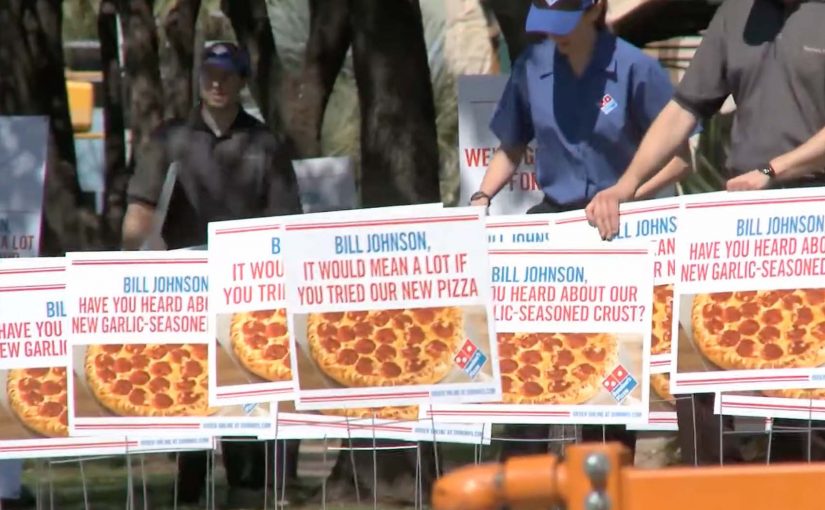
Domino’s campaign against consumers who cannot stand its pizza continues. Crispin Porter + Bogusky is back with a new facet of the “New Pizza” campaign. The brand sets out to harass three poor unsuspecting souls who have been ratted out as not eating Domino’s.

The premise is that “only a handful” of people have not tried the new pizza recipe Domino’s came out with.

The mechanic: turn trial into a social bounty hunt

The mechanism is simple and slightly mean in a way that makes people watch. Identify the “holdout”. Make their resistance a story. Then recruit their friends as the distribution layer, so the campaign spreads through personal networks instead of brand channels alone. Because the invitation comes from someone you know, it carries social proof and mild pressure that paid media cannot.

In US quick-service marketing, “get them to try it once” is often the hardest job, because taste perceptions and jokes about quality can become cultural default settings.

Why it lands: public call-out plus a clear path to redemption

This works because the tension is real. People do have strong opinions about Domino’s. Making the holdout visible creates social pressure, but the campaign balances that pressure by offering an easy way out. Try the new recipe. Join the conversation. Stop being the exception.

Extractable takeaway: When you use public call-out, pair it with a low-friction “redemption” action so people can update their stance without losing face.

The real question is whether your trial problem is a product problem or a permission problem, and which one you can solve fastest.

The business intent: accelerate reappraisal of the product

This is not a love-brand play. It is a credibility reset. Domino’s wants lapsed and sceptical customers to re-test the product, so the “new recipe” can replace the old mental model.

After this, Domino’s reported doubling its profits last quarter to $23.6 million.

Forcing first trial at scale: practical moves

  • Make the barrier explicit. “You have not tried it” is a clearer friction point than “please consider our brand”.
  • Recruit friends, not audiences. Social pressure works best when it comes from someone the holdout knows.
  • Give the story a role people can play. “Bounty hunter” is a participation frame, not just a message.
  • Link the stunt to a measurable behaviour. The only KPI that matters here is trial, not views.

So do you know a pizza holdout? Find out how to become a Taste Bud Bounty Hunter at www.PizzaHoldouts.com. A “Taste Bud Bounty Hunter” is the friend who nominates a holdout and nudges them to try the new recipe.


A few fast answers before you act

What is Domino’s “Pizza Holdouts” in one sentence?

A campaign that targets people who still have not tried the “new” Domino’s recipe, using friends to identify them and turning first-trial into a playful hunt.

What is the core mechanism?

Social recruitment plus a role people can play. Friends “rat out” holdouts, and the brand reframes outreach as a bounty-hunt style participation story.

Why does using friends change the effectiveness?

Because social pressure is more persuasive when it comes from someone you know. The message is carried by relationships, not just media.

What is the real KPI this format is trying to move?

Trial. The stunt is designed to force the first bite, not just generate views or talk.

What is the most transferable takeaway?

If your growth problem is “first experience”, make the barrier explicit, recruit peer influence, and design a participation frame that points to the behaviour you want.
Cesviamo: The Condom Mob

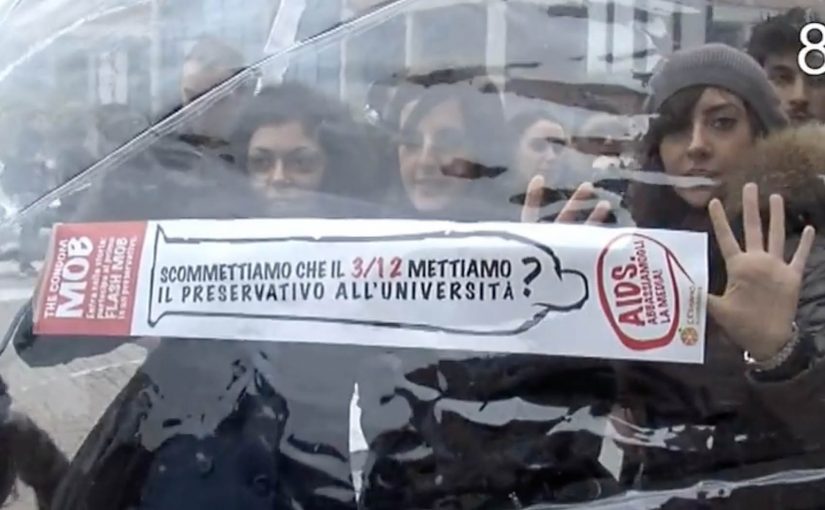
Cesviamo is an Italian social network created by CESVI, a non-profit organization, and this campaign is built to do three things at once. Increase awareness of the site. Explain how the social network works by turning fundraising into “funraising”. Here, “funraising” means making participation itself part of the fundraising appeal. And make people, especially students, more conscious about AIDS.

The execution is the “Condom Mob”. A large, public stunt where 100 young people enter a giant condom as a highly visible symbol against AIDS. The post reports that participation exceeded expectations, reaching 223 people in the condom in one case and 230 in another.

How the stunt acts as a product demo for the network

The mechanic is designed to be understandable at a glance, then extend into the platform. The “mob” delivers immediate attention, while the narrative around funraising and participation cues the idea of joining, sharing, and building momentum through the social network itself. Because the stunt is legible in seconds and maps directly to joining and sharing, it works as both attention device and product demo for the network.

In European nonprofit and cause-led communication, a single, highly legible public action can cut through faster than awareness copy, because it creates a shareable proof moment that people feel compelled to talk about.

Why it lands

It uses contrast and scale to force attention. A condom is already a charged object. Making it oversized and public turns it into a conversation starter, which helps the AIDS message travel beyond the people who were physically present. The “mob” format also frames the topic as collective responsibility, not private embarrassment.

Extractable takeaway: If you need awareness plus platform adoption, choose one symbol that is instantly readable, then design the stunt so the audience’s next step naturally points back to joining and participating in your owned experience.

What CESVI is really trying to achieve

The business intent is behavioral. The real question is whether a public spectacle can turn student attention into repeat participation inside the network. Normalize discussion. Pull students into the cause. And position Cesviamo as a place where participation is easy, social, and measurable. For cause campaigns like this, spectacle is only useful when it feeds a repeatable participation path. The stunt is the ignition. The platform is where attention can be converted into repeat involvement.

What to steal for your own cause campaign

  • Make the symbol unavoidable. Choose one visual that communicates the issue without explanation.
  • Design for “I have to tell someone”. If the moment creates a story people can repeat in one sentence, distribution follows.
  • Connect spectacle to a next step. Awareness without an action path leaks value. Point clearly to how to join, donate, or participate.
  • Measure participation, not just reach. Headcount and involvement are stronger proof than impressions for cause work.

A few fast answers before you act

What is the core idea of the Condom Mob?

A large, public stunt where young people enter a giant condom to spark AIDS awareness and drive attention back to CESVI’s Cesviamo network.

Why does “funraising” matter in this context?

It reframes giving and participation as something people do together, making it easier to recruit students and first-time supporters.

What makes the symbol effective?

It is instantly recognizable and directly tied to prevention. That directness reduces the need for explanation and increases talk value.

How should the next step be designed?

The stunt should hand people to one obvious action, such as joining, donating, or participating, so attention does not dissipate after the moment passes.

What is the main risk with a stunt like this?

If the spectacle overwhelms the cause, people remember the shock but miss the message. The narrative and next step must stay explicit and repeated.

BMW vs Audi: Jump for Joy

A familiar rivalry, reduced to one simple provocation

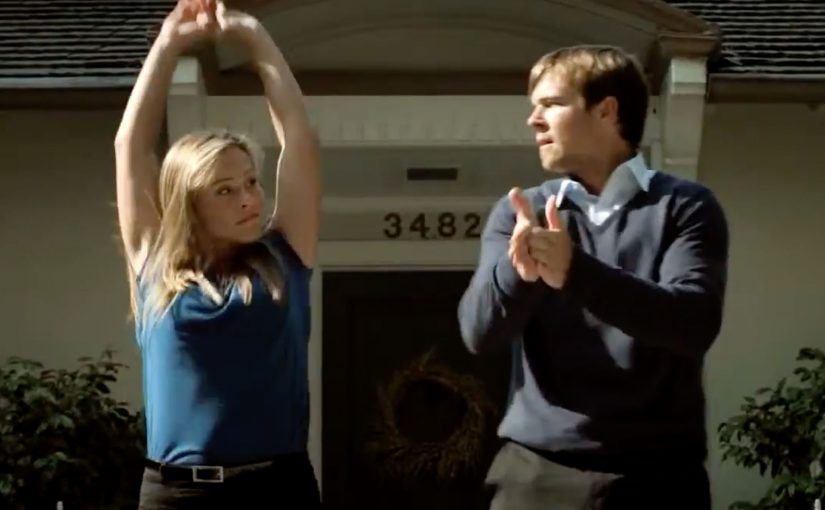
Another BMW vs Audi battle. Here you can watch some amazing ways to take a seat in a BMW.

How the idea works once you look past the stunts

The mechanic is built on a tiny human action with a clear frame. Entering the car becomes the entire performance, with the brand as the stage and the seat as the punchline.

In European automotive markets, playful rivalry cues can turn ordinary product moments into highly shareable entertainment without heavy explanation.

The real question is whether you can turn one repeatable product moment into a contest frame people want to perform and share.

Why it lands: competitiveness plus physical comedy

It works because the viewer instantly understands the rules. There is an implied opponent, a familiar status game, and a stream of surprising variations that reward continued watching. Because the mechanic repeats the same entry move, each new variation lands as a clean surprise rather than confusion.

Extractable takeaway: If you can make the “rules” obvious in one glance, you can build entertainment from repetition, and the audience will do the work of staying engaged for you.

The business intent: own “fun to drive” without saying it

Instead of listing features, the brand borrows emotion. It positions BMW as energetic and confident by making the act of taking a seat feel like part of the driving fantasy. Brand-versus-brand work is strongest when it sells a feeling through behaviour, not feature claims.

What to steal for your next brand-versus-brand moment

  • Use a micro-behaviour as the hook. By micro-behaviour, I mean a tiny, recognisable action people already do, like taking a seat.
  • Let the rivalry do the setup. A known competitor creates instant context without extra copy.
  • Stack variations fast. The replay value comes from “what is the next version” momentum.
  • Make the proposition implicit. Show the feeling the brand wants to own, instead of explaining it.

A few fast answers before you act

What is the core idea of this BMW clip?

It turns the simple act of taking a seat in a BMW into a series of entertaining variations, framed as a playful BMW vs Audi rivalry moment.

How does the mechanic work?

One repeatable action is performed in multiple surprising ways. The audience keeps watching to see the next variation, not to learn features.

Why is brand rivalry effective here?

Because it creates instant stakes and a familiar frame. Viewers immediately understand the “battle” and focus on the execution.

What is the business intent behind this approach?

To reinforce BMW’s energetic, confident brand feel by associating the product with fun and performance, delivered as entertainment rather than claims.

What is the most transferable takeaway?

Choose one product-adjacent behaviour that everyone recognises, then make it repeatable, surprising, and easy to share.