
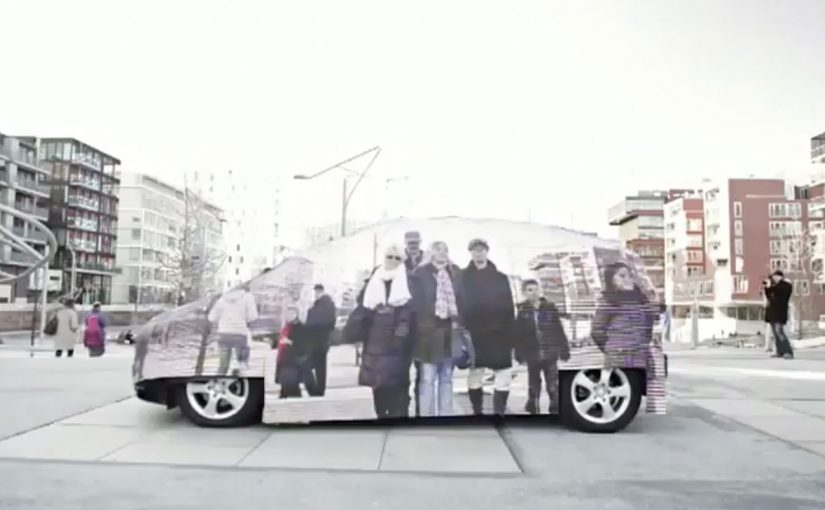
Mercedes-Benz F-CELL: The Invisible Drive

To demonstrate the claimed low impact of its new fuel cell vehicle, Mercedes-Benz has created an “invisible” car that blends into its surroundings.

The trick is a simple, showable hack. One side of the car is covered with LEDs. A camera captures what is on the opposite side, then the LED side displays that live feed so the vehicle appears to disappear from a specific viewpoint.

Stunts like this turn abstract emissions claims into a single, watchable proof-of-idea.

The mechanism that makes the metaphor work

This is not magic and it does not need to be. It is optical camouflage framed as a brand statement. Optical camouflage here means using a camera view and a display surface to mimic the background from a chosen angle. If the vehicle’s impact is close to “nothing,” the car should look like “nothing.” The LED-and-camera setup makes that metaphor instantly legible, even to someone who has never heard the term “fuel cell.” Because the illusion happens live on the car, the metaphor reads as evidence instead of post-production.

In enterprise automotive and mobility marketing, visual proof beats technical proof when the audience is not willing to parse specs.

The real question is whether your claim can be understood and repeated from a single viewpoint without the brochure. This is a strong sustainability communication move when the trick is honest and the metaphor stays tighter than the explanation.

Why it lands

It creates a physical moment people can point at. Sustainability messaging often lives in numbers, claims, and fine print. Here, the message is experiential. You see the effect with your own eyes, and you can describe it in one sentence.

Extractable takeaway: When your product promise is invisible, build a demonstration that makes the promise visible in under five seconds, using a single repeatable rule people can explain to someone else.

Steal the invisibility demo pattern

  • Pick one metaphor and commit to it. The entire execution serves one idea. That focus is why it travels.
  • Use real-world physics, not post-production. Even when the audience knows it is a trick, they trust it more when it is happening live.
  • Design for the shareable angle. Viewpoint-dependent illusions work because they are built for cameras and spectators, not just participants.
  • Make the explanation part of the experience. The best stunts include a built-in “how it works” story that spreads with the clip.

A few fast answers before you act

How does the “invisible car” effect work?

LED panels on one side of the car display a live video feed captured from the opposite side, creating a camouflage illusion from a particular viewpoint.

What is the brand point of using invisibility here?

It turns an environmental claim into a visual metaphor. If the impact is minimal, the car is presented as visually minimal within the scene.

Why do these technology stunts get attention when product specs do not?

They compress the story into a single moment people can see, record, and retell. That makes the promise easier to believe and easier to share.

What is the main risk when copying this approach?

Overcomplicating the trick. If the audience needs a long explanation to understand the effect, the stunt stops being a stunt and becomes a demo.

How do you keep a metaphor stunt from feeling like greenwashing theater?

Keep the claim narrow, make the trick transparent, and ensure the metaphor points to a product attribute you can substantiate elsewhere, even if most people never read the detail.

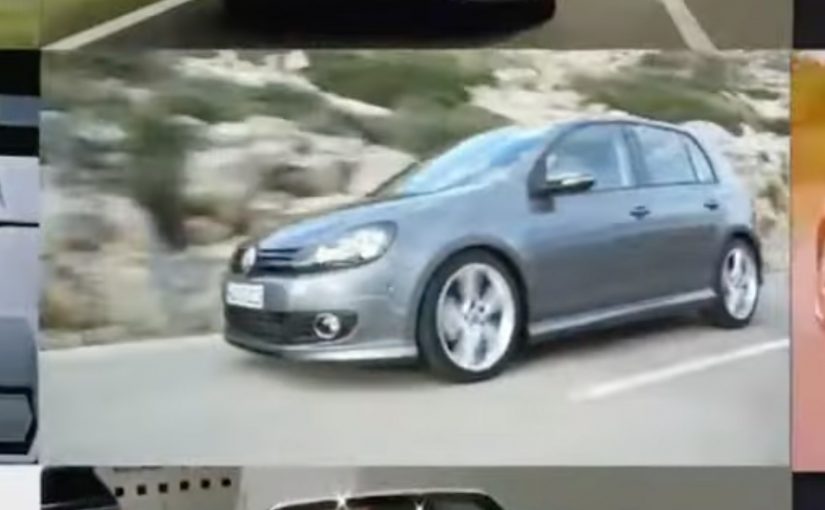
Toyota: A Glass of Water

A Glass of Water is a challenge created by Saatchi & Saatchi Stockholm for Toyota in Sweden. Its mission is to help drivers cut down their fuel consumption by 10% and reduce CO2 emissions, aligned with Toyota’s stated zero-emission vision.

When drivers register on the program website, they accept the challenge to place a glass of water on their dashboard or cup holder, then drive in a smooth manner that avoids spillage.

According to Toyota, the less you spill, the gentler you drive. Therefore the less fuel you consume.

A rule you can test on your next drive

The brilliance is the simplicity. No special car, no expert coaching, no complicated scorecard. Just a physical feedback loop that makes every harsh brake and every aggressive turn visible in the most basic way possible.

How the mechanism teaches eco-driving

Spilling is the metric. If you keep the water steady, you are accelerating, braking, and cornering more smoothly. That smoother style tends to reduce wasteful energy spikes, which is the same principle behind most eco-driving advice, translated into something you can feel immediately.

In European automotive marketing, behavior-change challenges work best when the rule is simple enough to try on the next drive.

Why it lands

It turns an abstract goal. “reduce fuel consumption”. into a personal game with instant feedback. The glass makes you self-correct without being told what to do, and it makes eco-driving feel like mastery rather than sacrifice. It also travels well as a story because anyone can explain it in one sentence.

Extractable takeaway: If you want people to change a daily behavior, give them a physical, low-effort indicator that converts “doing better” into a visible result they can improve on.

What Toyota is really buying

This is not just awareness. It is repeatable participation. Each drive becomes a new attempt, and each attempt reinforces the brand’s association with smarter, calmer driving rather than with lecturing about emissions.

The real question is how to make smoother driving feel self-evident and repeatable, not how to explain eco-driving more forcefully.

What to steal from the water-glass challenge

  • Use a single, legible metric. Spills are binary and instantly understood.
  • Make the feedback loop physical. Physical cues outperform abstract dashboards for habit shifts.
  • Lower the start barrier to almost zero. If people can start today, they will.
  • Turn restraint into skill. People adopt habits faster when it feels like competence.

A few fast answers before you act

What is A Glass of Water?

A driving challenge where you place a glass of water on the dashboard or cup holder and try to drive smoothly enough not to spill, as a proxy for reducing fuel consumption.

Why does “not spilling” relate to fuel savings?

Because avoiding spills requires gentler acceleration, braking, and cornering. That smoother driving style tends to reduce inefficient energy spikes.

What makes this different from typical eco-driving advice?

It replaces instructions with immediate feedback. The glass shows you how you are driving without needing an expert or a complex display.

What is the biggest risk with this kind of challenge?

If people treat it as a stunt rather than a habit tool, the effect fades quickly. The challenge needs repetition to translate into lasting driving style change.

How should a brand measure success for a behavior challenge like this?

Participation volume, repeat participation, and any measured or self-reported fuel consumption improvement among participants, not only views or clicks.

Volkswagen: The Fun Theory

I am sure some of you may have already heard of the “The Fun Theory” campaign by Volkswagen that just recently won the Cannes 2010 Cyber Grand Prix for a digitally led integrated campaign. Here, “digitally led” means the digital layer does the heavy lifting for discovery, sharing, and participation, not just for amplification.

For those who have not heard of the campaign, The Fun Theory was all about generating interest in Volkswagen’s Blue Motion technologies that deliver the same great car performance with reduced environmental impact, and to do this, they found an insight around how “fun” could change human behavior for the better, and this formed The Fun Theory, a campaign that spawned over 700 user generated Fun Theory initiatives along with a number of big viral hits that generated over 20 million YouTube views, with one rushing past 12 million views alone!

What makes this digitally led (without overcomplicating it)

This is one of those campaigns where the “digital” part is not a layer added at the end. It is the distribution engine. It is how the idea travels, how participation scales, and how a single insight turns into hundreds of initiatives people want to copy, remix, and share. The real question is whether your idea can travel without you pushing it. A campaign is not digitally led unless the channels are the mechanic that makes it repeatable.

Extractable takeaway: If you want integrated work to scale, design the participation loop and the sharing loop into the idea itself. Otherwise “digital” stays a bolt-on and the campaign stays one-off.

The strategic insight that carries the whole idea

The Fun Theory is built on a simple behavioral observation. If you make the better choice fun, more people will do it. That is the core. Everything else is execution.

  • One clear behavior frame. “Fun changes behavior for the better.”
  • A product story that benefits. Blue Motion technologies. Same performance, reduced impact.
  • A scalable content model. Big hits create attention, then user generated initiatives extend the lifespan.

In large brand organizations, integrated work scales when the behavior mechanic and the distribution loop are designed together.

What to take from this if you are building integrated work

  1. Lead with a human mechanism, not a message. People share mechanisms they can repeat.
  2. Let distribution be part of the design. If it does not travel, it does not scale.
  3. Create a format others can copy. The strongest campaigns spawn “versions.”
  4. Keep the brand role credible. The idea must connect back to a real product promise.

A few fast answers before you act

What is Volkswagen’s “The Fun Theory” in one sentence?

It is a digitally led integrated campaign built on the idea that making the better choice fun can change human behavior for the better, while building interest in Volkswagen’s Blue Motion technologies.

Why did this campaign matter beyond a single viral video?

Because it scaled into participation. It spawned hundreds of user generated initiatives, not just one-off attention.

What is the link to Blue Motion technologies?

The campaign positioned Blue Motion as delivering the same great car performance with reduced environmental impact, then used “fun” as the behavioral hook to earn attention and sharing.

What is the transferable lesson for digital and brand leaders?

If you can pair a simple behavioral mechanism with a credible product story, digital channels can turn one idea into a repeatable format that communities propagate for you.

How do you know when a “digitally led” idea is strong enough?

If people can describe it quickly, repeat it without you, and share it with minimal friction, it is built to scale.